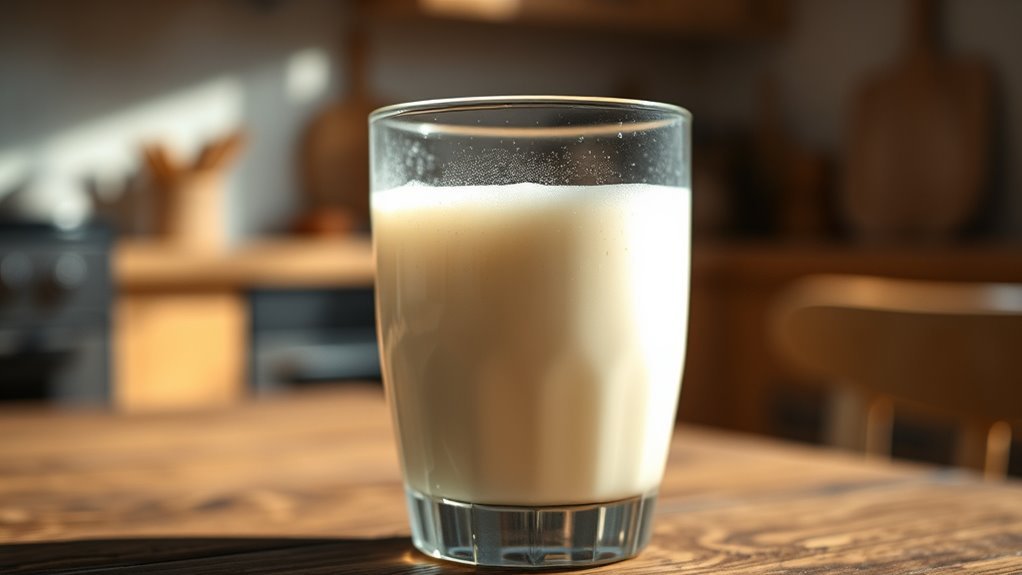
How Many Calories Are in a Glass of Milk?
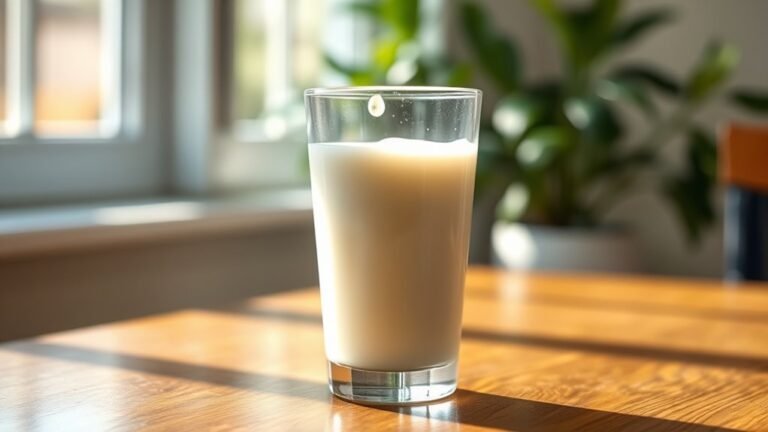
You’ll find about 150 calories in an 8-ounce glass of whole milk, but that number changes with the type you pick—skim milk has fewer calories, around 80, while plant-based options like almond or soy milk can range from 30 to 100 calories.
Your portion size also matters, with larger servings adding more calories. If you want to understand how milk fits into a healthy diet and compare options, there’s more helpful info ahead.
Calories in Different Types of Milk

How many calories are in the milk you drink? It depends on the type you choose. Whole milk packs about 150 calories per 8-ounce glass, thanks to its higher fat content.
If you opt for 2% reduced-fat milk, you’ll get around 120 calories, while 1% low-fat milk drops to about 100 calories.
Skim milk, or fat-free, contains the fewest calories, roughly 80 per glass.
Plant-based alternatives vary widely: almond milk typically has 30 to 60 calories, soy milk ranges from 80 to 100, and oat milk clocks in around 120 calories.
Knowing these differences helps you pick the right milk for your calorie goals without sacrificing taste or nutrition.
Nutritional Benefits of Milk

While choosing the type of milk matters for calories, you should also consider its nutritional benefits. Milk offers a rich array of nutrients that support your overall health. Here are four key benefits you’ll get from a glass of milk:
- Calcium Boost: Milk is an excellent source of calcium, essential for strong bones and teeth.
- Protein Power: It provides high-quality protein, helping you build and repair muscles.
- Vitamin D: Fortified milk contains vitamin D, which aids calcium absorption and supports immune function.
- B Vitamins: Milk supplies B vitamins like riboflavin and B12, important for energy production and brain health.
Comparing Milk Calories With Plant-Based Alternatives

Because many people opt for plant-based milks as alternatives, it’s important to compare their calorie content with that of cow’s milk.
A typical 8-ounce glass of whole cow’s milk contains about 150 calories, while skim milk has around 90 calories.
When you look at plant-based options, almond milk often has fewer calories, roughly 30 to 50 per glass, making it a lower-calorie choice.
Soy milk generally matches cow’s milk more closely, with about 80 to 100 calories per serving.
Oat milk tends to be higher, around 120 calories, due to its natural sugars and carbohydrates.
Keep in mind, these values can vary by brand and whether the milk is sweetened or flavored.
Knowing these differences helps you choose what fits your calorie needs best.
How Serving Size Affects Calorie Intake
Since the number of calories you consume depends on the amount you drink, serving size plays a crucial role in managing your intake. When you pour milk, even small changes can affect your calorie count considerably.
Here’s how serving size impacts your calorie intake:
- Standard Glass (8 oz): Typically contains about 120 calories for whole milk.
- Small Serving (4 oz): Cuts calories roughly in half, around 60 calories.
- Large Serving (12 oz): Increases calories by 50%, approximately 180 calories.
- Extra Large (16 oz): Doubles the calories compared to a standard glass, about 240 calories.
Tips for Including Milk in a Balanced Diet
If you want to enjoy milk without overdoing calories, focus on balancing your portions and choosing the right type for your dietary needs. Opt for skim or low-fat milk to reduce calorie intake while still getting essential nutrients like calcium and vitamin D.
Incorporate milk into meals, such as adding it to oatmeal, smoothies, or coffee, rather than drinking large quantities alone. Pay attention to serving sizes. One cup is usually enough to gain benefits without extra calories.
If you’re lactose intolerant, try lactose-free or fortified plant-based alternatives, but check their calorie content.
Finally, combine milk with a variety of foods rich in protein, fiber, and healthy fats to maintain a balanced diet.
This approach helps you enjoy milk’s benefits without compromising your calorie goals.
Frequently Asked Questions
How Does Milk Calorie Content Vary by Brand?
Milk calorie content varies slightly by brand due to differences in fat content, fortification, and processing. You’ll notice organic or specialty brands sometimes have more calories than standard options, so always check the nutrition label before choosing.
Does Milk Calorie Content Change When Heated?
Think of heating milk like warming a cozy blanket; it doesn’t add calories. When you heat milk, its calorie content stays the same because heat doesn’t create or destroy energy in the milk itself.
Are There Calorie Differences Between Organic and Non-Organic Milk?
You won’t find significant calorie differences between organic and non-organic milk since their nutritional content is quite similar. The main differences lie in farming practices, not calories, so you can choose based on preference or values.
Can Milk Calories Impact Weight Loss Efforts?
Yes, milk calories can totally sabotage your weight loss dreams if you chug it like it’s water. But if you sip mindfully, you’ll fuel your body without turning into a human milkshake.
Balance is key!
How Do Flavored Milks Affect Total Calorie Intake?
Flavored milks add extra calories and sugar, so they can increase your total calorie intake more than plain milk.
If you’re watching calories, you’ll want to limit flavored options or choose lower-sugar varieties to stay on track.
Conclusion
Now that you know how many calories are in a glass of milk, you can make smarter choices for your diet. For example, imagine Sarah, who switched from whole milk to skim milk to cut calories without losing essential nutrients.
By understanding serving sizes and comparing options, you can enjoy milk’s benefits while managing your calorie intake. Remember, small changes like these can make a big difference in your overall health and energy levels.
In conclusion, being aware of the calories in milk helps you maintain a balanced diet and supports your nutritional goals effectively.