How Much Whole Milk Should a 12-Month-Old Drink? Expert Guidelines
When it comes to how much whole milk a 12-month-old should drink, it often feels like a double-edged sword—essential yet easy to overdo. You might wonder exactly how much milk is enough without crowding out important solid foods or causing nutrient imbalances. Finding that sweet spot is essential for your toddler’s growth and development, but it’s more nuanced than simply pouring a glass.
Let’s explore what factors influence the right amount of whole milk for your child. Understanding these can help you provide balanced nutrition that supports their health and milestones.
Recommended Daily Milk Intake for 12-Month-Olds

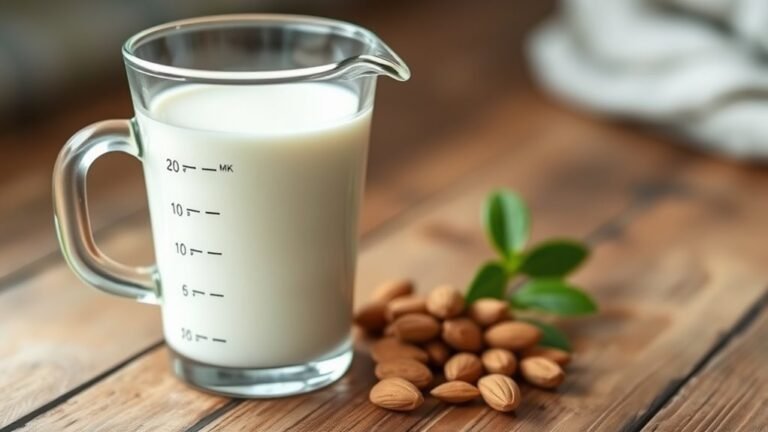
While every child’s appetite varies, you should aim to give your 12-month-old about 16 ounces (2 cups) of whole milk daily. This daily intake supports children’s nutrition by providing essential calcium while complementing a balanced diet rich in solid foods.
Depending on your toddler’s appetite and solid food consumption, the recommended range can be between 8 to 24 ounces. However, it’s important not to surpass 24 ounces, as too much whole milk can hinder iron absorption, leading to potential nutritional deficiencies.
Milk should never replace solid foods but serve as a helpful addition to them.
Benefits of Whole Milk for Toddlers

Because your toddler’s brain and bones develop rapidly during this stage, whole milk plays a crucial role by providing essential nutrients like calcium, vitamin D, and healthy fats. These nutrients support brain development and bone growth while meeting your child’s increasing nutritional needs.
Making sure adequate milk intake helps maintain balanced toddler nutrition and supports cognitive growth.
| Nutrient | Benefit |
|---|---|
| Calcium | Strengthens bones |
| Vitamin D | Enhances calcium absorption |
| Healthy Fats | Supports brain development |
| Calories | Fuels active toddlers |
Giving toddlers 8-10 ounces of whole milk daily ensures they get enough calories and nutrients to thrive. Whole milk is key to establishing strong bones and healthy brain development during these critical early years.
Gradual Transition From Breast Milk or Formula

As your baby approaches their first birthday, you can start introducing whole milk gradually by offering small sips from an open cup to help them get used to the new taste. This gradual shift from breast milk or formula lets your child adjust comfortably to cow’s milk.
Begin by replacing some breast milk or formula feeds with whole milk, decreasing the old milk over several weeks to encourage acceptance. Offering whole milk in an open cup during mealtimes supports independent drinking and oral development.
Keep daily whole milk intake between 16-24 ounces to avoid interfering with iron absorption and ensure your baby continues eating nutrient-rich foods.
Monitor your baby’s response closely, adjusting milk amounts as needed to maintain balanced nutrition during this important stage of growth and development.
Choosing Between Bottle, Sippy Cup, and Open Cup
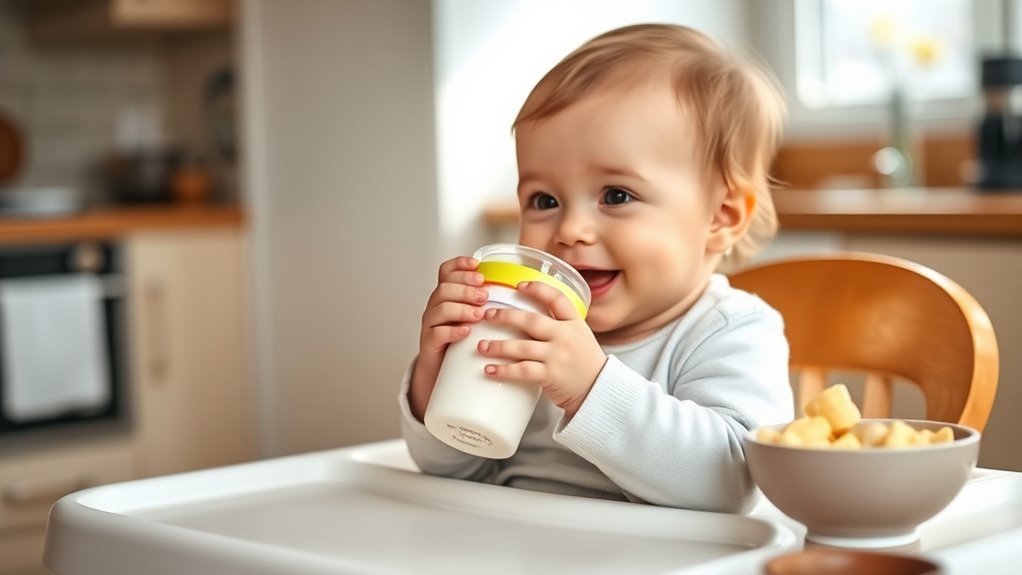
When you start shifting your 12-month-old from bottles, choosing between a sippy cup and an open cup plays a key role in promoting independence and healthy oral habits. The milk changeover from bottles to a cup encourages better drinking habits and supports oral development.
Using a sippy cup can reduce milk bottle cavities, while an open cup improves motor skills and prepares your child for independent beverage management. Here’s a quick comparison to help you decide:
| Option | Benefits |
|---|---|
| Bottles | Familiar, but risk dental decay |
| Sippy Cup | Reduces cavities, easy to use |
| Open Cup | Boosts independence and skills |
| Straw Cup | Encourages oral muscle use |
| Gradual Mix | Smooth milk transition |
Choosing the right cup supports your child’s independence and overall oral health during this key transition.
Balancing Milk With Solid Foods
Now that you’ve chosen the best cup for your 12-month-old, it’s important to balance their milk intake with solid foods. At 12 months, your toddler should have about 16 ounces of milk daily, which provides essential calcium and vitamin D.
However, milk shouldn’t replace solid foods but complement them in a balanced diet. Solid foods supply vital nutrients like iron, so including iron-rich foods is key for proper nutrition.
As your child eats more solids, milk intake may naturally decrease, supporting feeding guidelines that prevent excessive milk consumption and reduce the risk of iron deficiency.
Monitoring for Allergies and Intolerances
How do you know if your 12-month-old is reacting to whole milk? Watch for allergy symptoms like hives, vomiting, diarrhea, or breathing difficulties soon after drinking milk. These signs might indicate a milk allergy or intolerance.
If you suspect dairy reactions, talk to an allergist who can perform skin prick tests, blood tests, or a supervised oral food challenge to confirm the diagnosis. Often, your healthcare provider will recommend an elimination diet, removing milk temporarily before carefully reintroducing it under medical supervision.
Alternatives to Cow’s Milk for Toddlers
Although cow’s milk is a common choice for toddlers, you might want to explore fortified soy beverages as a nutritious alternative that closely matches calcium and vitamin D levels.
For your 12 months old child, soy beverages are the primary plant-based milks suitable as cow’s milk alternatives. When choosing, always pick unsweetened options fortified with calcium and vitamin D to guarantee they meet your toddler’s nutritional needs.
Other plant-based milks like almond, rice, oat, coconut, and cashew generally aren’t recommended as primary drinks before 12 months. Be mindful of potential allergic reactions and consult your healthcare provider to confirm which age-appropriate drinks are best.
Frequently Asked Questions
How Much Whole Milk Should a 1 Year Old Drink?
You should give your 1-year-old about 16 ounces, or 2 cups, of whole milk daily. Don’t exceed 24 ounces to avoid iron absorption issues, and make sure milk complements solid foods for balanced nutrition.
How Much Milk Should I Give a 12 Month Old?
Think of milk as your toddler’s fuel. Give about 16 ounces daily, split throughout meals and snacks. Don’t exceed 24 ounces, or iron absorption might falter. Balance milk with solids to keep nutrition steady and strong.
Conclusion
You want to give your 12-month-old whole milk to support growth—but not so much that it crowds out crucial solids or iron absorption. While milk offers important nutrients and comfort, too much can hinder their appetite for diverse foods.
Gradually shift from bottles to open cups, balancing milk with a variety of solids to foster healthy development. Remember, it’s not just about how much milk they drink, but how well it fits into their overall nutrition. Finding the right amount of whole milk is key to promoting balanced nutrition and healthy growth.