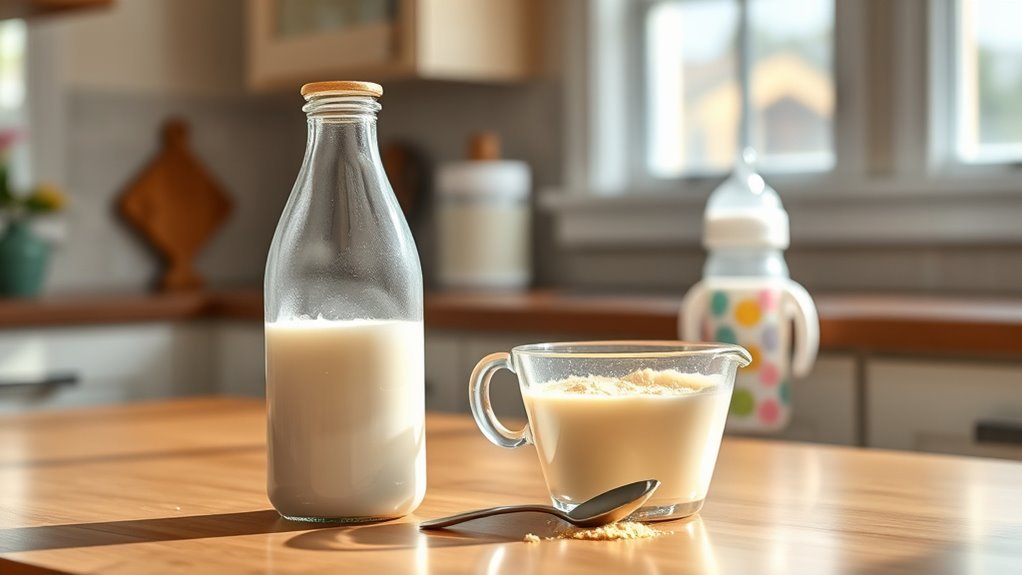
How to Go From Formula to Breast Milk in 5 Easy Steps
If you’re preparing to migrate your child from formula to milk, you might wonder how to do it smoothly without causing fuss or discomfort. Transitioning from formula to milk can be a big step for your little one, but it doesn’t have to be overwhelming. The shift doesn’t have to be abrupt or stressful; with the right steps, you can help your little one adjust naturally.
Understanding the best type of milk to start with and how to introduce it alongside formula can make all the difference. Whether you choose whole milk or another kind, introducing milk gradually is key. Let’s explore how to make this change simple and effective.
Choose the Right Type of Milk for Your Baby

When you shift your baby from formula to milk, choosing the right type is crucial for their health and development. For children aged 12 months to 2 years, whole milk is recommended because it provides essential nutrition, including calcium and vitamin D, which support brain development and growth.
If you’re breastfeeding, you might continue alongside milk to ensure balanced nutrition.
After age 2, your pediatrician might suggest switching to 2% or low-fat milk, especially if your toddler is overweight or drinking too much milk.
If you’re considering alternatives to cow’s milk, opt for fortified, unsweetened plant-based options like soy or pea milk. Always check labels carefully, as many lack fundamental nutrients, and consult your pediatrician before making changes, especially if your child has allergies or dietary restrictions.
Introduce Milk Gradually Alongside Formula

Since sudden changes can be overwhelming for your baby, you should introduce milk gradually alongside formula to help them adjust to the new taste and texture. Start by mixing 25% whole milk with 75% formula, then slowly increase milk over a week until reaching 100%.
Offer this mix in a familiar cup or sippy cup during meal times to encourage acceptance. Monitor your baby’s reactions closely, adjusting the pace if needed, and consult your pediatrician if any discomfort arises.
Remember, this gradual *shift* respects your baby’s age and readiness, making the switch smoother.
- Witness your baby’s curiosity as they explore new flavors
- Feel relief knowing you’re easing the switch gently
- Celebrate small victories with every successful sip from the cup
- Build trust through patient, attentive monitoring
- Enjoy bonding moments during feeding times
Encourage Drinking Milk From a Cup

After gradually introducing milk alongside formula, it’s a good time to encourage your baby to drink milk from a cup. Start by offering a sippy cup or open cup around 12 months to promote independent drinking.
Practice drinking during meal times, serving milk at room temperature or slightly warmed to make it more appealing. Place the cup within your toddler’s reach to spark curiosity and encourage self-feeding.
This helps support their oral development as they learn new skills. Be patient and use positive reinforcement to motivate your baby, understanding that mastering milk from a cup takes time and repeated practice.
Monitor Your Baby’s Response and Adjust Pace
As you introduce milk in place of formula, closely watch your baby’s reactions to spot any signs of digestive discomfort or intolerance. Carefully monitor their response during feeding by observing stool changes, sleep patterns, and mood shifts.
If you notice symptoms like rash, vomiting, constipation, or diarrhea, adjust the pace of progression accordingly. Don’t hesitate to consult your pediatrician if signs of distress persist. Keep detailed observation to tailor feeding amounts and methods to your baby’s comfort.
- Notice how your baby handles different milk temperatures
- Track any changes in digestion or mood
- Recognize early symptoms of intolerance
- Slow down the transition if needed
- Communicate concerns with your pediatrician
Incorporate Milk Into Meals and Snacks Consistently
When you consistently offer milk with meals and snacks, your child starts to see it as a natural part of eating, which encourages regular intake and acceptance. To incorporate milk into your child’s routine, place a sippy cup on the highchair tray during mealtime, promoting steady sipping.
You can also mix milk into familiar foods like oatmeal, smoothies, or mashed potatoes, making consumption more appealing. Keep mealtime calm and pressure-free to create positive experiences, reducing refusal and fostering acceptance.

Frequently Asked Questions
How Do You Transition From Formula to Milk?
You start by mixing small amounts of whole milk with formula, gradually increasing milk over a week.
Offer milk lukewarm in a cup, replace bottles with sippy cups, and watch for any reactions carefully.
What Is the 5 5 5 Rule for Milk?
Wondering what the 5 5 5 rule for milk is? It means giving your toddler 5 ounces of milk, 5 times a day, helping you manage portions and guarantee they get enough nutrients without overdoing it.
How Much Whole Milk Is a 1 Year Old Supposed to Have?
You should give your 1-year-old about 16 to 24 ounces of whole milk daily. Keep it balanced with solid foods, and avoid exceeding 24 ounces to prevent iron deficiency anemia.
Split servings throughout the day.
Can I Switch From Formula to Whole Milk Cold Turkey?
You can switch cold turkey, but it might upset your baby’s digestion or cause refusal.
It’s safer to shift gradually and consult your pediatrician to guarantee your baby adjusts well and maintains proper nutrition during the change.
Conclusion
Moving your little one from formula to milk might feel like steering a ship through gentle waves, but with patience, you’ll reach calm waters soon. By choosing the right milk, introducing it gradually, encouraging cup use, and keeping an eye on their reactions, you’re setting your child up for success.
Remember, consistency is your compass—offer milk during meals and snacks, and soon enough, your baby will happily sail into this new routine with ease. Transitioning from formula to milk is a big step, but with these simple strategies, you can make the process smooth and positive.
By following these five easy steps, you’ll help your child embrace milk confidently, making mealtime enjoyable and nutritious.