How Long Is Breast Milk Good in the Refrigerator?
You can safely store fresh breast milk in your refrigerator for up to four days when kept at the right temperature, ideally between 32°F and 39°F (0°C to 4°C). Proper storage of breast milk is essential to maintain its quality and safety for your baby. Be sure to use clean, BPA-free containers, label them with the date, and place milk at the back of the fridge to avoid temperature fluctuations.
If you notice any sour smell or unusual appearance, it’s best to discard it. There’s more to learn about handling and prolonging your milk’s freshness to ensure your baby receives the best nutrition possible.
Understanding Breast Milk Storage Guidelines

Although storing breast milk properly can seem intimidating at first, understanding the key guidelines helps you keep your milk safe and nutritious for your baby. You should store freshly expressed milk in clean containers, preferably BPA-free plastic or glass.
Label each container with the date you pumped to track freshness easily. Always store milk in small portions, about 2 to 4 ounces, so you only thaw what you need. Avoid filling containers to the brim, as milk expands when frozen.
Label milk containers with the date and store in small portions to preserve freshness and prevent waste.
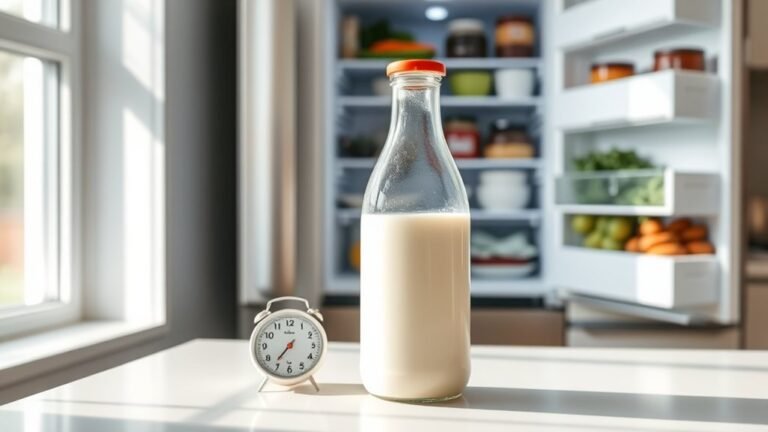
Place the milk in the back of the refrigerator, not the door, to maintain a consistent temperature. Remember, freshly expressed milk can last up to four days in the refrigerator.
Following these basic steps ensures your baby gets the best nutrition every time.
Ideal Refrigerator Temperature for Breast Milk

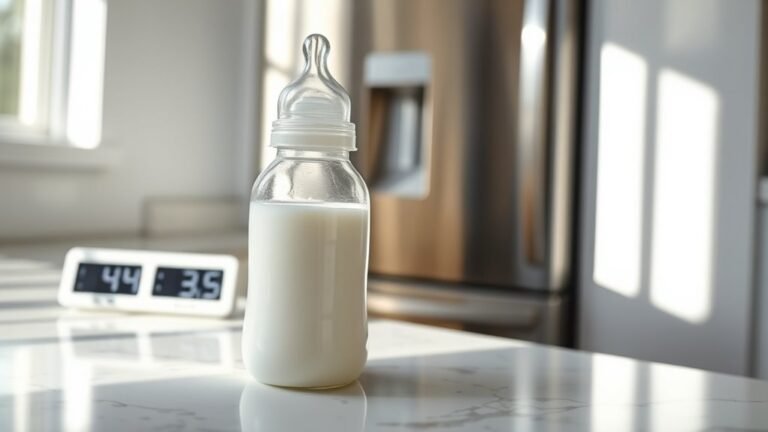
Since breast milk quality depends heavily on temperature, keeping your refrigerator at the right setting is essential for preserving its freshness and nutrients. Ideally, your fridge should be set between 32°F and 39°F (0°C to 4°C).
Temperatures above this range can cause rapid milk spoilage, while colder settings risk freezing the milk unintentionally.
Here’s a quick guide to refrigerator temps for breast milk storage:
| Temperature Range (°F) | Temperature Range (°C) | Storage Outcome |
|---|---|---|
| 32 – 39 | 0 – 4 | Ideal freshness |
| Above 39 | Above 4 | Risk of spoilage |
| Below 32 | Below 0 | Milk may freeze |
Regularly monitor your fridge temperature to keep your milk safe and nutritious.
Maximum Storage Duration for Fresh Breast Milk

When you store fresh breast milk in the refrigerator at the ideal temperature, you can keep it safe and nutritious for up to four days. This timeframe guarantees your baby receives milk with its essential nutrients and immune benefits intact.
It’s important to place milk at the back of the fridge, where the temperature stays most consistent. Avoid storing milk in the door, as frequent temperature fluctuations can shorten its freshness.
If you don’t plan to use the milk within four days, consider freezing it to preserve quality longer.
Always label the milk with the date you expressed it, so you use the oldest milk first.
Sticking to these guidelines helps you provide the best nutrition while minimizing waste.
Signs Your Refrigerated Breast Milk Has Spoiled
Even with proper storage, breast milk can spoil, and it’s important to recognize the signs to keep your baby safe. First, check the smell. Spoiled breast milk often has a sour or rancid odor, unlike its usual mild scent.
Next, look at the milk’s appearance. If it looks curdled, clumpy, or has separated unusually without shaking, it may be spoiled. Also, be cautious if the milk has changed color, turning darker or yellowish.
Trust your instincts. If it smells off or looks strange, don’t risk feeding it to your baby. Remember, breast milk can sometimes separate naturally, but a quick swirl should mix it back evenly.
When in doubt, throw it out to avoid any health risks.
Best Practices for Storing Breast Milk in the Fridge
Although storing breast milk correctly is essential to preserve its quality, many parents find it challenging to keep track of best practices.
First, always use clean, sterilized containers or bags designed for breast milk storage.
Label each with the date you expressed it, so you use the oldest milk first.
Keep the milk at the back of the fridge where the temperature is most consistent, avoiding the door.
Store milk in small portions to prevent waste and make thawing easier.
Don’t overfill containers, as milk expands when freezing, but since this is for refrigerated storage, leave a little space for expansion too.
Finally, maintain your fridge temperature at or below 4°C (39°F) to keep breast milk safe and fresh for up to four days.
Thawing and Using Refrigerated Breast Milk Safely
Since breast milk contains delicate nutrients and antibodies, you’ll want to thaw and use it carefully to preserve its benefits. Start by moving frozen milk to the refrigerator overnight to thaw slowly and safely. Avoid thawing milk at room temperature, as bacteria can multiply quickly.
Once thawed, gently swirl the milk to mix the fat that may have separated. Don’t shake it vigorously, as that can break down valuable components. Use the thawed milk within 24 hours and never refreeze it.
Before feeding, warm the milk by placing the container in warm water. Avoid microwaving, which can create hot spots and destroy nutrients. Always check the milk’s smell and appearance before use, discarding it if it smells sour or shows curdling.
Impact of Container Type on Breast Milk Freshness
When you choose the right container for storing breast milk, you help keep it fresh longer and protect its nutrients. Use clean, BPA-free plastic or glass containers with tight-fitting lids to prevent contamination and reduce air exposure.
Avoid regular plastic bags, which can leak or tear easily. Specially designed breast milk storage bags are convenient but should be sealed carefully to prevent spills and contamination.
Glass containers are durable and don’t absorb odors, but they can break, so handle them with care. Always label containers with the date you expressed the milk to track freshness.
Differences Between Fresh and Previously Frozen Milk Storage
Choosing the right container not only preserves the quality of fresh breast milk but also plays a role when handling previously frozen milk.
Fresh milk generally lasts up to four days in the refrigerator, but once milk has been frozen and thawed, its shelf life shortens to about 24 hours.
You’ll want to store previously frozen milk separately and clearly label it to avoid confusion.
Also, avoid refreezing thawed milk, as this can degrade nutrients and increase bacterial growth.
When thawing frozen milk, do it in the refrigerator rather than at room temperature to maintain safety.
Tips to Extend the Shelf Life of Refrigerated Breast Milk
To keep your refrigerated breast milk fresh for as long as possible, you should handle and store it with care.
Start by using clean, sterilized containers or breast milk storage bags to prevent contamination. Label each container with the date you expressed the milk, so you always use the oldest first.
Use clean, sterilized containers and label with the date to ensure safe, organized breast milk storage.
Store the milk toward the back of the refrigerator, where the temperature is most consistent, and avoid placing it in the door.
Keep your refrigerator at or below 4°C (39°F) to slow bacterial growth.
When thawing or warming milk, do so gently by placing the container in warm water, never using a microwave, which can create hot spots and degrade nutrients.
Following these tips will help you maintain your milk’s quality and safety for your baby.
Frequently Asked Questions
Can Breastfeeding Mothers Consume Refrigerated Breast Milk Themselves?
Yes, you can drink refrigerated breast milk, but keep in mind it’s meant for your baby’s nutrition.
If you choose to consume it, make sure it’s fresh and stored properly to avoid any risk of spoilage.
Does Breast Milk Storage Time Affect Its Nutritional Value?
Yes, breast milk’s nutritional value slightly diminishes over time, but it’s still beneficial. You should use it within recommended storage times to ensure your baby gets the best nutrients and immune protection possible.
How Does Maternal Diet Impact Stored Breast Milk Quality?
Your diet affects stored breast milk quality by influencing its nutrient and fatty acid content. Eating balanced, nutrient-rich foods helps maintain milk’s nutritional value, ensuring your stored milk supports your baby’s growth and development effectively.
Can Additives or Supplements Be Mixed With Refrigerated Breast Milk?
You might think mixing supplements with refrigerated breast milk is simple, but it’s best to avoid it unless your pediatrician approves. Some additives can alter milk’s taste or nutrients, so always check before combining anything.
Is It Safe to Microwave Breast Milk for Warming?
You shouldn’t microwave breast milk because it heats unevenly and can create hot spots that might burn your baby’s mouth.
Instead, warm it gently by placing the bottle in warm water or using a bottle warmer.
Conclusion
When it comes to storing breast milk in your fridge, time is truly of the essence—you’ve got up to 4 days to keep it fresh and safe for your little one. Remember to store it at the right temperature, use clean containers, and trust your senses to spot any spoilage.
With these simple steps, you’ll keep your milk as nourishing as a warm hug, ready whenever your baby needs it most. Proper breast milk storage in the refrigerator ensures your baby receives the best nutrition possible. Always prioritize safety by following guidelines on how long breast milk is good in the refrigerator.