How Long Is Breast Milk Good in the Fridge €“ a Storage Guide
Storing breast milk in your fridge might seem straightforward, but there’s more to it than just popping the bottle in. Knowing how long breast milk is good in the fridge is essential to keep it fresh and safe for your baby. You also need to understand the right containers to use, where to place the milk, and how long it truly lasts.
If you’ve ever wondered how to handle your expressed milk properly, you’re about to uncover the key details that make all the difference. Proper storage ensures your baby gets the best nutrition without any risks. Let’s dive into the essential tips for storing breast milk effectively.
Choosing the Right Containers for Breast Milk Storage

When you store breast milk, choosing the right containers is vital to keep it safe and fresh. Opt for breast milk storage containers made of BPA-free, food-grade material like glass bottles or hard plastic. These guarantee your milk stays uncontaminated.
You can also use specially designed breast milk storage bags with squeeze-out air features. However, avoid household plastic bags or liners not meant for milk storage. Always prioritize container hygiene by thoroughly washing and sterilizing sealable containers before use.
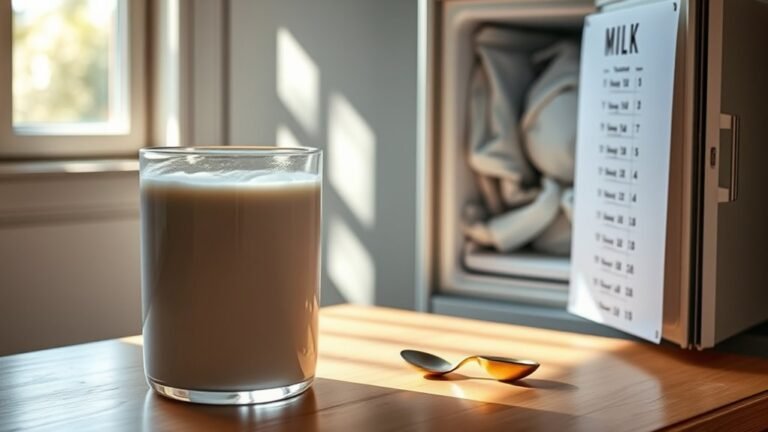
Leak-proof storage is fundamental to prevent spills and contamination. Don’t forget to label your storage containers. Mark each container with the date expressed to track freshness effectively.
Optimal Refrigeration Practices for Expressed Milk

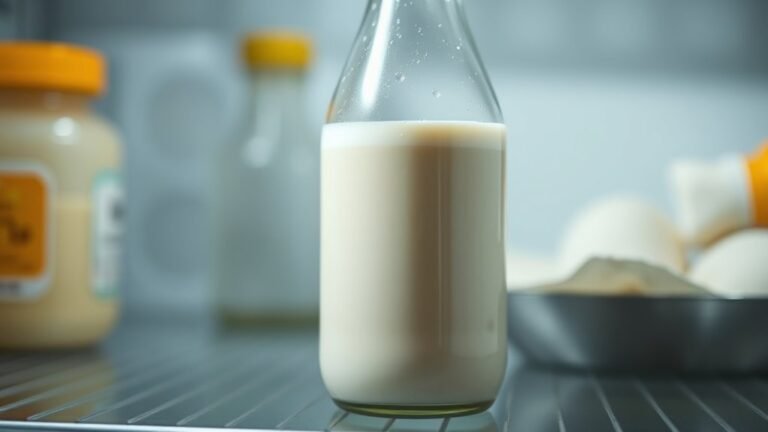
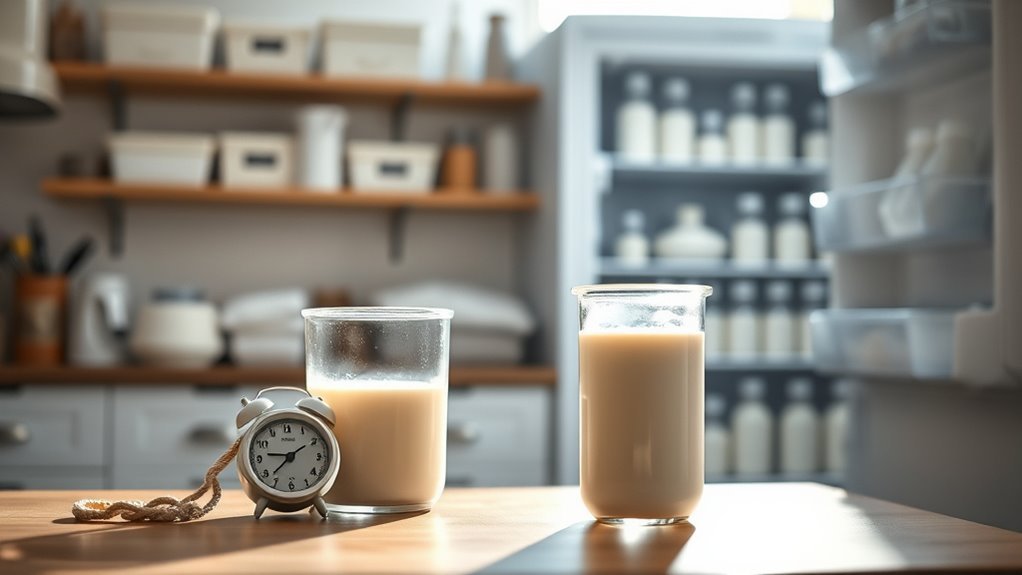
Selecting the right containers sets the stage for proper refrigeration of your expressed breast milk. Once stored, place your containers in the back of the refrigerator, where the temperature remains ideally cool at around 39°F (4°C).
Avoid the door, as frequent opening causes temperature fluctuations that can spoil milk faster.
Always label each container with the expression date to guarantee proper rotation and timely usage, preventing milk from passing its expiration.
Store milk in small portions of 2-4 ounces to minimize waste and make feeding easier.
If you notice any sour smell or change in appearance, discard the milk immediately.
Combining Fresh and Stored Breast Milk Safely

Although combining fresh and stored breast milk can save time and reduce waste, you need to handle it carefully to keep it safe for your baby. Always cool fresh breast milk to room temperature or below before adding it to milk already in refrigerator storage. This temperature control helps prevent bacterial growth and spoilage.
Never mix warm or hot milk directly with previously refrigerated or thawed milk, as it can cause milk layering issues and partial thawing. Add fresh milk to stored milk within 24 hours and gently swirl or shake to mix without damaging nutrients.
Follow safety guidelines by using the combined milk within 24 hours of mixing, then discard any leftovers to maintain freshness and avoid contamination. Proper milk mixing ensures your baby gets safe, nutritious milk every time.
Recommended Storage Durations for Breast Milk
Handling breast milk properly includes knowing how long you can safely store it in the refrigerator. Following recommended storage guidelines helps minimize bacterial growth and nutrient loss, ensuring your baby gets the best nourishment.
Keep these key points in mind for refrigerated milk storage duration:
- Store breast milk up to 4 days at 39°F (4°C) to maintain quality and safety.
- Use the oldest milk first by practicing “first in, first out” and label each container with the expression date to track expiration.
- If you thaw frozen milk, use it within 24 hours and keep it refrigerated; don’t refreeze thawed milk.
Proper Thawing and Warming Techniques for Frozen Milk
When you need to thaw frozen breast milk, do it slowly in the refrigerator overnight to keep its nutrients intact and prevent bacterial growth.
Avoid thawing at room temperature, as it can encourage bacteria to grow.
For warming, place the milk container in warm water or run warm water over it for 20-30 minutes.
Never use a microwave since it can create hot spots and destroy essential nutrients.
Always check the temperature by placing a few drops on your wrist; it should feel barely warm before feeding.
Once thawed, store the milk in the refrigerator and use it within 24 hours.
Frequently Asked Questions
How Long Is Breastmilk Good for if Stored in the Fridge?
You can store breast milk in the fridge for up to 4 days at 39°F, but it’s best to use it within 24 hours for freshness.
Always label and keep it in the back, not the door.
What Is the 4 4 4 Rule for Breast Milk?
You thought breast milk came with a secret handshake? The 4-4-4 rule means you can keep it 4 hours room temp, 4 days in the fridge, and 4 to 6 months frozen, your milk’s very own VIP pass!
What Is the 3-3-3 Rule for Breast Milk?
The 3-3-3 rule means you can keep breast milk at room temperature for 3 hours, store it in the fridge for 3 days, and freeze it for 3 months.
Always toss milk that’s older to stay safe.
What Is the 5 5 5 Rule for Breast Milk?
Think of the 5-5-5 rule as your milk’s gentle timeline: you can keep breast milk at room temperature up to 5 hours, refrigerate it safely for 5 days, and freeze it for up to 5 months.
Conclusion
By storing your breast milk at 39°F (4°C) in clean, labeled containers and using the “first in, first out” method, you’ll keep it fresh and safe for up to four days.
For example, Sarah kept her milk in the back of the fridge and noticed no spoilage even after three days, making feeding stress-free. Just remember to check for any sour smell before use and never refreeze thawed milk.
To guarantee your baby gets the best nutrition, proper breast milk storage is essential. Following these guidelines will help you maintain the quality and safety of your breast milk throughout refrigeration.