10 Tips to Increase Milk Supply When Pumping
To increase your milk supply when pumping, follow effective pumping tips that include sticking to a consistent schedule by pumping every 2-3 hours and using a double electric pump for greater efficiency. Staying hydrated, eating well, and managing stress are essential to support natural milk production.
Make sure your pump flange fits properly to avoid discomfort and improve milk flow. Incorporate hands-on massage techniques during pumping sessions, and create a relaxing environment to help stimulate let-down.
Tracking your milk output regularly can help you make necessary adjustments. Keep exploring these tips to find what works best for your body and lifestyle, ensuring a successful pumping experience.
Establish a Consistent Pumping Schedule

Although it might feel challenging at first, establishing a consistent pumping schedule helps your body produce milk more efficiently. When you pump at regular intervals, ideally every two to three hours, you signal your body to maintain or increase milk production.
Try to pump at the same times each day, so your body adapts to that routine. Consistency also prevents your breasts from becoming too full or too empty, both of which can affect supply.
Keep track of your pumping sessions to notice patterns and adjust as needed.
Even if you’re returning to work or have a busy day, sticking to your schedule as closely as possible supports steady milk output. Remember, your body responds best to regular stimulation, so make pumping a priority.
Use a Double Electric Breast Pump

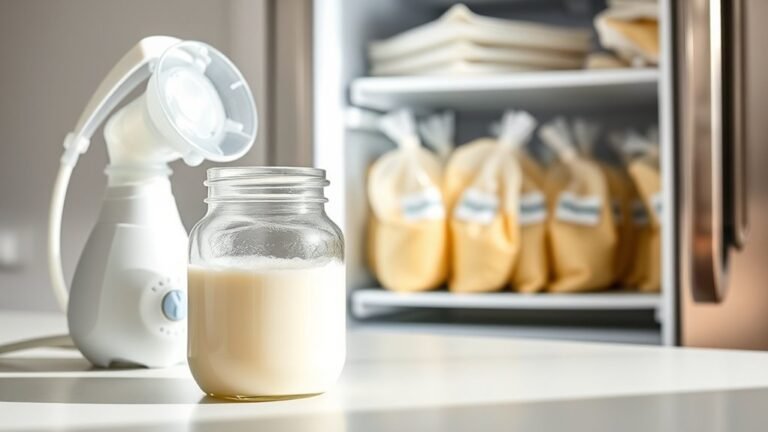
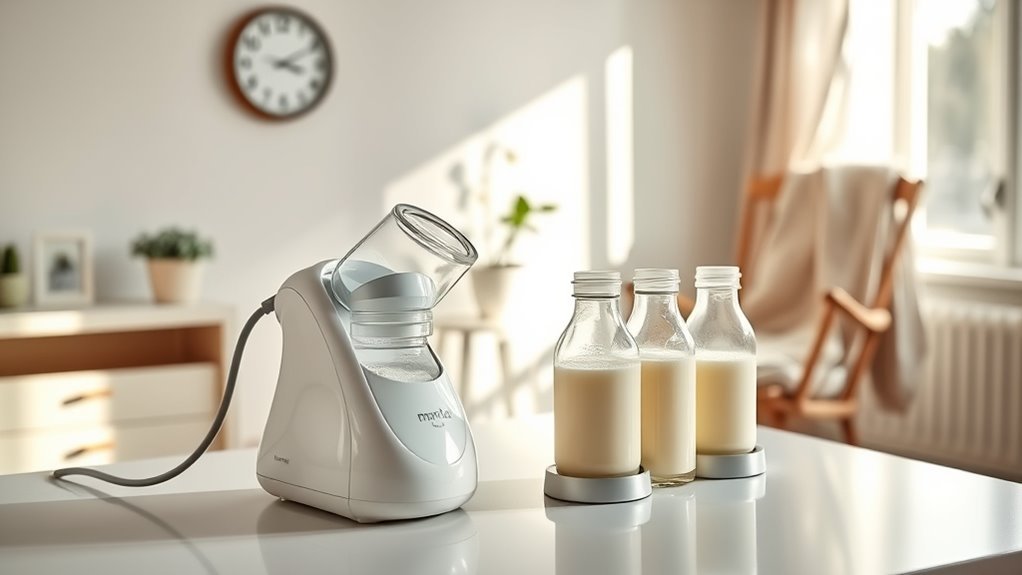
When you use a double electric breast pump, you can express milk from both breasts simultaneously, which saves time and often increases your overall milk output. Pumping both sides at once stimulates more milk ejection reflexes, encouraging your body to produce more milk.
This efficiency not only cuts down your pumping sessions but also helps maintain or boost your supply by mimicking natural feeding patterns. Make sure to choose a pump with adjustable suction and speed settings so you can personalize your comfort and effectiveness.
Using a double electric pump can also reduce the time your breasts stay full, preventing discomfort and supporting better milk production.
Consistency paired with this efficient tool can markedly enhance your milk supply when pumping.
Practice Hands-On Pumping Techniques

Since pumping alone mightn’t fully empty your breasts, practicing hands-on techniques like breast compressions and massage can substantially boost milk flow.
While you pump, gently massage your breasts in a circular motion to stimulate let-down and increase milk production.
Use your fingers to compress the breast tissue, especially in areas that feel fuller, which helps release trapped milk.
Try alternating between pumping and hand expression to maximize output.
This hands-on approach encourages more complete emptying, signaling your body to produce more milk.
Remember to keep your hands clean and be gentle to avoid discomfort.
Incorporating these techniques into your pumping routine can make a noticeable difference in your milk supply and overall pumping efficiency.
Stay Hydrated and Maintain a Balanced Diet
Because your body needs extra fluids and nutrients to produce milk, staying hydrated and eating a balanced diet play crucial roles in supporting your milk supply.
Drink water regularly throughout the day. Don’t wait until you’re thirsty. Herbal teas and milk-friendly drinks like lactation smoothies can also help keep you hydrated.
Focus on whole foods rich in protein, healthy fats, and complex carbohydrates to provide sustained energy.
Include plenty of fruits and vegetables for essential vitamins and minerals.
Avoid excessive caffeine and sugary snacks, as they can interfere with milk production and your overall well-being.
Optimize Your Pumping Environment
Staying hydrated and eating well lay the groundwork for a good milk supply, but your surroundings during pumping also make a big difference. Creating a comfortable, calm environment helps your body relax and encourages letdown.
Hydration and nutrition support milk supply, while a calm environment enhances relaxation and encourages letdown.
To optimize your pumping space, try these tips:
- Find a quiet spot with minimal distractions to help you focus.
- Use comfortable seating and support pillows to ease tension.
- Play soothing music or white noise to promote relaxation.
- Keep your pump and accessories clean and within easy reach to reduce stress.
Incorporate Skin-to-Skin Contact
When you hold your baby skin-to-skin, your body responds by releasing hormones that boost milk production and improve letdown. This close contact stimulates oxytocin, which helps your milk flow more easily during pumping sessions.
Try to spend time with your baby bare-chested, allowing direct skin contact as often as possible, especially before and after pumping. This simple practice can increase your milk supply over time and strengthen your breastfeeding bond.
You don’t need long sessions; even 15 to 30 minutes of skin-to-skin can make a difference. If your baby is premature or has trouble latching, skin-to-skin contact still supports your milk production.
Incorporating this natural method alongside regular pumping helps create a more effective and comfortable breastfeeding experience for both of you.
Avoid Stress and Prioritize Rest
Along with skin-to-skin contact, managing your stress levels and getting enough rest play a big role in boosting your milk supply. When you’re stressed or exhausted, your body produces more cortisol, which can reduce milk production.
To help keep stress low and rest high, try these tips:
- Set realistic pumping goals to avoid frustration.
- Create a calm, comfortable pumping environment.
- Take short breaks to breathe deeply or meditate.
- Prioritize sleep by napping when your baby naps or asking for help.
Try Galactagogues With Caution
Although galactagogues can help boost milk supply, you should approach them with caution and consult your healthcare provider before trying any supplements or herbal remedies.
Not all galactagogues work the same for everyone, and some may cause side effects or interact with medications you’re taking. Common options include fenugreek, blessed thistle, and milk thistle, but their effectiveness varies, and evidence is limited.
Your doctor can help you determine if these are safe and appropriate for your situation.
Remember, relying solely on galactagogues won’t replace good pumping habits, hydration, and rest. Use them as a supportive measure rather than a primary solution.
Always monitor how your body responds and stop use if you notice any adverse effects or discomfort.
Ensure Proper Pump Flange Fit
Supplements like galactagogues can support milk production, but focusing on how you use your pump will have a more direct impact on your supply. One key factor is guaranteeing your pump flange fits properly. A poor fit can cause discomfort and reduce milk output.
Here’s how to check and improve your flange fit:
- Measure your nipple diameter and compare it to flange size.
- Ensure the nipple moves freely without rubbing against the flange.
- Look for any pain or redness after pumping, which may indicate a poor fit.
- Experiment with different flange sizes to find the most comfortable and effective option.
A proper fit maximizes suction efficiency, helps prevent nipple damage, and ultimately boosts your milk supply.
Monitor and Track Your Milk Output
When you monitor and track your milk output consistently, you gain valuable insight into your pumping patterns and supply trends. This helps you identify when your supply dips or peaks, allowing you to adjust pumping frequency or techniques accordingly.
Keep a simple log or use an app to record the amount of milk expressed each session. Review your data weekly to spot patterns and set realistic goals.
| Date | Time | Milk Output (oz) |
|---|---|---|
| April 20 | 8:00 AM | 3.5 |
| April 20 | 2:00 PM | 3.0 |
| April 20 | 8:00 PM | 2.8 |
| April 21 | 8:00 AM | 4.0 |
Tracking keeps you informed and motivated to maintain or improve your supply.
Frequently Asked Questions
Can Certain Medications Affect Milk Supply While Pumping?
Yes, certain medications can influence your milk supply while pumping. Some might decrease production, while others may help boost it.
Always check with your healthcare provider before taking any meds to guarantee they’re safe for breastfeeding.
How Does Caffeine Intake Impact Milk Production?
If you drink too much caffeine, like Sarah who had three coffees daily, your milk supply might dip slightly. Moderate caffeine usually won’t harm your production, but excessive intake can reduce milk volume and affect your baby’s sleep.
Is It Normal to Feel Pain When Pumping?
Yes, feeling pain when pumping isn’t normal and could signal incorrect flange size or suction settings. You should adjust the pump or consult a lactation expert to guarantee comfort and prevent damage while expressing milk.
How Do Hormonal Changes Influence Milk Supply During Pumping?
Hormonal changes dance like a symphony in your body, directly affecting milk supply during pumping. When prolactin and oxytocin rise, your milk flows more freely.
Can Exercise Affect My Milk Supply When Pumping?
Yes, exercise can affect your milk supply. Moderate workouts usually won’t reduce supply, but intense or prolonged exercise might.
Stay hydrated and listen to your body to maintain a healthy balance while pumping.
Conclusion
Picture your milk supply as a garden—you’re the careful gardener nurturing each bloom. By sticking to a steady pumping routine, using the right tools, and caring for yourself with hydration and rest, you help your garden flourish.
Remember, every drop you express is a victory. With patience and these tips, your milk supply can grow strong and steady, nourishing both you and your little one.
Keep tending your garden with love and consistency. Following these 10 tips to increase milk supply when pumping will support your breastfeeding journey and help ensure a healthy milk supply.