How to Do Make Buttermilk From Milk in 7 Easy Steps
If you’ve ever needed buttermilk for a recipe but didn’t have any on hand, you’re in luck. Making buttermilk from milk at home is straightforward and requires just a few common ingredients. You’ll want to know the right milk to choose and how an acid transforms it into that tangy, thick liquid.
Once you get these basics down, you’ll see why homemade buttermilk can be a game-changer in your kitchen. This simple process not only saves you a trip to the store but also ensures fresh, flavorful buttermilk whenever you need it.
Understanding Buttermilk and Its Uses

What makes buttermilk stand out in your kitchen? It’s the result of fermentation, where raw milk naturally sours before churning butter. This process creates a tangy liquid packed with beneficial bacteria that aid digestion.
Buttermilk isn’t just nutritious, with 8 grams of protein, 12 grams of carbs, and only 3 grams of fat per cup. It’s incredibly versatile. You can use it as a flavor enhancer in baked goods, a tenderizer for meats, and even as a natural leavening agent that helps recipes rise beautifully.
Once your buttermilk has soured, make sure to refrigerate it to keep it fresh and safe to use. Understanding these uses helps you appreciate buttermilk’s unique role beyond just being a dairy by-product.
Selecting the Right Milk for Buttermilk

Since the type of milk you choose directly affects the taste and texture of your buttermilk, selecting the right one is essential. Whole milk or 2% milk work best because they create a creamy, rich buttermilk with the perfect consistency.
If you use reduced-fat or skim milk, your buttermilk may turn out thinner and less satisfying. You can also try raw milk, which naturally ferments to produce cultured buttermilk without adding acid.
While plant-based milks like almond or soy are options, they don’t replicate the traditional texture as well.
Remember, freshness is key—fresh milk yields better flavor and texture.
Choosing quality milk sets the foundation for your buttermilk, so pick carefully before moving on to adding the acid to curdle it.
Choosing an Acid for Curdling Milk

Although you can use different acids to curdle milk, lemon juice and vinegar remain the most popular choices for making buttermilk. Each acid brings a unique flavor. Lemon juice adds a bright, citrus note, while vinegar provides a sharper, tangier taste.
To get the right curdling effect, use about 1 tablespoon of acid per cup of cold milk. Choosing fresh, high-quality lemon juice or vinegar ensures your buttermilk substitute turns out smooth and flavorful.
The acid you pick will influence the tanginess, so consider the flavor profile you want in your recipe. Remember, the acid’s quality and the milk’s temperature play key roles in how well the milk curdles into that perfect buttermilk consistency.
Mixing Milk and Acid Properly
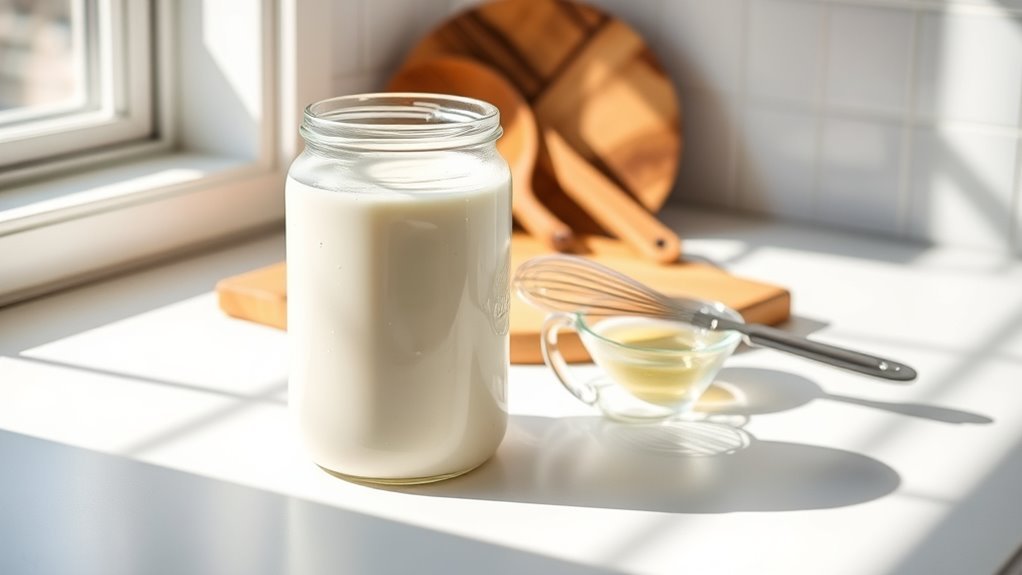
When you mix the acid and milk properly, you guarantee the right texture and tang for your buttermilk substitute. Start by adding 1 tablespoon of white vinegar or lemon juice to 1 cup of milk in a measuring cup.
Then, gently stir the milk and acid together to combine them thoroughly. This careful mixing ensures the acid evenly distributes, allowing the milk proteins to react correctly.
Though the mixture won’t fully curdle immediately, this step sets the foundation for the curdling process that thickens the milk and develops the characteristic tang.
Proper mixing prevents uneven texture or separation, giving you a smooth buttermilk substitute that’s perfect for baking or cooking. Use the mixture right away or refrigerate it until needed.
Allowing Time for Milk to Curdle
To get the milk to curdle properly, you need to let the mixture sit undisturbed at room temperature for 5 to 10 minutes.
During this time, the acid you added interacts with the milk proteins, causing them to coagulate and start forming small lumps.
This curdling process thickens the liquid slightly and gives it that characteristic tangy flavor.
Make sure you use fresh milk at room temperature to speed up curdling and get consistent results.
The longer you leave the mixture, up to about 15 minutes, the more pronounced the curdling and tanginess become.
Keep the mixture still and avoid stirring during this period to allow the acid to work effectively, creating the perfect base for your homemade buttermilk.
Checking the Texture and Consistency
After letting the milk sit undisturbed, you’ll want to check the texture and consistency to guarantee it’s ready. The mixture should have a slightly thickened, creamy texture with small curdled bits visible on the surface.
Gently tilt the container; if it flows slowly, that’s a good sign of proper consistency. It should resemble yogurt or thin sour cream, not be completely liquid.
Use a spoon to see if it clings slightly, confirming the right acidic curdling.
Storing and Using Your Homemade Buttermilk
Wondering how to keep your homemade buttermilk fresh and ready for use? For proper storage, pour it into an airtight container and refrigerate immediately. Your homemade buttermilk will stay fresh for up to 1-2 weeks this way.
If you want to extend its shelf life, freeze small portions in ice cube trays. Frozen buttermilk can last up to 3 months. When you’re ready to use it, thaw the cubes overnight in the refrigerator and stir well to restore consistency.
Always check for signs of spoilage, like a sour smell or mold, before using stored buttermilk.
You can confidently substitute your homemade buttermilk 1:1 for store-bought versions in any recipe, making it a versatile and fresh addition to your kitchen.
Frequently Asked Questions
How to Make Buttermilk Step by Step?
You mix 1 tablespoon of lemon juice or vinegar with 1 cup of milk, stir gently, and let it sit for 5 to 10 minutes at room temperature.
Then, your homemade buttermilk’s ready to use or store.
How Do You Convert Milk to Buttermilk?
You just perform a little magic trick: add acid to milk, wait a few minutes, and voilà. Milk turns tangy and thick like buttermilk. Who knew kitchen science was so delightfully simple and mildly rebellious?
How Much Vinegar Do I Use in a Cup of Milk to Make Buttermilk?
You use 1 tablespoon of vinegar for every cup of milk. Just add the vinegar into the measuring cup first, pour in the milk, stir gently, and let it sit 5-10 minutes to thicken and sour.
How to Make Buttermilk With 2 Ingredients?
You know what they say: “Two heads are better than one.” Just mix 1 cup of milk with 1 tablespoon of lemon juice or vinegar, stir, and let it sit 5–10 minutes to get homemade buttermilk.
Conclusion
Now that you know how easy it is to make buttermilk at home, you might be surprised to learn that over 60% of home bakers prefer homemade buttermilk for its fresh tang and natural texture.
By simply mixing milk with a bit of acid and waiting just 5–10 minutes, you create a healthier, more flavorful ingredient without additives.
Give it a try—you’ll taste the difference and feel great about what you’re serving your family! Making homemade buttermilk from milk is a simple, cost-effective way to enhance your baking and cooking.