How Long Is Frozen Breast Milk Good and How to Store It Safely
When you freeze breast milk, understanding how long frozen breast milk is good and how to store it safely is vital for your baby’s health. Proper storage helps preserve its nutrients and prevents waste, but the guidelines can sometimes be confusing.
Using the right containers and labeling your milk correctly makes a big difference. Plus, thawing it safely is just as important to maintain quality.
Keep these points in mind, and you’ll guarantee your milk stays fresh and safe—here’s what you need to know.
Guidelines for Freezing Breast Milk

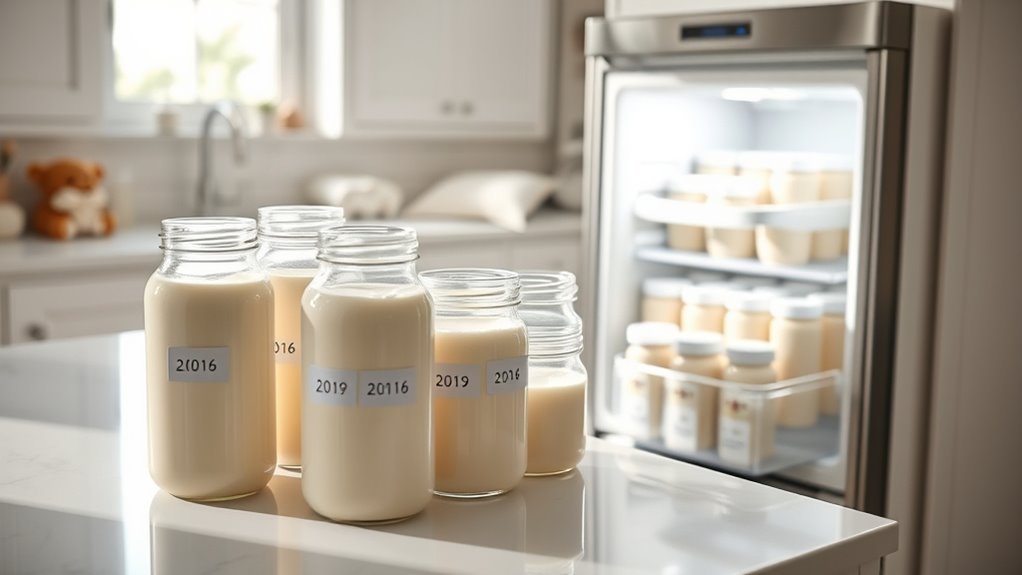
When you freeze breast milk, it’s important to label each container with the date of expression and store it in the back of your freezer, where the temperature stays most consistent.
Following proper storage guidelines guarantees your frozen breast milk preserves superior quality and safety.
Use the first in, first out method to manage storage time effectively, so older milk is used before newer batches.
When freezing breast milk, leave at least 1 inch of space in storage containers to allow for expansion and prevent leaks.
To thaw, place containers in the refrigerator overnight or run them under warm water.
Avoid microwaving to preserve nutrients and prevent hot spots.
These steps help you maintain storage safety and the best quality for your baby’s milk.
Choosing the Right Containers for Storage

Freezing breast milk safely starts with picking the right containers. Choose sterilized containers made from BPA-free plastic or glass bottles with airtight lids to keep milk fresh and prevent leaks. Storage bags offer space-efficient storage and are perfect for freezing small portions, while silicone milk trays let you freeze milk in cubes for easy use later.
Avoid household plastic bags, which can crack or leak, risking milk safety.
| Container Type | Benefits |
|---|---|
| BPA-free Plastic | Leak-proof, reusable, safe |
| Glass Bottles | Durable, easy to sterilize |
| Storage Bags & Trays | Space-efficient, perfect for freezing small portions |
Selecting the right storage containers preserves milk quality and supports your baby’s health.
Labeling and Organizing Frozen Milk

A clear labeling system is essential for managing your frozen breast milk effectively. Always label containers with the date and time of expression to guarantee proper rotation and avoid using expired milk. If you share milk with daycare, include your baby’s name on each label.
Record the volume in ounces or milliliters to help with thawing and feeding precise amounts.
For efficient storage organization, use freezer organizers or storage bins to keep milk neatly arranged and easy to access.
Store milk bags flat to save space and allow you to thaw small portions quickly when needed.
Safe Thawing and Warming Practices
Although thawing frozen breast milk requires care, you can safely do it by placing the milk in the refrigerator overnight or warming it under lukewarm running water. Avoid microwaves and direct stove heat to conserve nutrients and prevent hot spots.
Once thawed, use the milk within 24 hours and never refreeze it. To warm milk, place the container in warm water and test the temperature on your wrist. Gently swirl the milk to mix separated fat without shaking vigorously.
Following these warming practices guarantees breast milk safety and maintains its quality during safe storage.
| Step | Method | Key Tip |
|---|---|---|
| Thaw frozen breast milk | Refrigerator overnight | Plan ahead for gradual thawing |
| Thaw frozen breast milk | Lukewarm running water | Avoid hot water or microwaves |
| Warm milk | Warm water bath | Test temperature on wrist |
| Use after thawing | Within 24 hours | Do not refreeze leftover milk |
Understanding Storage Duration and Milk Quality
After safely thawing and warming your frozen breast milk, understanding how long it remains good and how its quality changes over time becomes important.
Frozen breast milk is safest when used within 6 months of storage in a standard freezer, though it can last up to 12 months in a deep freezer.
For optimal safety, use frozen breast milk within 6 months in a standard freezer, or up to 12 months in a deep freezer.
However, the best storage time to preserve milk quality and nutritional value is within 6 months.
Following proper storage guidelines, like labeling milk with the expression date and keeping it at the back of the freezer, helps maintain consistent temperature and milk preservation.
Using the “first in, first out” method ensures you use older milk first, respecting the expiration date and promoting milk safety.
Be mindful that thawed milk should be used promptly to retain its benefits.
Frequently Asked Questions
How Long Is Breastmilk Good After You Freeze It?
You can keep frozen breast milk good for about 6 months in a standard freezer and up to 12 months in a deep freezer.
Make sure to label it with the date and use it within 24 hours once thawed.
What Is the 4 4 4 Rule for Breast Milk?
You probably didn’t know breast milk stays fresh up to 4 months in the freezer!
The 4-4-4 rule means you can store it 4 hours at room temp, 4 days refrigerated, and 4 months frozen safely.
What Is the 3-3-3 Rule for Breast Milk?
The 3-3-3 rule means you can keep breast milk at room temperature for 3 hours, in the fridge for 3 days, and in the freezer for 3 months.
Stick to this to keep milk safe and fresh.
How to Know if Frozen Breast Milk Is Still Good?
You’ll know frozen breast milk is still good if it smells fresh, looks normal, and hasn’t changed color or texture drastically.
If it smells sour or curdled, don’t use it. Always trust your senses.
Conclusion
Think of frozen breast milk as a precious treasure chest—each bottle holds nourishment and love you’ve carefully preserved. By choosing the right containers, labeling with care, and thawing gently, you release that treasure safely.
Remember, using it within the recommended time keeps its magic alive for your little one. Treat your stored milk like a gift, and you’ll guarantee every drop shines with the warmth and goodness your baby deserves.
Proper storage and timely use of frozen breast milk are key to maintaining its quality. Following safe storage guidelines ensures your baby receives the best nutrition possible.