How Long Does Breast Milk Last at Room Temperature? Safe Storage Guide
Think of breast milk as a delicate gift that requires careful handling to keep its value intact. When you leave breast milk at room temperature, the clock starts ticking on its freshness and safety. You might assume it’s safe for hours, but the reality depends on several factors you may not have considered.
Understanding how long breast milk lasts at room temperature can help you make better choices for your baby’s health. Factors like the cleanliness of storage containers, room temperature, and how recently the milk was expressed all play a role. Let’s explore what really affects the safety and quality of breast milk when left out.
Factors Affecting Breast Milk Shelf Life at Room Temperature

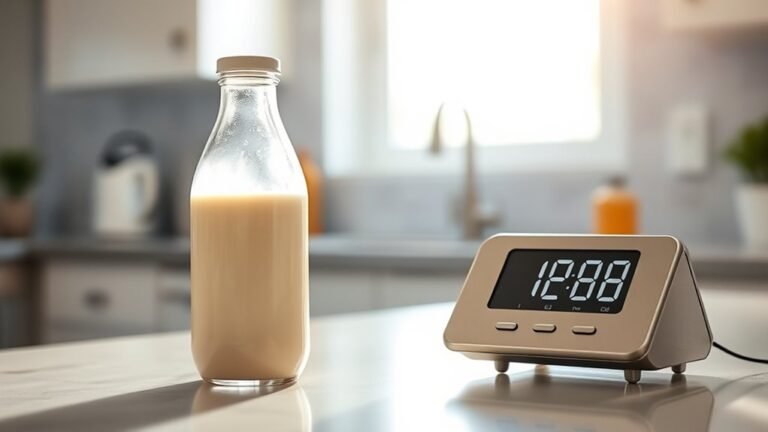
Although breast milk can stay safe at room temperature for up to 6 hours, you should ideally use it within 4 hours to reduce bacterial growth. The shelf life of breast milk at room temperature depends heavily on the environment and temperature.
If the room temperature exceeds 77°F (25°C), especially in warm or humid conditions, the safe storage time drops to about 2 hours. Factors like how clean your storage container is and the initial quality of the milk also impact how long it remains safe.
Higher temperatures and humidity accelerate bacterial growth, so keeping the milk in a cooler environment helps extend its shelf life. Being mindful of these factors ensures your baby gets safe, nutritious milk every time.
Recommended Time Limits for Storing Breast Milk Without Refrigeration

Understanding the factors that affect breast milk’s shelf life helps you follow the recommended time limits for storing it without refrigeration. Fresh breast milk stays safe at room temperature for up to 6 hours in a sterile, covered container.
However, if the room temperature rises above 29°C (84°F), safe storage time drops to 2 hours due to faster spoilage. In cooler settings (20-25°C or 68-77°F), breast milk remains safe for 4-6 hours.
Always check for spoilage signs like sour smell before feeding.
| Room Temperature (°C) | Storage Time (hours) | Notes |
|---|---|---|
| Above 29 | 2 | Warm environment, quick spoilage |
| 20 – 25 | 4 – 6 | Ideal room temperature |
| Below 20 | Up to 6 | Cooler setting |
| Any | >6 | Not safe, discard |
Safe Containers for Storing Breast Milk at Room Temperature

When storing breast milk at room temperature, you should use clean, food-grade glass or hard plastic containers that are BPA-free to keep the milk safe and fresh. Make sure your storage containers have airtight lids to prevent contamination and spills.
Before use, wash each container thoroughly with soap and hot water to eliminate bacteria. Avoid using disposable bottle liners or household plastic bags, as they don’t offer proper protection.
It’s important to label every container with the date you expressed the milk so you can monitor freshness easily.
Signs That Breast Milk Has Spoiled
If you notice a sour smell or a lumpy texture in your breast milk, it’s a strong sign that it has spoiled. Spoiled milk often develops a sour smell that’s clearly different from fresh milk.
You might also see a curdled appearance, signaling bacterial growth. Sometimes, the milk changes color or separates, which hints at spoilage. An off taste can occur, but tasting isn’t recommended.
Watch for these signs of spoiled milk:
- Sour smell that’s noticeably unpleasant
- Curdled appearance or lumps in the milk
- Color change or separation accompanied by odor
If any of these signs show up, it’s safest to discard the milk to avoid feeding your baby spoiled milk.
Impact of Ambient Temperature on Breast Milk Safety
Noticing signs of spoiled breast milk is important, but keeping milk safe also depends heavily on the temperature where you store it.
At room temperature, which is up to 77°F (25°C), you can safely keep breast milk for up to 6 hours.
However, the ambient temperature plays a vital role in breast milk safety. When it rises above 77°F, spoilage accelerates, and the storage duration drops to about 2 hours.
This temperature impact happens because higher heat speeds up bacterial growth, making milk unsafe sooner.
To maintain breast milk safety, it’s best to store milk in a cool, covered container and refrigerate or freeze it promptly if you can’t use it within those timeframes. Monitoring ambient temperature helps prevent spoilage and protects your baby’s health.
Special Considerations for Premature and Sick Infants
Because premature and sick infants have weaker immune systems, you need to handle their breast milk with extra caution. For these vulnerable babies, the storage time at room temperature is much shorter. Breast milk should be used within 1 hour to guarantee feeding safety.
Milk left out beyond 4 hours considerably increases the risk of spoiled milk and bacterial growth, which can harm premature infants. Always check for signs like sour smell or off appearance before feeding.
Keep in mind:
- Use freshly expressed milk directly or very soon after expression.
- Avoid using milk left out for more than 4 hours.
- Consult healthcare providers for specific guidance on storage and feeding.
Prioritizing these steps helps protect your baby’s fragile immune system effectively.
Guidelines for Using Breast Milk Left Out Overnight
When breast milk sits out overnight at room temperature, it becomes unsafe for feeding due to bacterial growth. According to storage guidelines, you shouldn’t leave breast milk out for more than 6 hours at room temperature.
If the milk has been left out overnight, it’s best to discard it to guarantee safety.
In warmer environments above 77°F (25°C), the safe limit drops to just 2 hours.
Milk left out overnight may harbor bacteria and should never be fed to your baby. Instead, if you want to use it, limit its use to skin application only.
To maintain breast milk’s freshness and safety, always refrigerate or freeze it promptly after expressing. Following these guidelines protects your baby’s health.
How to Handle Breast Milk When Away From Home
Although handling breast milk away from home can seem challenging, you can keep it safe and fresh by following a few simple steps. When expressing milk, always use clean storage containers and label them with the date and time.
Keep freshly expressed milk at room temperature no longer than 4 hours, especially if you’re in a warm environment.
Freshly expressed milk should not be kept at room temperature for more than 4 hours, especially in warm conditions.
During transportation, store milk in an insulated cooler bag with ice packs to maintain freshness.
- Use clean, covered storage containers for hygiene.
- In warm environments, limit room temperature storage to 2 hours.
- Always transport milk in an insulated cooler to prevent spoilage.

Combining Freshly Expressed Milk With Stored Milk Safely
To keep breast milk safe and nutritious, you should cool freshly expressed milk to room temperature before mixing it with stored milk.
Combining warm milk directly with refrigerated or frozen milk can raise the overall temperature, increasing the risk of bacterial growth and spoilage.
Avoid adding warm or hot milk straight to frozen milk, as sudden temperature changes can harm milk quality.
Once you combine freshly expressed milk with stored milk, label the container with the date and time to ensure safe storage and timely use.
Remember, refrigerated combined milk should be used within 24 hours, and thawed milk within 24 hours after mixing.
Best Practices to Preserve Nutrients in Room Temperature Storage
After combining freshly expressed milk with stored milk, you might need to keep it at room temperature for a short time before feeding. To guarantee optimal safety and nutrients preservation during this period, use clean, sterile storage containers to minimize bacterial growth. Keep the milk covered and store it at or below 77°F (25°C).
Use clean, sterile containers and keep milk covered below 77°F to preserve safety and nutrients.
Avoid warm environments, as bacteria multiply rapidly after 2 hours, reducing milk quality. Remember to refrigerate promptly after the room temperature storage window to maintain nutritional benefits.
Use sterile storage containers to reduce contamination. Limit room temperature storage to a maximum of 4-6 hours. Keep milk covered and away from heat sources to prevent bacterial growth.
Following these best practices helps you preserve your breast milk’s valuable nutrients while ensuring your baby’s safety.

Frequently Asked Questions
What Happens to Breastmilk After 4 Hours?
After 4 hours, breast milk starts to develop harmful bacteria, so you shouldn’t feed it to your baby. Instead, it’s safer to discard it or use it for skin care purposes if you want to avoid waste.
What Is the 2 Hour Rule for Breast Milk?
You can’t risk turning your breast milk into a science experiment! The 2-hour rule means you should use or refrigerate freshly expressed milk within 2 hours at room temperature.
This helps keep it safe and fresh for your baby.
How Long Is Pumped Breast Milk Good at Room Temperature?
You can keep pumped breast milk at room temperature for up to 6 hours, but it’s best to use it within 4 hours.
If it’s warmer than 77°F, use it within 2 hours to stay safe.
What Is the 4 4 4 Rule for Breast Milk?
The 4 4 4 rule means you can keep breast milk 4 hours at room temperature, 4 days in the fridge, and 4 months in the freezer.
Following this helps you keep milk safe and nutritious for your baby.
Conclusion
You might think breast milk’s safe at room temperature much longer, but here’s the catch: once the clock ticks past 4 hours—or just 2 if it’s warm—you’re risking more than you realize. Don’t let a few degrees or minutes fool you.
To keep your little one safe and nourished, stay sharp, store wisely, and trust the time limits.
After all, when it comes to breast milk, every moment truly counts. Proper storage and awareness of how long breast milk lasts at room temperature are essential for your baby’s health.