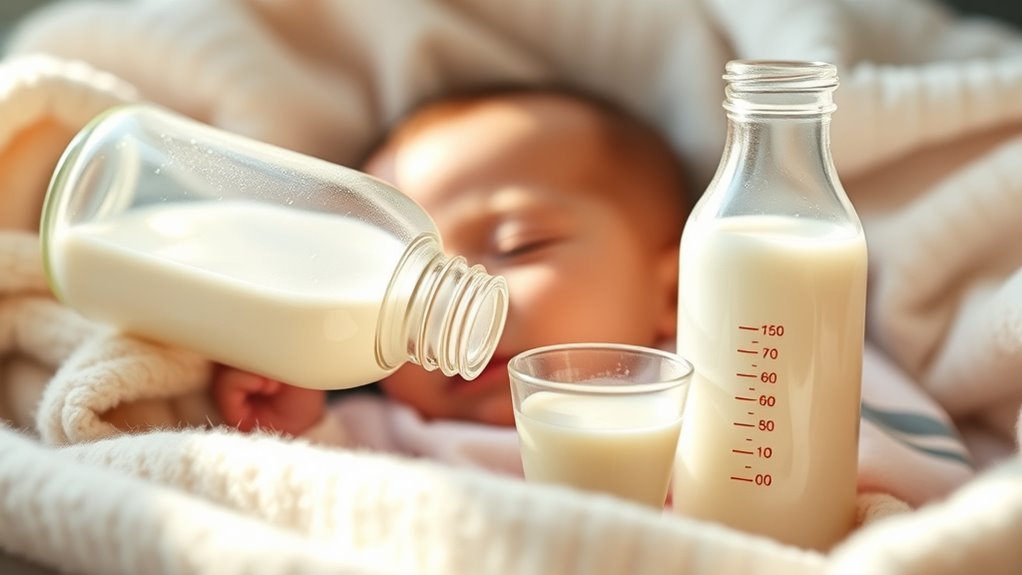
How Much Milk Does a Newborn Drink? Complete Feeding Guide
When you feed your newborn for the first time, you might notice they only take a tiny sip—around 5 milliliters or less. How much milk does a newborn drink is a common question for new parents. That small amount may surprise you, but it’s perfectly normal given their tiny stomach size.
Understanding how much milk your baby needs during those first critical days can ease your mind and help you care for them better. Let’s explore how feeding amounts change as your newborn grows.
Typical Milk Intake in the First 24 Hours

Although your newborn’s stomach is tiny, about the size of a cherry, they’ll typically drink between 2 to 10 milliliters of milk per feeding in the first 24 hours. This small stomach limits the volume your baby can handle, so their initial consumption might seem minimal.
Across all feedings during the first 24 hours, a newborn’s total milk intake usually ranges from 10 to 30 milliliters. You’ll likely feed your newborn 8 to 12 times in this period to meet their nutritional needs.
Milk Consumption Between 24 and 48 Hours

As your newborn moves into the 24 to 48-hour mark, they typically drink between 5 to 15 milliliters of milk per feeding. Their milk intake remains small due to limited stomach capacity, but feeding frequency increases to every 1 to 3 hours.
Whether you’re breastfeeding or considering formula consumption, watch for steady weight gain and enough wet diapers to confirm proper nutrition. During these early days, your baby’s stomach is still adjusting, so small, frequent feedings are key.
Milk intake totals about 15 to 45 mL daily in this period. Feedings occur roughly every 1 to 3 hours to match stomach capacity. Monitoring wet diapers helps track adequate feeding and hydration.
This stage sets the foundation for your newborn’s growth and comfort.
Feeding Volumes After 48 Hours

After the first 48 hours, your newborn’s milk intake typically increases to between 15 and 30 milliliters per feeding. This means the feeding volume usually ranges from about 0.5 to 1 ounce per feeding after 48 hours.
As your baby’s stomach development progresses, their capacity grows, allowing more milk intake during each feeding. You’ll notice that feeding volume varies depending on your newborn’s hunger cues and weight gain rather than a strict amount.
Paying attention to these signals helps ensure your baby is getting enough. While the feeding volume starts smaller, it gradually increases as your newborn becomes more efficient at nursing.
Staying responsive to hunger cues supports healthy growth and a smooth changeover in milk intake during this critical stage.
Average Intake at 1 to 3 Weeks
How much milk does your newborn drink between 1 and 3 weeks? At this stage, milk intake typically ranges from 2 to 3 ounces per feeding.
Your baby, now 1 to 3 weeks old, usually feeds every 2 to 3 hours, which means about 8 to 12 feedings each day.
As your newborn grows, their stomach capacity increases, allowing for larger milk consumption.
- Milk intake per feeding: 2 to 3 ounces (60 to 90 milliliters)
- Feeding frequency: every 2 to 3 hours, 8 to 12 times daily
- Average daily milk consumption: 15 to 23 ounces (450 to 675 milliliters)
Monitoring milk intake alongside growth and wet diapers helps guarantee your baby is feeding well during these critical weeks.
Milk Requirements After Three Weeks
Once your baby passes the three-week mark, they typically drink between 3 to 5 ounces (90 to 150 milliliters) of milk per feeding, with feedings spaced every 3 to 4 hours.
At this stage, your newborn’s milk intake gradually increases to match their rapid growth.
You’ll notice the ounces of formula or breast milk per feeding rising from about 2 to 3 ounces initially to 4 or more ounces as they grow stronger.
Maintaining a consistent feeding schedule helps guarantee your baby gets the right amount of nutrition.
Overall, your newborn’s daily milk intake usually ranges from 24 to 36 ounces, depending on their size and individual hunger cues.
Paying attention to these cues will help you meet their evolving milk needs effectively.
Signs Your Newborn Is Hungry
Although newborns can’t tell you when they’re hungry, they communicate through clear signals you can learn to recognize. Paying attention to these hunger cues helps you respond promptly to your baby’s needs and ensures successful feeding.
Early signs often appear before crying, so catching them early is key.
Look for these common signs your newborn is hungry:
- Rooting or turning their head toward your breast or bottle
- Becoming more alert, opening their mouth wide, and making sucking motions
- Fussing, crying, or putting their hands to their mouth Your baby may also wake from sleep or become more active when it’s time to eat. Recognizing these signs lets you feed your newborn before they get too upset, making feeding smoother and more comforting for both of you.
Differences Between Breast Milk and Formula Feeding
Because breast milk digests faster than formula, you’ll notice breastfed babies often feed more frequently, usually every 2 to 3 hours. Formula-fed infants typically consume larger amounts per feeding but less often.
The feeding pattern affects how you plan the amount of milk per feed for your newborns. Both breast milk and formula provide complete infant nutrition, but the volume and frequency differ.
| Feeding Type | Amount Per Feed | Feeding Frequency |
|---|---|---|
| Breast Milk | 1.5 to 3 oz | Every 2 to 3 hours |
| Formula | 2 to 4 oz | Every 3 to 4 hours |
Understanding these differences helps you meet your baby’s needs effectively.
Monitoring Your Baby’s Growth and Wet Diapers
Tracking your newborn’s growth and wet diapers helps you confirm they’re getting enough milk.
Whether feeding with formula or breast milk, monitoring diaper output and weight gain gives you clear signs of adequate milk intake and hydration.
After the first week, aim for at least 6-8 wet diapers daily, with pale yellow or colorless urine indicating proper hydration.
Consistent weight gain, around 5-7 ounces per week, signals healthy newborn growth.
If diaper output falls short, it may suggest insufficient milk intake. Keep a close eye on these indicators to ensure your baby is thriving.
- At least 6-8 wet diapers daily after week one
- Regular weight gain of 5-7 ounces weekly
- Pale yellow or clear urine signaling proper hydration
When to Consult a Healthcare Provider About Feeding
If your newborn consistently takes less than an ounce per feeding after the first week or shows signs of dehydration, you should consult a healthcare provider promptly.
You also need to contact a healthcare professional if your baby isn’t gaining weight as expected or has fewer than six wet diapers daily.
Pay attention to signs like excessive fussiness, refusal to feed, or illness during feeding times. These warrant immediate healthcare consultation.
Persistent vomiting, diarrhea, or ongoing feeding difficulties that don’t improve should also prompt you to consult your pediatrician.
Additionally, if your baby isn’t meeting growth milestones related to feeding and nutrition, don’t hesitate to seek professional advice.
Early intervention ensures your newborn receives the support needed for healthy feeding and development.

Frequently Asked Questions
How Much Milk Does a Newborn Drink Chart?
You can use a chart showing newborns drink 0.5-1 ounce per feeding first days, 1.5-2 ounces by week one, and 3-4 ounces by two months.
Adjust based on your baby’s weight and hunger cues.
Is 2 Oz Every 2 Hours Too Much for a Newborn?
You’re not drowning your newborn in a milk ocean. 2 oz every 2 hours isn’t too much if they’re hungry and gaining weight well.
Trust their cues, watch diaper output, and adjust feeding as they grow.
Am I Overfeeding My 1 Week Old?
You might be overfeeding if your 1-week-old frequently spits up, seems fussy, or gains weight too quickly.
Watch diaper output and feeding cues closely to guarantee you’re meeting, not exceeding, their needs.
What Is the 3-3-3 Rule for Breast Milk?
Imagine Sarah feeding her newborn every three hours. The 3-3-3 rule means you nurse or bottle-feed your baby at least every 3 hours, totaling 8-12 feedings daily to guarantee proper nutrition and growth.
Conclusion
You’ll notice your newborn’s milk munching moves from mere milliliters to more meaningful measures in just weeks. By watching feeding frequency, fussiness, and fullness cues, you can confidently care for your little one’s growing needs.
Remember, regular wet diapers and steady growth signal successful sipping. Stay steady, stay supportive, and seek help if hunger hints or health concerns hover.
With patience and persistence, you’ll master your baby’s milk milestones with ease and empathy. Understanding how much milk a newborn drinks is key to ensuring their health and happiness.