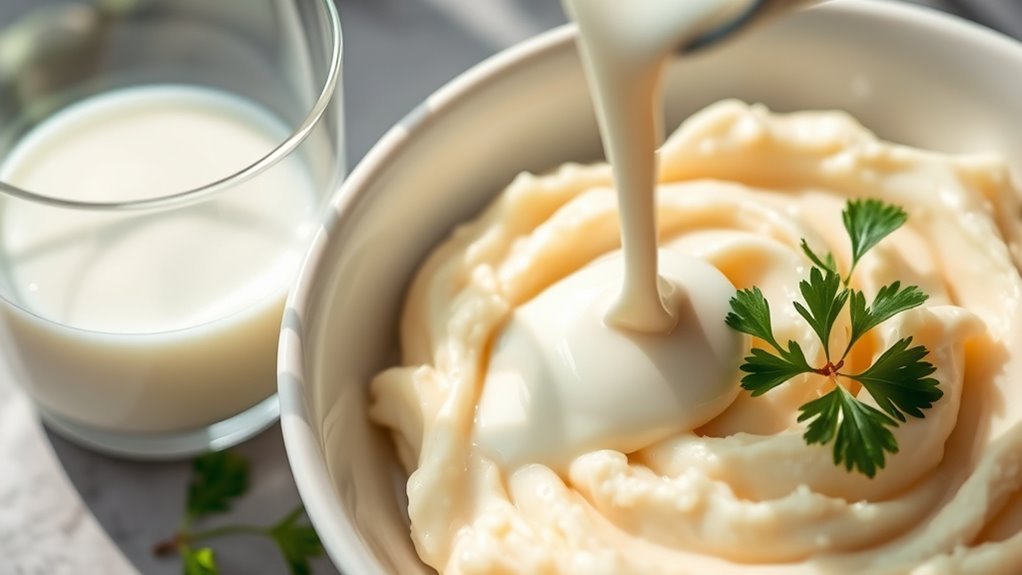
How Heavy Cream Can Be Substituted for Milk in Recipes
Think of milk and heavy cream as two sides of the same coin—both essential but distinct in texture and richness. When you don’t have milk on hand, reaching for heavy cream might seem straightforward, but it requires a bit of finesse to get it right. Understanding how heavy cream can be substituted for milk in recipes is key to maintaining the desired flavor and consistency.
You’ll want to balance their differences without compromising your recipe’s outcome. Heavy cream is much thicker and richer than milk, so adjustments are necessary. Let’s explore how you can make this substitution work smoothly in your cooking.
Understanding the Role of Milk and Heavy Cream in Recipes

Although milk and heavy cream may seem interchangeable, they play distinct roles in recipes due to their different fat contents and textures. Milk contains about 3-4% fat, offering lighter hydration that supports essential chemical reactions in baking, such as leavening and binding.
Heavy cream, with its 36-40% fat content, brings greater richness, moisture, and a velvety texture that enhances flavor and mouthfeel. When you consider substitution, it’s important to remember that heavy cream’s richness can alter a recipe’s texture and moisture balance.
Milk’s lower fat content allows for specific hydration levels vital in baking, while heavy cream’s higher fat can overwhelm those processes if not adjusted. Understanding these differences helps you make informed choices to maintain the desired flavor, texture, and appearance in your dishes.
Methods to Substitute Heavy Cream for Milk

When you need to replace milk with heavy cream in a recipe, you have several effective methods to maintain the right balance of fat and liquid.
The simplest substitute is mixing heavy cream with water in a 1:1 ratio, which closely mimics whole milk’s consistency. You can adjust this ratio by adding more water if you want less richness and thickness.
Another homemade option involves combining 1/4 cup melted unsalted butter with 3/4 cup milk to replicate heavy cream’s richness. These methods let you tailor the fat content and texture to your recipe’s needs.
Effects of Using Heavy Cream Instead of Milk on Texture and Flavor

Since heavy cream contains more fat than milk, using it in your recipes considerably boosts richness and creaminess.
Heavy cream’s higher fat content significantly enhances the richness and creaminess of your dishes.
The increased fat content enhances the texture, making baked goods moister and denser than when you use milk.
You’ll notice a velvety mouthfeel that adds indulgence to both sweet and savory dishes.
However, this richness comes with a trade-off: the density can reduce the lightness and delicate crumb often expected in certain recipes.
The flavor also becomes more pronounced and richer, which can elevate the overall taste but might overpower subtler notes.
When you substitute heavy cream for milk, you create a texture and flavor profile that’s distinctly fuller and more luxurious, perfect when you want a moist, decadent finish instead of a lighter, airier result.
Practical Tips for Adjusting Recipes When Substituting
To successfully substitute heavy cream for milk, you’ll want to dilute the cream with an equal amount of water to maintain the right liquid volume in your recipe. This recipe adjustment helps balance the fat content, approximating the richness of whole milk.
When substituting, keep in mind that heavy cream can alter the texture, often making baked goods denser and richer. If you prefer a lighter flavor or consistency, add a bit more water or milk to your diluted mixture.
Always test small batches first to see how the increased fat affects your baking’s outcome.
Dairy-Free and Alternative Milk Substitutes Compared
Although dairy-free and alternative milk substitutes vary widely in flavor and texture, you can find options that suit nearly any recipe or dietary need. When substituting heavy cream, consider coconut milk for its rich creaminess and tropical hint, or almond milk for a lighter, nutty touch.
Plant-based creams like cashew add richness but won’t whip like dairy cream. Here’s a quick comparison:
| Milk Alternative | Best For |
|---|---|
| Coconut Milk | Creaminess, rich sauces |
| Almond Milk | Light recipes, smoothies |
| Plant-Based Cream | Sauces, soups (not whipping) |
Choosing the right dairy-free substitute depends on the recipe’s texture and flavor needs. Each milk alternative offers unique creaminess, helping you keep dishes delicious without dairy.
Frequently Asked Questions
What Happens if You Use Heavy Cream Instead of Milk in a Recipe?
If you use heavy cream instead of milk, you’ll get a richer, creamier texture and flavor. Your dish might be denser and thicker, so you’ll want to adjust liquid amounts to keep the right consistency.
How to Substitute Heavy Cream for 1 Cup of Milk?
Like a painter blending colors, you can mix ½ cup heavy cream with ½ cup water to replace 1 cup milk. This keeps your dish rich without overwhelming it, balancing flavor and texture perfectly.
How Does Heavy Cream Affect Baking Recipes?
You’ll notice heavy cream makes your baked goods richer, moister, and denser. It can create a more tender crumb and enhance flavor, but it might also make your treats rise less and appear more golden.
Is It Better to Bake With Heavy Cream or Milk?
Choosing between heavy cream or milk is like picking between velvet and cotton. Go for heavy cream if you want richness and moisture.
Choose milk if you prefer lighter, airier baked treats with fewer calories and fat.
Conclusion
When you substitute heavy cream for milk, remember that a little goes a long way—like biting off more than you can chew. Mixing equal parts heavy cream and water helps keep your recipe balanced, while adding melted butter to milk can mimic cream’s richness.
Adjust thoughtfully to maintain flavor and texture, and you’ll turn simple swaps into delicious successes. With these tips, you’ll never be caught between a rock and a hard place in the kitchen again.
By following these guidelines on how heavy cream can be substituted for milk in recipes, you ensure your dishes stay creamy and flavorful without compromise.