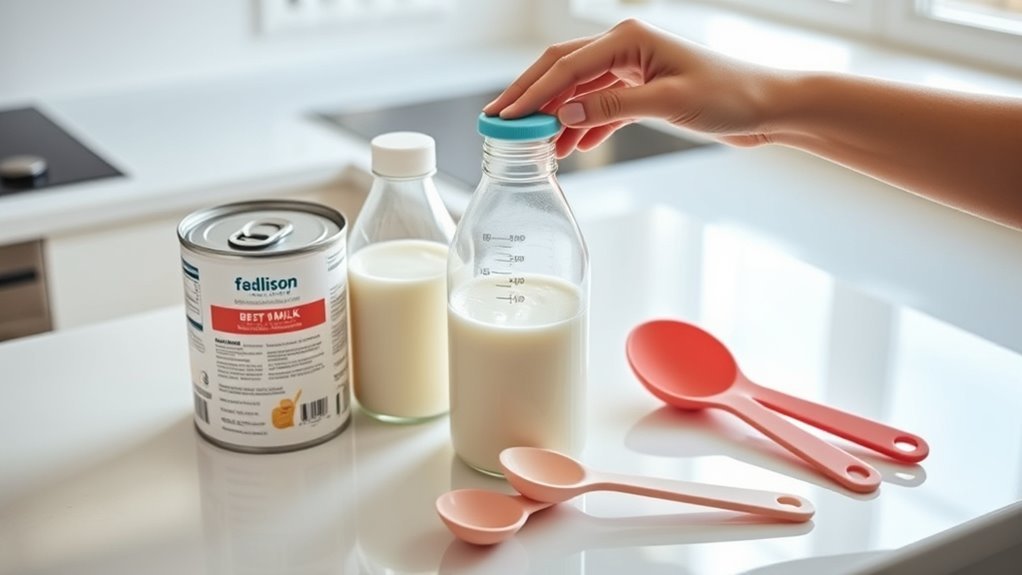
How to Mix Breast Milk and Formula Safely: Step-by-Step Guide
If you’re thinking about combining breastmilk and formula, it’s important to do it safely to protect your baby’s health. Mixing breastmilk and formula milk safely involves careful handling and preparation. You’ll want to handle everything with care—from choosing the right formula to preparing and storing the milk properly.
Getting these steps right can make a big difference in your little one’s comfort and nutrition. But what exactly should you watch out for when mixing these two feeding options? Understanding the best practices ensures your baby gets the benefits of both without any risks.
Understanding the Benefits of Combining Breastmilk and Formula

Why consider combining breastmilk and formula? Combination feeding offers you nutritional benefits by blending breast milk with formula to meet your baby’s evolving needs. This approach supports infant nutrition while accommodating your feeding schedule, especially if you’re returning to work or facing low milk supply.
By supplementing breast milk with formula, you ensure your baby receives consistent nourishment without stressing your milk production. You can pump breast milk regularly to maintain supply and safely mix it with formula, making feeding flexible for you and other caregivers.
Combination feeding also helps share feeding responsibilities easily. Overall, this method balances your baby’s nutritional needs and your lifestyle, making supplementing with formula a practical, safe choice when done thoughtfully.
Choosing the Right Formula for Your Baby

After deciding to combine breastmilk with formula, choosing the right formula becomes an important step. Your formula selection should focus on infant nutrition, opting for an iron-fortified, age-appropriate formula. Look for added prebiotics to aid digestion and support immune health.
Always check the expiration date and pick products from reputable brands to guarantee formula safety. If your baby has special needs, consult your pediatrician for specialized formulas like hypoallergenic or lactose-free options.
| Factor | What to Look For | Why It Matters |
|---|---|---|
| Formula Type | Iron-fortified, age-appropriate | Supports healthy growth |
| Ingredients | Prebiotics, probiotics | Enhances digestion, immunity |
| Safety Checks | Expiration date, reputable brands | Ensures formula safety |
Preparing Formula Safely and Accurately

When you prepare formula, following the manufacturer’s instructions exactly guarantees your baby gets the right nutrition and stays safe.
For proper formula preparation, always use the correct water-to-powder ratio specified on the packaging.
Start with sterilized bottles, nipples, and utensils to maintain hygiene and prevent contamination.
Use boiled, cooled water to mix the formula, then add expressed breast milk only after the formula has cooled to preserve nutrients.
Employ gentle mixing techniques like swirling or light shaking to avoid foam and air bubbles, which can cause discomfort.
Feed your baby immediately and discard any leftover milk within one hour to ensure infant safety.
Proper storage and safe mixing habits are essential for healthy feeding and peace of mind.
Proper Hygiene Practices for Mixing Feedings
Maintaining proper hygiene is just as important as accurate preparation when mixing breastmilk and formula. Before you start, always wash your hands thoroughly with soap and water for at least 20 seconds to prevent bacteria contamination.
Sterilize bottles, nipples, and utensils by boiling them for at least 5 minutes or using a sterilizer to ensure they’re clean and sanitized. Use only sanitized surfaces during preparation to avoid contamination.
Prepare formula with safe, cooled boiled water. Let it sit for at least 15 minutes after boiling to reduce bacteria risks.
After feeding, discard any leftover milk or formula that’s been at room temperature for more than one hour.
These steps keep your baby’s feeding safe by minimizing bacteria growth and maintaining proper hygiene throughout the process.
Step-By-Step Guide to Mixing Breastmilk With Formula
Although mixing breastmilk with formula might seem tricky at first, following a clear step-by-step process makes it straightforward and safe. Start by preparing the formula separately, using sterilized bottles and utensils, and follow the manufacturer’s preparation guidelines carefully.
Let the formula cool to room temperature or slightly warmer before mixing. Gently add the expressed breast milk to the prepared formula, either directly in the bottle or in a separate clean container. Mix thoroughly by swirling or gently shaking to avoid foaming. For safety, feed your baby the mixture promptly within one hour and discard any leftovers to prevent bacterial growth.
Safe Storage Guidelines for Mixed Milk Bottles
Because mixed bottles combine perishable ingredients, you should refrigerate them immediately and use them within 24 hours to keep your baby safe. Proper refrigeration at or below 40°F (4°C) slows bacterial growth and extends the shelf life of your mixed milk.
Store the milk in clean, airtight containers to maintain freshness. If you prepare bottles ahead, label each with the date and time to follow safety guidelines easily.
Remember, any leftovers from feeding must be discarded after just one hour at room temperature to prevent contamination. Also, never refreeze thawed milk or milk that’s been mixed.
Following these storage rules helps ensure your baby gets safe, nutritious milk every time without risking bacterial growth or spoilage.
Recognizing Common Baby Reactions to Combo Feeding
Once you’ve mastered storing mixed milk safely, you’ll want to pay attention to how your baby responds to combo feeding. You might notice fussiness, gas, or stool changes as your little one adjusts to the new feeding routine.
Some babies experience digestive discomfort or colic temporarily. If your baby shows signs of sensitivity or a reaction like reluctance to feed, watch closely. It might signal an allergy or intolerance.
Most infants adapt within days, but persistent symptoms need medical advice.
| Symptom | Possible Cause | What to Watch For |
|---|---|---|
| Fussiness | Adjustment, sensitivity | Duration, feeding refusal |
| Gas | Digestive discomfort | Frequency, severity |
| Stool Changes | Formula introduction | Color, consistency |
| Colic | Reaction to feeding routine | Intensity, length of episodes |
Tips for Easing Your Baby’s Transition to Mixed Feeding
As you introduce formula into your baby’s diet, start slowly by replacing one breastfeeding session with a bottle over several days to help your little one adjust comfortably.
Use bottles with slow-flow nipples to mimic breastfeeding and reduce nipple confusion during this baby shift.
Offer formula when your baby is hungry but calm, increasing acceptance and easing fussiness.
Always follow proper formula preparation and formula safety guidelines, ensuring the milk is at a suitable temperature.
Maintain a consistent feeding schedule and routine to help your baby adapt smoothly to mixed feeding.
Remember to practice proper storage of prepared formula to keep it safe.
Patience is essential; allow your baby time to get used to bottle feeding without forcing changes, supporting a gentle and successful transition.

Monitoring and Maintaining Milk Supply While Combo Feeding
To keep your milk supply steady while combo feeding, you need to nurse or pump regularly to stimulate production.
Balancing breastfeeding and formula requires attention to maintain milk production and monitor your baby’s health.
- Stick to a consistent feeding schedule to avoid long gaps without stimulation.
- Pump after feedings or between nursing sessions to boost milk volume and prevent supply decline.
- Track diaper output and baby weight gain as indicators of sufficient milk supply.
- Store breastmilk properly to make certain safe supplementing alongside formula.
Frequently Asked Questions
How to Safely Combine Breast Milk and Formula?
You should prepare formula first, then cool it. Pour formula into a sterilized bottle, add breast milk, and feed immediately or refrigerate up to 24 hours.
Always discard leftovers after one hour to stay safe.
What Is the 4 4 4 Rule for Breast Milk?
The 4-4-4 rule means you can keep breast milk for 4 hours at room temperature, 4 days in the fridge, or 4 months in the freezer.
This helps you store milk safely and keep it fresh.
What Are the Disadvantages of Mixing Breastmilk and Formula?
You might think mixing breastmilk and formula is simple, but it can cause bacterial growth, spoilage, wasted milk, reduced supply, and digestive issues for your baby.
What Is the 3-3-3 Rule for Breast Milk?
The 3-3-3 rule means you can leave freshly expressed breast milk at room temperature for 3 hours, store it in the fridge for up to 3 days, or freeze it safely for 3 months.
Conclusion
Mixing breastmilk and formula is like blending two colors on a painter’s palette—each adds its unique shade to create a perfect masterpiece for your baby’s nourishment. By following safe preparation and storage steps, you’re ensuring every drop is as pure and loving as a parent’s touch.
Trust your instincts, keep hygiene a priority, and enjoy the journey of feeding your little one with confidence and care. Remember, proper mixing, handling, and storage are essential for your baby’s health and safety.
By combining breastmilk and formula safely, you’re crafting the best start possible for your child’s growth and development.