How Long Can Milk Be Out of the Fridge Safely Before Spoiling
You might not realize how quickly milk can spoil once it’s out of the fridge. Knowing how long milk can be out of the fridge safely is important to prevent waste and health risks. Leaving it on the counter for too long can turn it sour and unsafe to drink.
But exactly how long is too long? The answer depends on factors like temperature and the type of milk you’re using. Understanding these details can help you avoid waste and keep your milk fresh longer.
Understanding Milk Safety Guidelines

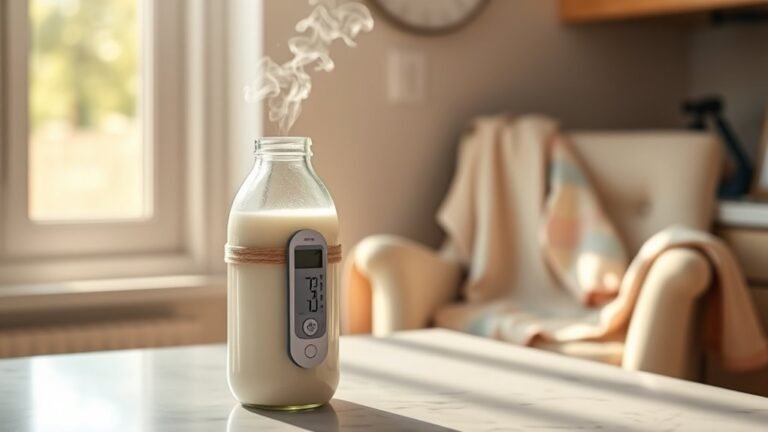
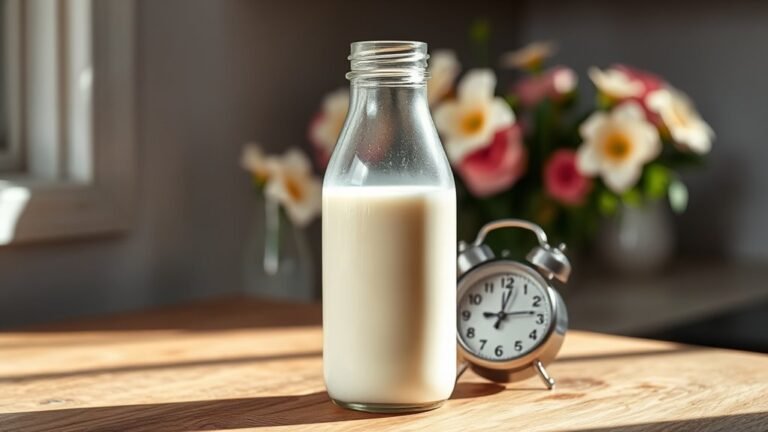
Because milk spoils quickly at room temperature, you shouldn’t leave it out for more than two hours. Following proper milk safety and refrigeration guidelines helps prevent spoilage bacteria from multiplying in the danger zone between 40°F and 140°F.
Milk spoils rapidly at room temperature; don’t leave it out over two hours to stay safe.
In this temperature range, bacteria growth accelerates and increases the risk of foodborne illness and food poisoning. Pasteurized milk still contains bacteria that can grow rapidly if left unrefrigerated.
To protect your health, store milk at 36-38°F, ideally in the back of the fridge, to slow bacteria growth and extend storage time.
Watch for spoilage signs like sour smell or curdling, and discard milk left out too long. Ignoring these rules can lead to foodborne illness, so always respect recommended storage times to keep your milk safe.
The Impact of Temperature on Milk Freshness

When milk stays within the “danger zone” of 40°F to 140°F, bacteria multiply rapidly, compromising its freshness and safety.
At room temperature, usually between 68-72°F, bacterial growth in milk accelerates, cutting the safe duration to about two hours.
If the temperature climbs above 90°F, bacterial proliferation spikes, reducing that safe window to just one hour.
Proper refrigeration at or below 40°F is essential for controlling temperature and slowing dairy microbiology processes, helping you prevent milk spoilage.
Since milk is a highly perishable food, consistent temperature control is critical for food safety.
Understanding these temperature effects helps you keep milk fresh longer and avoid spoilage signs.
Always prioritize refrigeration to minimize bacterial growth and preserve milk quality.
Signs That Milk Has Spoiled

If you’ve ever poured milk and noticed a sour smell or lumpy texture, those are clear signs it’s spoiled. Spoiled milk usually gives off a strong sour smell that triggers immediate odor detection.
Visual signs like curdling, clumping, or unusual sliminess also indicate bacterial growth and spoilage. When milk tastes off or bitter, it’s another red flag you shouldn’t ignore.
Even if milk looks and smells fine, consuming expired milk or milk left out too long risks harmful spoilage. Paying attention to these signs helps you avoid drinking milk that’s unsafe.
Trust your senses. Sour smell, clumping, sliminess, and off-taste all warn you that the milk has gone bad and should be discarded promptly to prevent illness.
Differences Between Pasteurized and Raw Milk Storage
Although both pasteurized and raw milk require refrigeration, you need to handle them differently to keep them safe. Pasteurized milk undergoes pasteurization, which kills most harmful bacteria and extends its shelf life.
Pasteurized milk is safer and lasts longer due to bacteria-killing pasteurization, unlike raw milk.
You can leave pasteurized milk out at room temperature for up to 2 hours without significant safety risks.
In contrast, raw milk contains naturally occurring bacteria and pathogens that increase the risk of rapid spoilage and bacterial growth if left unrefrigerated.
Its storage duration at room temperature is much shorter, so you should refrigerate raw milk promptly to prevent spoilage.
For both types, refrigeration is critical to maintain safety and slow bacterial growth.
Understanding these differences helps you minimize spoilage and ensure the milk you consume stays fresh and safe.
How Container Size and Storage Location Affect Milk Quality
Since milk’s temperature directly impacts its freshness, the size of the container and where you store it in the fridge play crucial roles in maintaining its quality. You should consider these factors to reduce spoilage risk and bacterial growth:
-
- Container size matters. Larger bottles stay colder longer due to their thermal mass, while smaller containers warm up faster, increasing bacterial growth.
- Storage location affects fridge temperature exposure. Milk kept in the coldest part of the fridge stays fresher compared to milk stored in the refrigerator door, which faces frequent temperature fluctuations.
- Half-empty bottles cool more slowly, raising spoilage risk.
Shelf Life of Milk After Opening
Once you open a container of milk, you need to refrigerate it promptly and keep it sealed to maintain its freshness and safety. Proper refrigeration at or below 40°F slows bacterial growth, extending the shelf life of opened milk to about seven days.
Storing milk at higher temperatures accelerates spoilage, reducing safe consumption time. Always check the expiration date but remember it applies to unopened milk; once opened, microbiology dictates freshness depends on storage conditions.
Be alert for signs of spoilage like sour odor, curdling, or texture changes. These indicate bacterial contamination and that the milk should be discarded. Maintaining correct storage temperature and sealing the container tightly are essential to prolong milk’s quality and guarantee it remains safe for consumption after opening.
Handling and Storing Alternative Milks
Just like dairy milk, alternative milks require proper handling and storage to stay fresh and safe. Whether you choose plant-based or dairy options, keeping them at the right temperature is vital to prevent spoilage. Here’s what you need to know about handling and storing alternative milks:
- Unopened shelf-stable plant-based milks can sit at room temperature for months, but once opened, refrigerate immediately and use within 7 to 10 days.
- Refrigerated non-dairy milks generally have a shelf life of 7 to 10 days after opening when kept at or below 40°F to guarantee safety.
- Avoid leaving alternative milks especially those not ultra-pasteurized out too long, as higher temperatures speed up spoilage.
Always check packaging for specific storage instructions to maximize freshness and safety.
Best Practices to Extend Milk Freshness
To keep your milk fresh longer, store it in the coldest part of your fridge, ideally between 36 and 38°F. Proper milk storage is vital for dairy preservation and extending shelf life. Always refrigerate milk immediately after purchase, minimizing out of fridge time to prevent bacterial growth.
Avoid drinking directly from the container to reduce contamination risks. Maintain strict temperature control, as warmer conditions accelerate spoilage and compromise food safety. Keep milk sealed tightly to protect it from airborne bacteria.
Regularly inspect your milk for spoilage signs like sour smell or curdling, especially if it’s been left out temporarily. By following these best practices, you’ll reduce spoilage risks and keep your milk safe and fresh for longer periods.

Frequently Asked Questions
Can I Drink Milk Left Out for 4 Hours?
You shouldn’t drink milk left out for 4 hours because harmful bacteria could have grown, even if it smells fine.
To stay safe, it’s best to discard it and avoid the risk of foodborne illness.
How Long Can Milk Be Unrefrigerated and Still Be Good?
You shouldn’t leave milk unrefrigerated for more than 2 hours at room temperature, or just 1 hour if it’s above 90°F.
After that, bacteria grow quickly, so it’s best to toss it.
How Long Is Breastmilk Good After Being Taken Out of the Fridge?
You can use breast milk within 4 hours after taking it out of the fridge.
If it’s warmed, you’ve got just 2 hours before it’s best to discard it to keep your baby safe and healthy.
How Long Will Milk Stay Fresh at Room Temperature?
You shouldn’t leave milk out at room temperature for more than two hours.
If it’s hotter than 90°F, cut that time to just one hour to keep it safe and prevent spoilage or illness.
Conclusion
You’d think milk could survive all day on your kitchen counter, but it’s actually a ticking time bomb after two hours at room temperature—or just one hour if it’s really hot.
To keep your milk fresh and safe, always pop it back in the fridge quickly, ideally below 40°F. Don’t risk it; if milk’s been out too long, toss it before it turns your stomach into a science experiment!
Remember, how long milk can be out of the fridge safely depends on the temperature and time, so always refrigerate milk promptly to avoid spoilage and foodborne illness.