How Long Can Milk Stay Out of the Fridge Safely? Storage & Safety Guide
You might think leaving milk out for a while won’t cause much harm, but even short periods at room temperature can lead to spoilage faster than you expect. How long can milk stay out of the fridge safely? This question is important because bacteria start multiplying quickly when milk is unrefrigerated, affecting both taste and safety.
Knowing exactly how long milk can stay unrefrigerated—and under what conditions—can save you from wasting it or risking your health. So, what’s the safe window before milk turns bad? Understanding these details helps you handle milk properly and avoid spoilage.
Understanding Milk Spoilage and Safety

Because milk spoils quickly at room temperature, understanding how bacteria grow and affect its safety is vital. When milk sits between 40°F and 140°F, the danger zone, bacterial growth accelerates, causing milk spoilage.
Milk spoils fast at room temperature because bacteria multiply rapidly between 40°F and 140°F.
You’ll notice sour smells, curdling, or clumps as bacteria multiply and break down milk components.
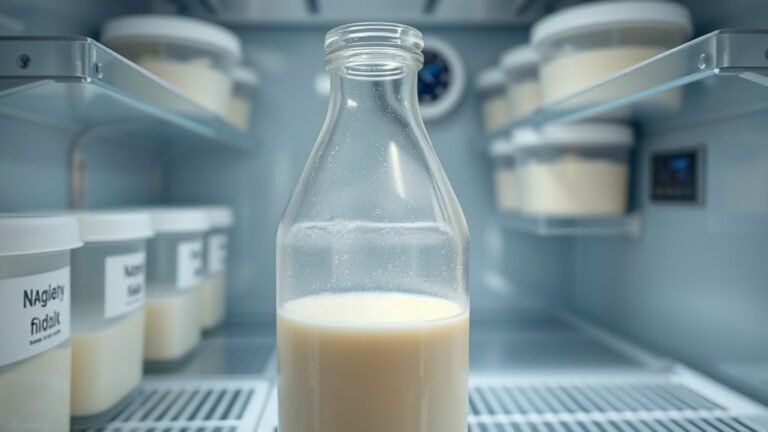
Refrigeration safety plays a key role here; keeping milk cold slows bacterial growth considerably, extending its freshness.
Once milk leaves the fridge, bacteria can double every 20 minutes, increasing the risk of contamination.
If you consume milk that’s been out too long, you risk foodborne illnesses from harmful bacteria like Salmonella or E. coli.
Recommended Time Limits for Leaving Milk Out

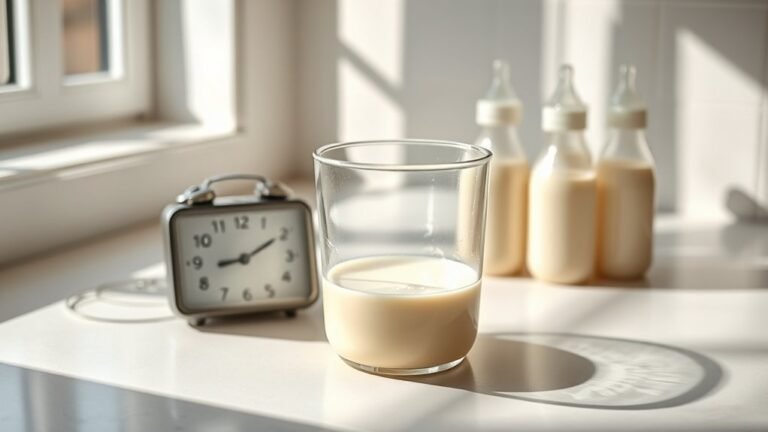
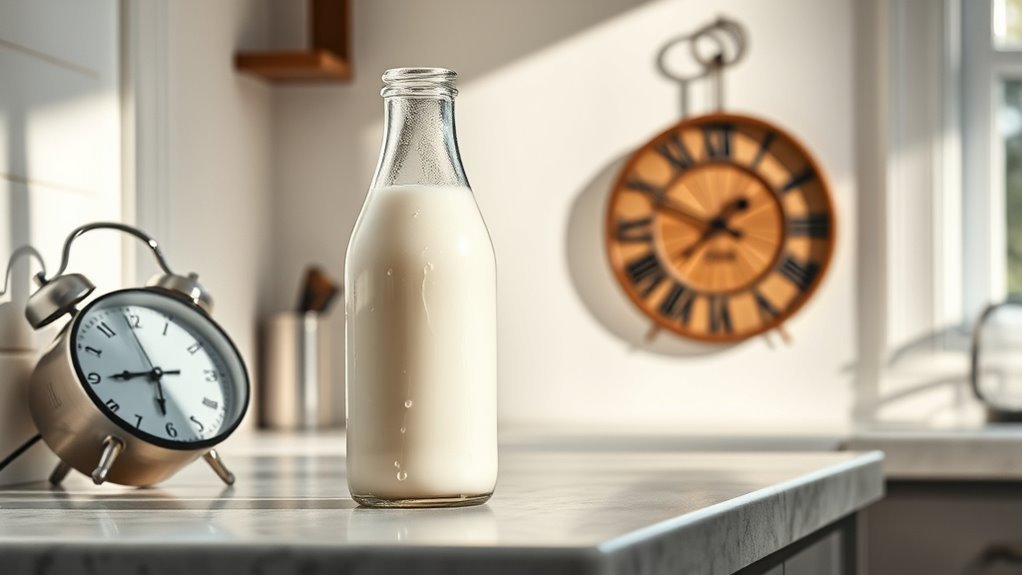
Although milk might seem okay after sitting out for a while, you shouldn’t leave it unrefrigerated for more than 2 hours at room temperature. The FDA recommends this limit to prevent rapid bacterial growth that leads to spoilage and increases the risk of foodborne illness.
If the temperature climbs above 90°F (32°C), you need to cut that safe window down to just 1 hour.
Leaving milk out longer than these guidelines causes sour taste and curdling, signaling it’s no longer safe to consume.
To keep milk fresh and safe, always return it to the refrigerator promptly after use. Following these recommended time limits helps you avoid spoilage and protects your health by minimizing harmful bacteria growth in the milk.
Impact of Temperature on Milk Quality

Temperature plays a major role in how long milk stays fresh once it’s out of the fridge. When milk’s temperature rises, bacteria multiply faster, increasing the risk of spoilage. Here’s what you need to know:
- Keep milk at or below 40°F to slow bacterial growth and maintain quality.
- Between 40°F and 140°F, the “danger zone,” bacteria grow rapidly, leading to quick spoilage.
- At room temperature (68-72°F), milk starts spoiling within 2 hours, but if the temperature exceeds 90°F, spoilage can occur in just 1 hour.
Signs That Milk Has Gone Bad
How can you tell if milk has gone bad? Pay attention to key signs of spoilage to guarantee food safety. Spoiled milk often gives off a sour or rancid odor that’s noticeably different from fresh milk.
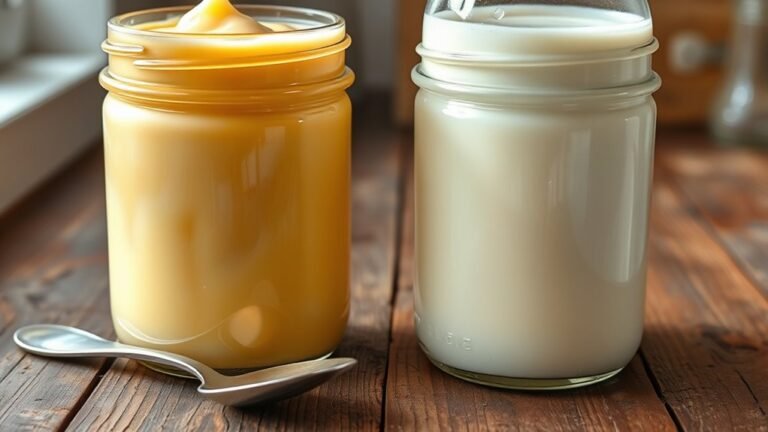
You might notice curdling, clumping, or a lumpy texture, clear indications that the milk is no longer safe to consume. An off-taste, like sour or bitter flavors, also signals spoilage.
Watch for changes in color, such as a yellowish tint, which suggests bacterial growth. Unusual thickness or sliminess on the milk’s surface is another red flag.
If you spot any of these signs of spoilage, it’s best to discard the milk immediately to avoid foodborne illness and keep your kitchen safe.
Differences Between Pasteurized and Raw Milk Storage
Because pasteurized milk undergoes heat treatment to kill most harmful bacteria, it tends to last longer under proper refrigeration than raw milk. Raw milk still contains naturally occurring microbes that can multiply quickly at room temperature.
Pasteurized milk lasts longer refrigerated, while raw milk contains microbes that multiply quickly at room temperature.
When storing milk, keep these differences in mind:
- Pasteurized milk can stay fresh in the refrigerator for 5–7 days, as spoilage bacteria grow slower due to heat treatment.
- Raw milk spoils rapidly outside the fridge because its natural bacteria multiply quickly, often within hours.
- Both types must be kept at or below 40°F, but raw milk demands extra care to avoid health risks from pathogens.
How Container Size and Opening Affect Milk Freshness
Although milk quality depends heavily on refrigeration, the size of the container and how often you open it play crucial roles in maintaining freshness.
Smaller containers warm up faster due to a higher surface-area-to-volume ratio, which speeds bacterial growth and increases spoilage risk.
Larger containers, once opened, tend to stay cooler longer because their volume acts as a thermal buffer.
However, every time you open the container, you expose the milk to air and bacteria from hands or utensils, accelerating spoilage regardless of container size.
Milk stored in half-empty bottles is especially vulnerable to temperature changes and contamination. To keep milk fresh longer, minimize the frequency of opening and opt for larger, sealed containers whenever possible.
Storing Alternative Milks Outside the Fridge
When managing milk storage, it’s important to remember that not all milk needs constant refrigeration. Shelf-stable alternative milks like almond, oat, and soy can safely stay out of the fridge unopened until their expiration date.
However, once opened, refrigeration is essential to prevent spoilage. Here’s what you need to keep in mind:
- Unopened shelf-stable milks can be stored at room temperature for months.
- Once opened, always refrigerate alternative milks and use them within 7 to 10 days.
- Avoid leaving opened plant-based milks out more than 2 hours, as warm temperatures increase spoilage risk.
Best Practices for Storing Milk at Home
To keep your milk fresh and safe, store it in the coldest part of your fridge, usually the back, where temperatures stay between 36 and 38°F. Proper milk storage starts with keeping it in its original sealed container to avoid contamination.
Never transfer milk to other containers, as this can increase spoilage risk.
Prioritize refrigerator safety by refrigerating milk immediately after purchase and minimize its time outside the fridge.
Avoid storing milk in the fridge door, where temperature fluctuates frequently, increasing spoilage chances.
Limit milk’s exposure to room temperature to no more than two hours, or one hour if it’s above 90°F.
Following these best practices helps guarantee spoilage prevention and extends your milk’s freshness at home.
Health Risks of Consuming Spoiled Milk
If you drink spoiled milk, you risk food poisoning that can cause nausea, vomiting, diarrhea, and stomach cramps. Spoiled milk contains harmful bacteria like Salmonella, E. coli, and Listeria, which can lead to serious illness.
These bacteria produce toxins that boiling won’t destroy, so heating spoiled milk won’t make it safe. Here’s what you need to know:
- Drinking milk left out too long increases bacteria growth, raising your risk of food poisoning.
- Even if it smells or tastes slightly off, harmful bacteria might already be present.
- People with weakened immune systems are especially vulnerable and should avoid spoiled milk entirely.
To stay safe, always refrigerate milk promptly and avoid consuming it once it’s spoiled.

Frequently Asked Questions
Can I Drink Milk Left Out for 4 Hours?
You shouldn’t drink milk left out for 4 hours because bacteria can grow rapidly, making it unsafe. Even if it smells fine, it could cause illness.
Always refrigerate milk promptly to stay safe.
How Long Can Milk Be Unrefrigerated and Still Be Good?
Imagine you left milk out during a picnic; you shouldn’t drink it if it’s been over 2 hours unrefrigerated.
If it’s hotter than 90°F, cut that time to 1 hour to stay safe.
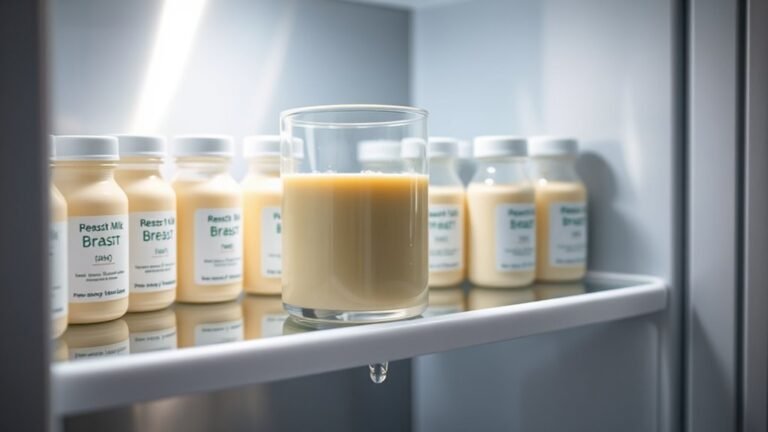
How Long Is Breastmilk Good After Being Taken Out of the Fridge?
You should use breastmilk within 2 hours after taking it out of the fridge.
If the room temperature is between 77°F and 86°F, use it within 1 hour to keep it safe and fresh.
How Do the Amish Keep Their Milk Cold?
Before smartphones, you’d see Amish folks keeping milk cold using natural methods like springhouses, running water, and underground cellars.
You can try their trick: place milk in cool, shaded areas with cloth coverings soaked in water.
Conclusion
You shouldn’t let milk sit out like it’s waiting for a miracle—two hours tops at room temperature, or just one hour if it’s hotter than 90°F. Going beyond that risks turning your milk into a bacteria party you don’t want to crash.
Always refrigerate it promptly and watch for sour smells or curdling. By following these simple steps, you’ll keep your milk fresh and safe, avoiding any unpleasant surprises in your glass.
Remember, proper milk storage and handling are key to ensuring milk safety. Keeping milk refrigerated and limiting its time out of the fridge helps prevent spoilage and maintains its quality for your enjoyment.