French Toast Without Milk: Simple Substitutes That Work
Did you know that nearly 10% of people in the U.S. avoid dairy due to allergies or intolerance? If you’re one of them, you might think French toast is off-limits. However, making French toast without milk is easier than you might expect.
By swapping out milk for simple alternatives and mastering a few key steps, you can enjoy this classic breakfast without compromise. Let’s explore how to get that perfect texture and flavor without using any milk.
With these tips, you’ll be able to create delicious milk-free French toast that everyone will love. Say goodbye to dairy and hello to a tasty, inclusive breakfast option!
Understanding Milk-Free French Toast

How can you enjoy delicious French toast without using milk? You don’t actually need milk to make a satisfying, milk-free French toast. The key lies in the egg mixture you prepare.
Instead of dairy, you can use water or plant-based milk like almond or soy milk to soak your bread slices. This approach has been around since 2006, proving milk isn’t essential for that classic flavor and texture.
When cooked, the egg mixture creates a crispy exterior while keeping the inside tender and fluffy.
You’ll find that milk-free French toast offers the same golden crust and rich taste you love, making it a perfect alternative if you’re avoiding dairy or just want to try something different.
Essential Ingredients for Milk-Free French Toast

Now that you know milk isn’t necessary for tasty French toast, let’s focus on what ingredients you’ll need to make it just right. Start with eggs as your base; they provide structure and richness.
Choose thick slices of bread like Challah, brioche, or Texas toast. They soak up the egg mixture well without falling apart.
Opt for thick bread slices like Challah or brioche to absorb the egg mixture without becoming soggy.
For moisture, you can use water for simplicity or opt for plant-based milk like almond, oat, coconut, or soy to add extra flavor and creaminess.
Whisk the eggs with vanilla and your favorite spices. Cinnamon works perfectly to create a flavorful batter.
This combination guarantees your French toast is delicious, moist, and full of taste, all without relying on traditional dairy milk.
Step-by-Step Preparation Guide

While preparing your milk-free French toast, start by whisking eggs, water, and vanilla extract in a shallow dish until smooth. This mixture forms the base of your recipe, providing flavor and moisture without milk.
Next, dip each bread slice into the egg mixture for about 10 seconds per side, making sure each piece is fully coated.
Heat a nonstick pan over medium-low heat and lightly grease it with butter or oil.
Place the soaked bread slices in the pan, cooking each side for 2-3 minutes until golden brown.
During the last minute of cooking, cover the pan to help the insides puff up and dry out.
This step-by-step method guarantees your milk-free French toast turns out perfectly every time.
Alternative Liquids to Replace Milk
Although traditional French toast recipes call for milk, you can easily substitute it with various liquids that keep your dish flavorful and moist. Water is a simple milk substitute that extends the egg mixture without altering the cooking time.
If you prefer dairy-free options, plant-based milk like almond, oat, coconut, or soy milk works wonderfully. Soy milk, in particular, mimics whole milk’s consistency, providing great flavor enhancement and maintaining a fluffy interior.
These milk substitutes also fit well with gluten-free options, ensuring everyone can enjoy your French toast. No matter which alternative liquid you choose, your egg mixture will remain balanced, and your cooking time stays consistent.
This flexibility lets you craft a delicious, moist French toast without milk, tailored to your dietary needs and taste preferences.
Tips for Perfect Texture and Flavor
To achieve the perfect texture and flavor in your French toast, start by choosing slightly stale or dry bread, which helps prevent sogginess and creates a crisp exterior.
Dip the bread briefly—about 10-15 seconds per side—into a well-seasoned egg mixture, including a touch of vanilla for added depth. Avoid soaking too long to maintain the right texture.
Cook the soaked bread on medium-high heat for 2-3 minutes per side until it turns golden brown with a crispy exterior.
For a tender interior, cover the toast during the last minute of cook time to steam and dry out the center. These simple tips ensure your French toast has a perfect balance of crispy outside and soft inside, bursting with flavor without milk.
Serving Suggestions and Variations
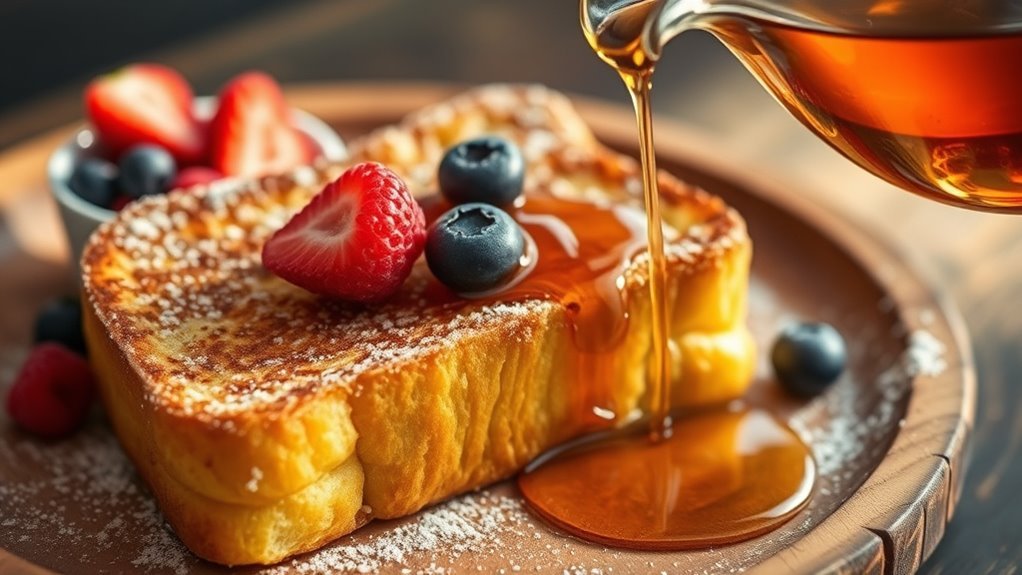
When serving your French toast without milk, you can easily elevate the dish by adding fresh fruits like strawberries or blueberries to brighten both flavor and appearance. Fresh berries and other fruit toppings add natural sweetness and vibrant color, making your plate inviting.
Drizzle maple syrup over your French toast for a classic touch, or try honey or caramel sauce for a variation. A dollop of whipped cream adds a light, indulgent feel, while crunchy toppings like chopped nuts or granola give a satisfying texture contrast.
For balanced breakfast ideas, serve your sweet French toast alongside savory sides like bacon or sausage. These serving suggestions and variations let you customize your meal to suit any mood or occasion, making your dairy-free French toast both delicious and versatile.
Frequently Asked Questions
What to Use Instead of Milk in French Toast?
You can use water, almond milk, soy milk, oat milk, or coconut milk instead of milk in French toast. These alternatives keep the texture right and add flavor, letting you enjoy French toast without dairy.
Can I Use Water Instead of Milk When Making French Toast?
You can use water instead of milk when making French toast, but expect a leaner, less creamy bite. To boost flavor, toss in vanilla or cinnamon. Your toast won’t drown in richness, but it’ll still shine.
What Can I Replace Milk With in a Recipe?
You can replace milk with plant-based milks like almond, soy, oat, or coconut milk for creaminess. Water works too but adds less richness.
Adjust eggs slightly if using water to keep your recipe balanced.
Can You Make Eggy Bread Without Milk?
Absolutely, you can create a delightful morning treat without milk. Just whisk eggs with a splash of water or vanilla, soak your bread, and fry until golden. You’ll enjoy a flavorful, fluffy eggy bread that’s simply irresistible.
Conclusion
Now that you know how to make delicious milk-free French toast, you can enjoy a classic breakfast without dairy worries. Did you know that over 65% of the global population is lactose intolerant? This simple swap lets you savor every bite without discomfort.
Using plant-based milk or water keeps your French toast just as tasty and fluffy. So go ahead—whip up your favorite flavors and enjoy a cozy, inclusive meal everyone can love!
For a perfect dairy-free breakfast, mastering how you make French toast without milk is key. It’s an easy and tasty way to cater to all dietary needs while still indulging in a beloved morning treat.