Does Almond Milk Need to Be Refrigerated for Storage?
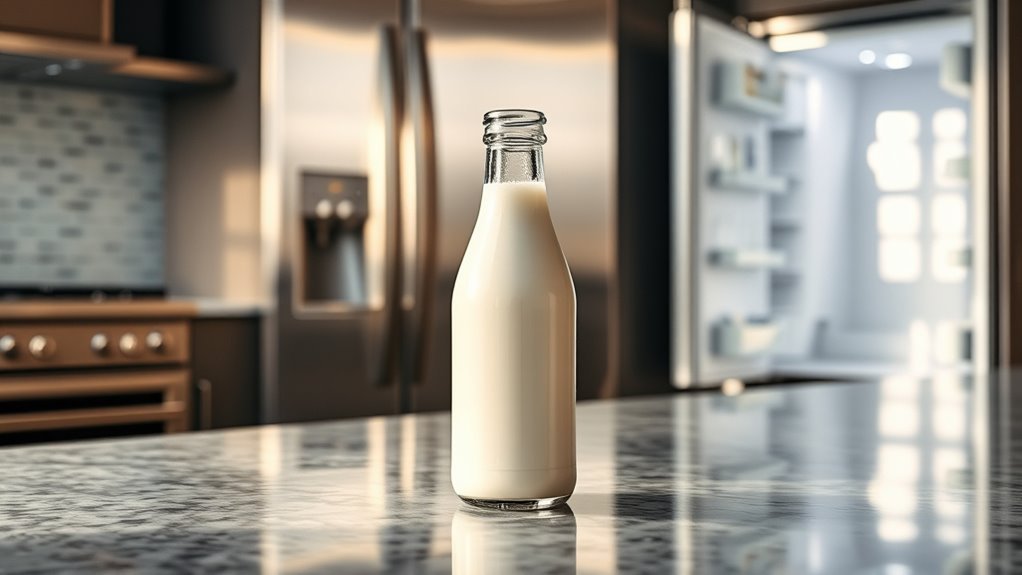
You only need to refrigerate almond milk after opening it. Unopened shelf-stable almond milk comes in aseptic cartons and can be stored in a cool, dry place without refrigeration. However, refrigerated almond milk should stay cold both before and after opening.
Always check the label for specific storage info and expiration dates. Keeping it sealed tightly and cold after opening helps maintain freshness. If you want to know more about proper storage and recognizing spoilage, keep exploring this topic.
Types of Almond Milk and Their Storage Requirements

Although almond milk comes in various types, each one requires specific storage methods to maintain freshness and safety. You’ll find two main kinds: shelf-stable and refrigerated.
Shelf-stable almond milk is usually sold in aseptic cartons and doesn’t need refrigeration until opened. Once opened, you must refrigerate it to prevent spoilage.
Shelf-stable almond milk stays fresh unrefrigerated until opened; then refrigeration is essential to avoid spoilage.
Refrigerated almond milk, on the other hand, is already kept cold at the store and must stay refrigerated both before and after opening.
You’ll also notice differences in additives and preservatives that affect how long each type lasts. For example, some brands add stabilizers to extend shelf life, while others keep it more natural, so you’ll want to check the label for storage instructions.
Following these guidelines guarantees your almond milk stays fresh longer.
How to Store Unopened Almond Milk

When you buy unopened almond milk, storing it properly depends on its type. Shelf-stable almond milk, which comes in aseptic cartons, doesn’t require refrigeration until you open it. Keep these cartons in a cool, dry place like your pantry, away from direct sunlight and heat sources.
On the other hand, refrigerated almond milk is already stored in the fridge at the store and should stay there until you’re ready to use it. Avoid leaving refrigerated almond milk out at room temperature for extended periods before opening.
Always check the expiration date on the packaging to guarantee freshness.
Proper Storage for Opened Almond Milk

Once you open almond milk, its storage needs change to keep it fresh and safe to drink. You’ll want to refrigerate it immediately to prevent bacterial growth.
Here’s how to store opened almond milk properly:
Properly store opened almond milk by sealing tightly and refrigerating promptly to maintain freshness and safety.
- Seal the container tightly after each use to minimize exposure to air.
- Keep it in the coldest part of your fridge, usually near the back, not the door.
- Use it within 7-10 days, as almond milk loses freshness quickly once opened.
- Avoid leaving it out at room temperature for extended periods to reduce spoilage risk.
Following these steps helps maintain the quality and safety of your almond milk after opening.
Signs That Almond Milk Has Spoiled
If you notice a sour smell or a change in texture, your almond milk has likely spoiled. Spoiled almond milk often develops a tangy, unpleasant odor that’s quite distinct from its usual mild scent.
You might also see clumps or curdling instead of a smooth, creamy consistency.
If the milk appears separated, with watery liquid on top and thicker parts below that don’t mix when shaken, it’s best to discard it.
Additionally, any off taste, bitterness, or unusual flavors indicate spoilage.
Sometimes, the color can darken or look cloudy instead of its normal creamy white.
When in doubt, trust your senses. If it smells, looks, or tastes off, don’t consume it to avoid potential digestive issues.
Tips to Extend the Shelf Life of Almond Milk
Recognizing the signs of spoiled almond milk helps you avoid wasting it unnecessarily. To extend its shelf life, handle and store it properly right from the start.
Identifying spoiled almond milk early prevents waste and ensures you store it correctly for longer freshness.
Here are four tips you can follow:
- Keep it cold: Refrigerate almond milk immediately after opening and store it at or below 40°F (4°C).
- Seal it tight: Always close the container tightly to prevent exposure to air and contaminants.
- Avoid cross-contamination: Use clean utensils and pour almond milk into a clean cup instead of drinking directly from the container.
- Check expiration dates: Consume almond milk before the printed date and within 7-10 days after opening for best freshness.
Following these steps helps you enjoy almond milk longer and reduces the risk of spoilage.
Differences Between Homemade and Store-Bought Almond Milk Storage
Although both homemade and store-bought almond milk require refrigeration, you’ll find their storage needs differ due to factors like preservatives, packaging, and shelf life.
Store-bought almond milk usually contains preservatives and comes in airtight, sterile packaging, allowing it to last longer even unopened. Once opened, you should consume it within 7-10 days.
Homemade almond milk, however, has no preservatives and is stored in regular containers, so it spoils faster. You’ll need to keep it refrigerated and use it within 3-5 days to avoid souring.
Also, homemade almond milk tends to separate, so give it a good shake before use. Understanding these differences helps you store each type properly and prevents waste.
Frequently Asked Questions
Can Almond Milk Be Used in Hot Recipes Without Curdling?
Yes, you can use almond milk in hot recipes without curdling if you heat it gently and avoid boiling. Stir constantly and add it gradually to hot mixtures to keep the texture smooth and prevent separation.
Is Almond Milk Safe for People With Nut Allergies?
Think of almond milk as a hidden forest where nut allergens dwell. If you’re allergic, you shouldn’t enter. You can’t risk exposure, so avoid almond milk and choose safer alternatives to protect your health.
How Does Almond Milk Compare Nutritionally to Dairy Milk?
Almond milk has fewer calories and less protein than dairy milk. You’ll get more calcium if it’s fortified, but it lacks dairy’s natural vitamins.
It’s great if you want a low-calorie, plant-based option.
Can Almond Milk Be Frozen for Long-Term Storage?
You might think freezing almond milk ruins its texture, but you can freeze it for long-term storage. Just thaw and shake well before use, as separation can happen but won’t affect safety or taste.
Does Almond Milk Contain Preservatives or Additives?
Almond milk often contains preservatives and additives like carrageenan, vitamins, and stabilizers to improve shelf life and texture.
You should check the label since some brands offer pure, additive-free versions if you prefer natural options.
Conclusion
Now that you know how to handle almond milk, storing it properly becomes second nature—like a trusted dance partner guiding your steps. Whether unopened or opened, keeping it chilled preserves its delicate flavor and freshness.
Remember, your almond milk’s shelf life is a fragile treasure; treat it well, and it’ll reward you with creamy goodness every time.
With these simple tips, you’ll keep spoilage at bay and enjoy every drop like a liquid gem. Proper storage and refrigeration are key to maintaining the quality and safety of your almond milk.