How Long Does Breast Milk Last in the Refrigerator
When you store breast milk in the refrigerator, it’s essential to know how long breast milk lasts in the refrigerator to ensure it stays safe and nutritious for your baby. Using the right containers and keeping the temperature steady can make a big difference in preserving the milk’s quality. But just how long can you trust that milk before it starts to lose its quality?
Understanding the storage limits and best practices can help you avoid waste and keep your baby healthy. Let’s explore what you need to know about storing breast milk in the refrigerator.
Recommended Containers for Storing Breast Milk

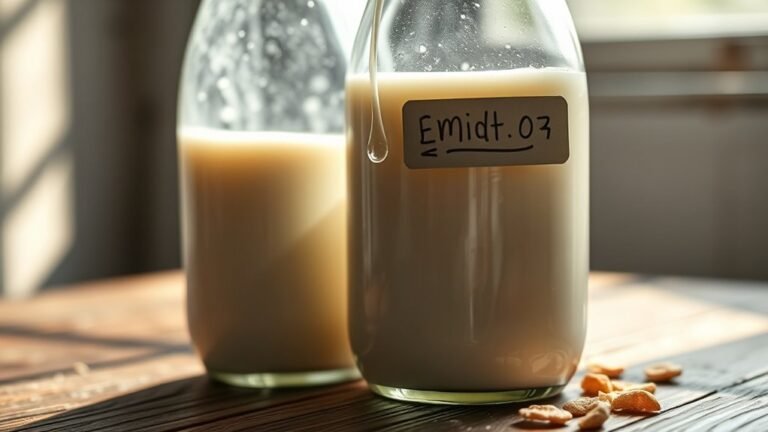
When storing breast milk, you should use clean, food-grade glass or BPA-free hard plastic containers with tight-fitting lids to keep the milk fresh and safe. These storage containers prevent contamination and preserve milk quality during refrigeration.
Before each use, practice thorough container sterilization to guarantee cleanliness. Specially designed breast milk bags are also suitable, but avoid household plastic bags or disposable liners as they lack durability and proper sealing.
Sterilize containers before use and choose specially designed breast milk bags over household plastic options.
Always check for lid tightness to avoid leaks or exposure to air. Use waterproof labels and a permanent marker for proper labeling, noting the date expressed.
Choosing containers made from food-grade materials ensures safety, and verifying their compatibility with refrigeration helps maintain milk’s nutritional value.
Following these guidelines keeps your stored breast milk safe and ready for feeding.
Optimal Refrigerator Storage Conditions

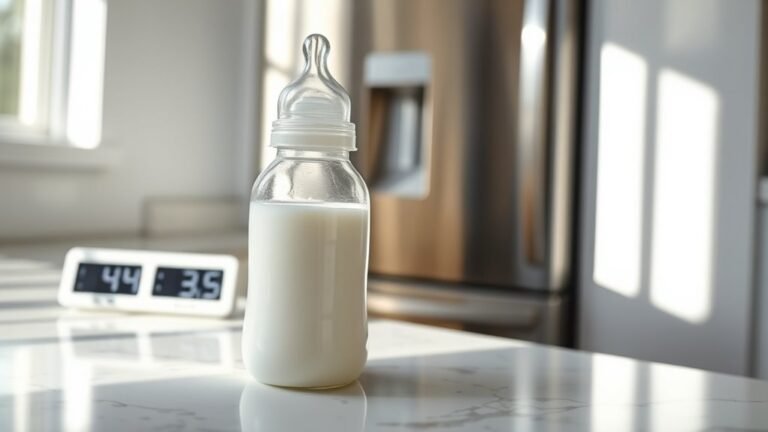
Although storing breast milk properly starts with choosing the right containers, maintaining the refrigerator at or below 4°C (39°F) is essential to keep the milk safe. Proper refrigeration ensures storage stability and prevents milk spoilage by slowing bacterial growth.
You should use a refrigerator thermometer for accurate temperature monitoring and store milk in the back of the fridge, avoiding the door where temperature fluctuates most. Keep the door closed to maintain a consistent cold storage environment.
Following these storage guidelines optimizes milk temperature and extends milk storage duration.
| Factor | Recommended Practice | Reason |
|---|---|---|
| Refrigerator Temperature | ≤ 4°C (39°F) | Prevents spoilage |
| Milk Storage Location | Back of fridge | Consistent temperature |
| Temperature Monitoring | Use thermometer regularly | Ensures proper refrigeration |
| Door Usage | Minimize opening | Maintains cold storage stability |
Guidelines for Labeling and Organizing Stored Milk

Since proper labeling and organization directly impact the safety and usability of stored breast milk, you should always label each container with the date it was expressed. Use waterproof labels and permanent markers to guarantee clarity and prevent smudging over time.
When organizing your storage, place containers with the oldest milk in front, allowing easy access and prioritizing their use. Follow a first-in, first-out (FIFO) rotation system to maintain freshness and avoid expiration.
If milk is stored at a childcare facility, include your child’s name on each container for accurate identification.
Safe Storage Durations for Breast Milk in the Refrigerator
If you store breast milk in the refrigerator, you should use it within 4 days at 39°F (4°C) or below to keep it safe. The recommended storage duration guarantees the milk retains its nutrients and stays free from harmful bacteria.
For best quality, try to use refrigerated breast milk within 24 hours after opening or thawing. Keep your milk at a consistent temperature by placing it in the back of the refrigerator.
Always label your milk with the date of expression to track expiration and prioritize older milk for use first. Once breast milk reaches the 4-day limit, discard it promptly to avoid risks.
Proper temperature control, labeling, and awareness of storage duration help you safely manage your breast milk supply.
Combining Fresh and Previously Stored Breast Milk
You’ve learned how to store breast milk safely in the refrigerator, but you might wonder how to handle combining fresh milk with what you’ve already stored. When combining milk, always cool fresh breast milk to room temperature or below before adding it to refrigerated milk.
Avoid mixing warm or hot milk with stored milk, as sudden temperature changes can encourage bacterial growth. Also, don’t add milk left out at room temperature for over 4 hours to refrigerated milk.
For safety, keep combined milk at or below 39°F (4°C) and use within 24 hours of mixing. Proper cooling and mindful storage time help maintain safety and quality in milk storage, ensuring your baby receives the best nutrition without risking spoilage or contamination.
Proper Thawing and Warming Techniques for Breast Milk
When thawing and warming breast milk, handling it gently preserves its nutrients and safety. To thaw breast milk, opt for gradual thawing by placing frozen milk in the refrigerator overnight or running it under warm water.
Avoid microwave heating, as it creates hot spots and harms nutrient preservation. When warming techniques involve placing the container in warm water or using warm water running over it, never heat directly.
Always perform temperature testing by checking a few drops on your wrist to ensure it’s lukewarm before feeding.
Remember, once warmed, use refrigerated breast milk within 1 to 2 hours, follow storage guidelines strictly, and never reheat or refrigerate it again.
These steps ensure feeding safety and maintain the milk’s valuable nutrients.
Frequently Asked Questions
What Is the 6 6 6 Rule for Breast Milk?
The 6 6 6 rule means you can keep freshly expressed breast milk for 6 hours at room temperature, 6 days in the fridge, and 6 months in a deep freezer. It helps you store milk safely and effectively.
How Long Can Breast Milk Stay in the Fridge Before It Goes Bad?
You’ve got to strike while the iron’s hot. Breast milk stays good in your fridge up to 4 days at 39°F, but it’s best to use it within 24 hours for your baby’s health and freshness.
What Is the 3-3-3 Rule for Breast Milk?
The 3-3-3 rule means you can keep breast milk at room temperature for 3 hours, in the fridge for 3 days, and in the freezer for 3 months.
Always label it to track freshness easily.
What Is the 4 4 4 Rule for Breast Milk?
The 4-4-4 rule means you can keep breast milk at room temperature for 4 hours, in the fridge for 4 days, and in the freezer for up to 4 months.
This helps you store milk safely.
Conclusion
By storing your breast milk in clean, airtight containers and labeling them clearly, you’ll keep your baby’s milk fresh and safe for up to four days in the fridge. Remember to keep the temperature steady at or below 4°C and use the oldest milk first—don’t let it slip through the cracks.
With these simple steps, you’ll always have nourishing milk ready, giving you peace of mind and your baby the best start at every feeding. Proper storage is key when considering how long does breast milk last in the refrigerator, ensuring safety and quality for your little one.