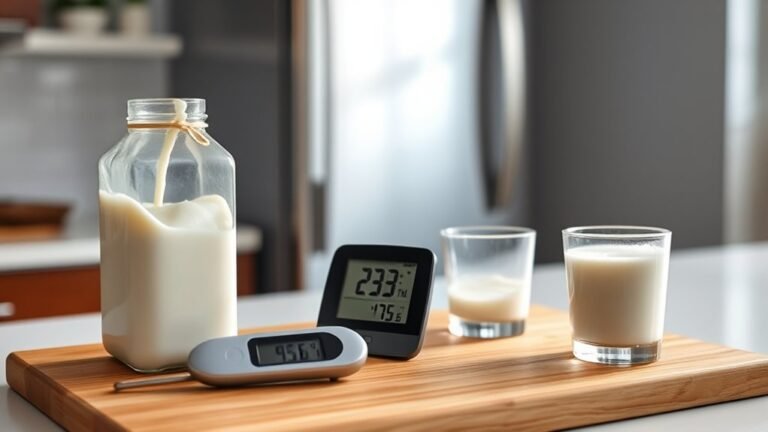
How Long Can Breast Milk Stay Out Safely
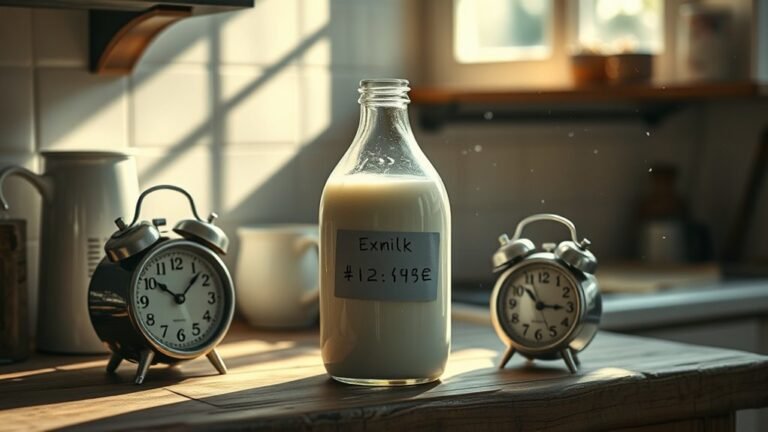
When breast milk takes a little break outside the fridge, you want to make sure it stays just right for your baby. Knowing how long breast milk can stay out safely is essential to preserve its nutrients and prevent any risk of spoilage. You might wonder how long it can comfortably sit at room temperature without losing its goodness or becoming a risk.
Understanding the safe time frame for breast milk storage at room temperature is important to keep your baby healthy and your routine smooth. Let’s explore what guidelines can help you manage this with confidence.
Recommended Containers for Storing Breast Milk

When storing breast milk, you should use clean, capped glass containers or BPA-free hard plastic containers to keep it safe. These containers are ideal for breast milk storage because they’re durable and won’t leach chemicals.
You can also use specially designed milk storage bags, but make sure they’re sterile and made for milk collection. Avoid household plastic bags or disposable liners, as they increase contamination risk and don’t meet safe storage guidelines.
Always thoroughly wash and dry containers before each use to prevent bacteria growth.
Choose containers suitable for freezing breast milk if you plan to store it long-term.
Optimal Storage Locations and Temperatures

Selecting the right containers is only part of keeping breast milk safe; where and how you store those containers plays a big role too. You want to keep breast milk at a refrigerator temperature of 39°F (4°C) or below, ideally in the back of the fridge where the temperature is most stable.
For freezer storage, maintain a consistent freezer temperature of 0°F (−18°C) or lower, placing milk in the back for best milk preservation. Monitoring storage temperature with a thermometer helps you follow storage guidelines and guarantees safe storage by preventing bacterial growth and nutrient loss.
| Storage Location | Recommended Temperature | Storage Duration |
|---|---|---|
| Refrigerator Back | ≤ 39°F (4°C) | Up to 4 days |
| Freezer (Regular) | ≤ 0°F (−18°C) | 3-6 months |
| Deep Freezer | ≤ −4°F (−20°C) | Up to 12 months |
| Refrigerator Door | Varies | Not recommended |
| Freezer Door | Varies | Avoid for storage |
Safe Duration for Leaving Breast Milk at Room Temperature

Although breast milk is best stored in the refrigerator or freezer, you can safely leave freshly expressed milk at room temperature (around 77°F or 25°C) for up to 4 hours. This safe duration assumes the environment isn’t too warm, as higher temperatures speed up bacterial growth.
If you’re handling thawed milk, keep in mind it should only stay out at room temperature for 1 to 2 hours before you either refrigerate or use it. After 2 hours, any leftover milk should be discarded to maintain breast milk safety.
Remember, stored breast milk left unrefrigerated beyond 4 hours risks contamination and must be discarded.
Combining Freshly Expressed Milk With Stored Milk
Managing breast milk storage doesn’t end with knowing how long milk can stay out safely. When combining freshly expressed milk with stored milk, you must cool the fresh milk to room temperature or refrigerate it first.
Adding warm or hot milk to refrigerated or frozen stored milk can cause partial thawing and increase bacterial growth.
Only mix the amount of freshly expressed milk you need for a feeding to minimize waste and reduce spoilage risk.
Follow storage guidelines by using the mixed milk within 24 hours of refrigeration.
Always label the container with the date of the earliest milk to ensure safe and proper use.
Paying close attention to cooling, temperature, mixing, and labeling helps keep your baby’s milk safe and nutritious.
Guidelines for Refrigerating and Freezing Breast Milk
When you refrigerate or freeze breast milk, keeping it at the right temperature is essential to preserve its safety and nutrients. You can store breast milk in the refrigerator at 39°F (4°C) for up to 4 days.
If you freeze it at 0°F (−18°C), it stays safe for up to 6 months, and up to 12 months in a deep freezer at −4°F (−20°C). Storage can be confusing, so always use clean, airtight containers labeled with the date expressed.
Place freshly expressed milk at the back of the refrigerator or freezer to maintain quality. Remember, thawed breast milk should be used within 24 hours and never refrozen.
Milk left out at room temperature for more than a few hours shouldn’t be stored or used.
Proper Methods for Thawing and Warming Breast Milk
After storing breast milk properly, you’ll need to thaw and warm it safely to preserve its nutrients and avoid harmful bacteria.
For thawing breast milk, place it in the refrigerator overnight or hold the bottle under warm running water. Avoid microwave use as it can create hot spots and damage nutrients.
When warming, use a warm water bath or run warm water over the bottle, ensuring good temperature control. Never use hot water directly.
Once thawed, refrigerate promptly and use within 24 hours to maintain thawed milk safety.
Use thawed breast milk within 24 hours and keep refrigerated to ensure safety and quality.
After feeding, discard leftover milk within 2 hours to prevent bacterial growth. Following this proper warming method helps keep your baby safe while preserving the milk’s valuable qualities.
Identifying Changes in Thawed Breast Milk
Although thawed breast milk might look or smell different than fresh milk, you can usually still feed it to your baby if you’ve stored it properly. During thawing, changes in odor, appearance, and color are common.
A yellowish or slightly cloudy color often results from diet or storage time and doesn’t affect safety. Separation of fat and liquid is normal; gently swirl to mix without shaking vigorously.
However, pay close attention to any sour or off smell, as it signals bacterial growth and spoilage. Such milk should be discarded immediately.
Also, if the texture looks unusual, like clumping or curdling, don’t risk feeding it.
Properly evaluating these factors helps you ensure the milk’s safety while avoiding spoilage after thawing and storage.
Best Practices to Maintain Breast Milk Quality and Safety
To keep breast milk safe and preserve its nutrients, you should always wash your hands thoroughly and store milk in clean, BPA-free containers.
Follow storage guidelines by labeling and dating each container to track freshness, especially if used at a childcare facility.
Store breast milk in the back of the refrigerator where temperatures stay stable.
If you’re out, keep milk in a cooler with ice packs and use within four hours to maintain breast milk safety.
Avoid leaving milk at room temperature for longer than four hours.
Use small containers (2-4 oz) to reduce waste and feed in portions.
Frequently Asked Questions
How Long Is Breastmilk Good After Taken Out of the Fridge?
You can keep breast milk out of the fridge for up to 4 hours at room temperature, but if it’s warmer, use or refrigerate it within 2 hours to keep it safe and fresh for your baby.
What Happens to Breast Milk After 4 Hours Room Temperature?
You’d think breast milk turns into a ticking time bomb after 4 hours at room temperature. That’s when harmful bacteria multiply rapidly, risking your baby’s health, and the milk’s nutrients start to vanish.
Don’t take chances!
What Is the 4 4 4 Rule for Breast Milk?
The 4 4 4 rule means you can keep freshly expressed breast milk at room temperature for 4 hours, in the fridge for 4 days, and in the freezer for 4 months to keep it safe and fresh.
What Happens if a Baby Drinks Breast Milk That Sat Out Too Long?
If your baby drinks breast milk that’s been left out too long, they could get sick with vomiting, diarrhea, or worse due to harmful bacteria. Always keep milk fresh to protect your little one’s health.
Conclusion
You want to keep your breast milk as fresh as a morning breeze, so always store it properly and watch the clock carefully. At room temperature, it’s safe for up to four hours, but thawed milk needs to be used within one to two hours.
By following these simple steps—using the right containers, refrigerating on time, and warming gently—you’ll make certain your baby gets the safest, most nourishing milk every time. Remember, understanding how long breast milk can stay out safely is key to protecting your baby’s health and ensuring optimal nutrition.