How Long Can Breast Milk Stay Out of the Fridge Safely
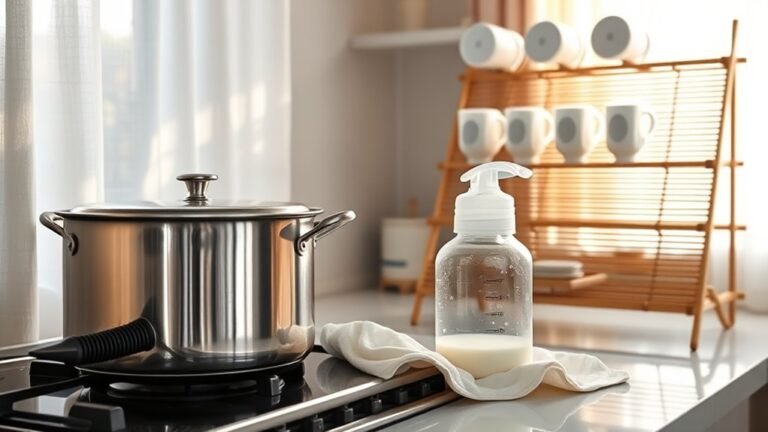
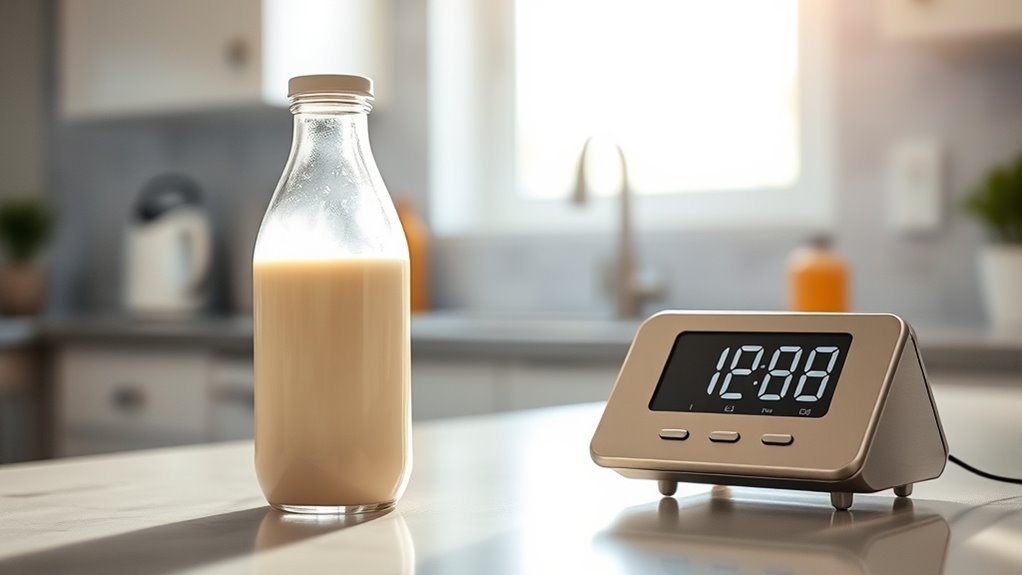
You can safely keep freshly expressed breast milk out of the fridge for up to four hours when the room temperature is between 66°F and 77°F. Proper breast milk storage is crucial to maintain its quality and safety for your baby. Make sure your hands and containers are clean to reduce contamination.
Avoid leaving milk in warmer temperatures or direct sunlight, as it spoils faster. If you don’t use it within four hours, refrigerate or freeze it. Keep following for tips on how to handle and store your milk properly.
Factors Influencing Breast Milk Storage Time

Because several factors affect how long breast milk stays safe at room temperature, you need to take each one carefully. First, the cleanliness of your hands and pumping equipment plays a big role; any contamination can shorten milk’s safe time.
Clean hands and equipment are key to keeping breast milk safe at room temperature.
Second, the room’s actual environment matters. Humidity and air circulation influence how quickly bacteria grow.
Third, how fresh the milk is initially impacts storage duration; milk that’s just expressed lasts longer than milk that’s been sitting out.
Fourth, whether the milk has been previously refrigerated or frozen affects its stability once thawed and left out.
Finally, the volume of milk in the container also counts. Smaller amounts tend to warm up and spoil faster.
Considering these factors helps you keep your baby’s milk safe and nutritious.
Recommended Room Temperature for Storing Breast Milk

Understanding the ideal room temperature helps you better manage how long breast milk stays safe outside the fridge. Generally, breast milk should be stored at a temperature not exceeding 77°F (25°C) to slow bacterial growth and preserve nutrients.
If the room is warmer, the milk’s quality can deteriorate faster.
Keep these temperature guidelines in mind:
- Ideal range: 66-77°F (19-25°C) for safe short-term storage
- Avoid hot environments: Above 77°F speeds up spoilage
- Cooler room temps: Below 66°F help extend freshness but aren’t always practical
Safe Duration for Freshly Expressed Breast Milk at Room Temperature

When you express breast milk, you can safely leave it at room temperature for up to four hours without significant risk of spoilage. This guideline assumes the room temperature is around 77°F (25°C) or lower.
During this period, the milk maintains its nutritional and immunological quality, making it safe for your baby to consume.
If you won’t be feeding your baby within that timeframe, it’s best to refrigerate or freeze the milk promptly to preserve its freshness.
Remember to store the milk in a clean, sealed container to minimize contamination.
Avoid leaving freshly expressed milk out for longer than four hours, as bacteria can multiply, increasing the risk of spoilage and potential harm to your baby.
Always prioritize safe storage to protect your little one’s health.
Impact of Environmental Conditions on Breast Milk Safety
Although breast milk can stay safe at room temperature for a limited time, various environmental factors can affect how long it remains fresh. You need to take these conditions carefully to keep your milk safe for your baby. Temperature fluctuations, exposure to sunlight, and air quality all play significant roles.
Breast milk safety at room temperature depends on temperature, sunlight, and air quality conditions.
For example, higher room temperatures can speed up bacterial growth, decreasing milk safety. Direct sunlight can degrade important nutrients, while poor air quality can introduce contaminants.
Keep these in mind:
- Temperature: Milk stays safe longer in cooler, stable environments.
- Light Exposure: Avoid leaving milk where sunlight hits it directly.
- Air Exposure: Minimize air contact by sealing containers tightly.
Signs That Breast Milk Has Spoiled
Knowing how environmental factors affect breast milk helps you recognize when it might no longer be safe.
If you notice a sour or rancid smell, that’s a clear sign the milk has spoiled.
Spoiled breast milk often looks curdled or lumpy, even after gently swirling it. You might also see a separation that doesn’t mix back together easily.
If the milk tastes off or bitter, avoid feeding it to your baby. Trust your senses.
If anything seems unusual, it’s better to err on the side of caution.
Spoiled milk can cause digestive upset or infections in infants, so being alert to these signs protects your child’s health.
Always check breast milk carefully before use, especially if it hasn’t been refrigerated promptly.
Best Practices for Handling and Storing Breast Milk
Properly managing and storing breast milk guarantees it stays safe and retains its nutrients for your baby. When handling breast milk, always wash your hands thoroughly before expressing or feeding.
Thorough handwashing before expressing or feeding ensures breast milk stays safe and nutritious for your baby.
Use clean, BPA-free containers or breast milk storage bags to keep milk fresh and prevent contamination.
Label each container with the date you expressed the milk to track freshness.
Keep these best practices in mind:
- Store freshly expressed milk in the back of the fridge, where temperature is most consistent.
- Freeze milk if you won’t use it within four days; thaw it in the refrigerator, not at room temperature.
- Never refreeze thawed milk to maintain its quality and safety.
Following these steps helps ensure your baby receives the best nutrition every time.
How to Safely Transport Breast Milk Without Refrigeration
Storing breast milk correctly at home is just one part of the process. You’ll also need to keep it safe when you’re on the go.
To transport breast milk without refrigeration, use an insulated cooler bag with ice packs to maintain a cold temperature.
Pack the milk in sealed, sterile containers and place them as close to the ice packs as possible. Avoid opening the cooler frequently to keep the temperature stable.
If you’re traveling for less than 4 hours, properly cooled breast milk should remain safe.
For longer trips, consider using portable electric coolers or plan to transfer the milk to refrigeration as soon as possible.
Differences Between Fresh and Previously Refrigerated Breast Milk at Room Temperature
Although both fresh and previously refrigerated breast milk can be safe at room temperature, they behave differently once left out. Fresh breast milk tends to maintain its natural protective enzymes and nutrients longer, while previously refrigerated milk may have started to lose some of these qualities during storage.
You should be mindful of how long each type stays out to ensure safety and quality.
Consider these differences:
- Fresh milk: Remains stable for about 4 hours at room temperature.
- Previously refrigerated milk: Should be used within 1-2 hours after being taken out.
- Bacterial growth: Occurs faster in previously refrigerated milk once warmed to room temperature.
Knowing this helps you decide when to use or discard milk safely.
Tips for Maintaining Breast Milk Quality During Storage
When you want to preserve the nutrients and safety of breast milk, following a few key storage tips makes all the difference. Always use clean containers, label the milk with date and time, and avoid overfilling. Store milk in small portions to reduce waste, and cool freshly expressed milk before refrigeration or freezing. Keep milk away from the fridge door to maintain a consistent temperature.
| Tip | Why It Helps | Quick Reminder |
|---|---|---|
| Use clean containers | Prevents bacterial contamination | Wash hands, sterilize jars |
| Label with date & time | Track freshness | Use waterproof marker |
| Store in small portions | Avoid leftovers | 2-4 oz per container |
| Keep milk inside fridge body | Consistent temperature | Avoid fridge door storage |
Frequently Asked Questions
Can Breast Milk Be Frozen and Thawed Multiple Times Safely?
You shouldn’t freeze and thaw breast milk multiple times. Each thawing cycle risks bacterial growth and nutrient loss.
Instead, thaw only what you need to keep your baby safe and preserve milk quality effectively.
How Does Breast Milk Storage Differ for Premature Babies?
You’ll need to store breast milk for premature babies more cautiously, often using stricter guidelines and shorter storage times to preserve nutrients and reduce infection risks. This ensures their fragile systems get the best protection and nourishment.
Are There Any Nutritional Changes in Breast Milk Over Time?
Think of breast milk as a living garden. It changes over time. You’ll notice its nutrients adapt to your baby’s needs, with antibodies and fats evolving, ensuring your little one always gets exactly what they require.
Can Breast Milk Be Used Past Its Expiration if It Smells Normal?
You shouldn’t use breast milk past its expiration, even if it smells normal. Bacteria can grow without causing odor changes, so it’s safest to discard expired milk to protect your baby’s health.
What Are the Best Containers for Storing Breast Milk?
For flawless freshness, choose food-grade, BPA-free bottles or specially designed breast milk storage bags. These containers keep your milk clean, convenient, and cool, ensuring your baby gets the best nourishment every time you feed.
Conclusion
You might be surprised to learn that freshly expressed breast milk can safely stay out at room temperature—about 77°F (25°C)—for up to 4 hours. Knowing this helps you plan feeding times without stress.
Just remember, factors like cleanliness and environment matter a lot. By following proper handling and storage tips, you’ll keep your baby’s milk fresh and nutritious.
This knowledge about how long breast milk can stay out of the fridge safely gives you peace of mind every time you feed. Proper breast milk storage is key to ensuring your baby gets the best nutrition.