How Long Does Breast Milk Last at Room Temp?
You can keep freshly expressed breast milk at room temperature—between 66°F and 78°F—for up to four hours safely. Knowing how long breast milk lasts at room temp is important to ensure your baby’s health. Beyond that, bacterial growth increases, risking spoilage and reduced quality.
Always use clean containers and avoid heat or sunlight exposure to maintain freshness. If you notice any sour smell or changes in texture, it’s best to discard the milk.
There are also smart ways to store and handle milk when you’re on the go that can help keep it safe longer. Following these tips will help you provide safe, nutritious milk for your baby.
Understanding Room Temperature and Breast Milk Storage

Although breast milk is a natural and nutritious food for your baby, you need to store it properly to keep it safe at room temperature. Room temperature generally means anywhere between 66°F and 78°F (19°C to 26°C).
If the environment is warmer, bacteria can multiply faster, so you must be cautious. Always use clean containers and cover the milk to prevent contamination. Avoid leaving breast milk exposed to direct sunlight or heat sources.
If you plan to feed your baby within a few hours, keeping milk at room temperature is fine, but don’t let it sit out longer than necessary. Proper handling helps maintain the milk’s nutritional quality and guarantees your baby’s safety.
Following these simple steps will give you peace of mind while feeding.
Recommended Time Limits for Freshly Expressed Breast Milk

Now that you know how to handle breast milk safely at room temperature, it’s important to understand how long freshly expressed milk can last under different conditions.
Generally, breast milk stays fresh at room temperature (up to 77°F or 25°C) for up to 4 hours. However, this can vary slightly based on your surroundings and storage method.
Here’s a quick guide:
| Storage Condition | Temperature Range | Recommended Time Limit |
|---|---|---|
| Room Temperature | Up to 77°F (25°C) | Up to 4 hours |
| Cooler with Ice Packs | Below 59°F (15°C) | Up to 24 hours |
| Refrigerator | 39°F (4°C) or lower | Up to 4 days |
| Freezer (standard) | 0°F (-18°C) or lower | Up to 6 months |
| Deep Freezer | -4°F (-20°C) or lower | Up to 12 months |
Stick to these limits to ensure your baby gets safe, nutritious milk every time.
Factors That Affect Breast Milk Freshness at Room Temperature

Since room temperature can vary throughout the day, several factors influence how long your breast milk stays fresh when left out. First, the actual temperature matters; a warmer room speeds up bacterial growth, reducing milk freshness.
Also, how clean your hands and pumping equipment are plays a big role. Contamination can spoil milk faster. The milk’s initial quality and how soon you express it after feeding impact longevity too.
If the milk has been exposed to air during pumping or storage, oxidation can occur, affecting freshness. Additionally, the volume of milk left out can matter. Smaller amounts may cool and warm quicker, influencing spoilage rates.
Being mindful of these factors helps you keep your expressed milk safe and nourishing for your baby.
Signs Your Breast Milk Has Gone Bad
How can you tell if your breast milk has gone bad? Trusting your senses is key. Spoiled breast milk often has distinct signs that help you decide whether to use it or not.
Trust your senses to recognize when breast milk has spoiled and ensure your baby’s safety.
Look out for these indicators:
- Sour or rancid smell: Fresh milk has a mild, sweet scent. A strong sour odor means it’s spoiled.
- Unusual taste: If the milk tastes bitter or off, don’t feed it to your baby.
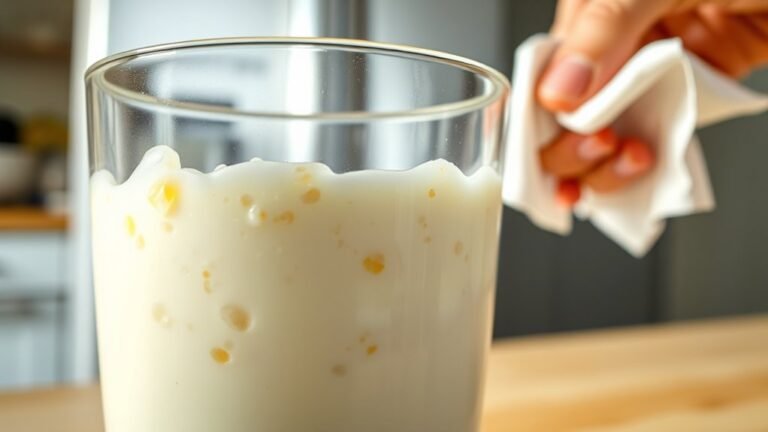
- Curdled or separated texture: Some separation is normal, but thick clumps or chunks signal spoilage.
- Color changes: Breast milk that turns grayish or greenish may be bad.
If you notice any of these signs, it’s safest to discard the milk to protect your baby’s health.
Safe Practices for Handling Breast Milk Outside the Home
Handling breast milk safely outside the home requires careful planning and proper storage to keep it fresh and nutritious for your baby. Always wash your hands before touching breast milk or feeding equipment.
Use clean, sterilized containers to store milk, and seal them tightly to prevent contamination.
Avoid leaving breast milk at room temperature for longer than four hours, as bacteria can multiply quickly.
When you’re ready to feed, warm the milk gently by placing the container in warm water. Never use a microwave, as it can create hot spots and destroy nutrients.
After feeding, discard any leftover milk, since bacteria from your baby’s mouth can contaminate the rest.
Tips for Storing and Transporting Breast Milk on the Go
When you’re on the move, keeping breast milk fresh requires the right tools and a bit of preparation. Use insulated cooler bags with ice packs to maintain a safe temperature for your milk. Store milk in small, labeled containers to avoid waste and make feeding easier. Always pack extra ice packs if you anticipate longer travel times. Avoid opening the cooler frequently to keep the temperature stable.
Here are some quick tips:
- Use BPA-free bottles or storage bags designed for breast milk
- Label containers with date and time of expression
- Keep milk away from direct sunlight and heat
- Plan your travel route and timing to limit exposure to warm environments
These steps will help ensure your baby’s milk stays fresh until feeding time.
Differences Between Fresh and Thawed Breast Milk at Room Temp
Although fresh and thawed breast milk might look similar at room temperature, they behave differently and require distinct handling. Fresh milk can sit out safely for up to 4 hours, while thawed milk lasts only about 1-2 hours once completely thawed.
Nutrient quality and immune factors also differ, with fresh milk retaining more beneficial properties.
| Aspect | Fresh Breast Milk | Thawed Breast Milk |
|---|---|---|
| Safe Room Temp Time | Up to 4 hours | 1-2 hours |
| Nutrient Quality | Higher | Slightly reduced |
| Immune Factors | Intact | Partially diminished |
| Bacterial Growth | Slower | Faster |
| Handling Advice | Use within 4 hours | Use immediately after thawing |
Understanding these differences helps you safely feed your baby.
How to Reheat Breast Milk Safely After Room Temperature Storage
Since thawed breast milk has a shorter safe period at room temperature, you might find yourself needing to reheat it carefully after storage.
To do this safely, avoid overheating or using a microwave, which can damage nutrients and create hot spots. Instead, warm the milk gently and evenly.
Follow these steps for safe reheating:
- Place the milk container in a bowl of warm water for a few minutes.
- Gently swirl the milk to mix the fat that may have separated.
- Test the temperature on your wrist to ensure it’s lukewarm.
- Use the milk within two hours after reheating, and never reheat it more than once.
This approach preserves the milk’s quality and protects your baby’s health.
When to Discard Breast Milk Left at Room Temperature
If breast milk sits out too long, bacteria can multiply and make it unsafe for your baby. You should discard any breast milk left at room temperature for more than four hours. Even if it smells or looks fine, it’s better not to take any risks.
Once your baby starts feeding from a bottle, bacteria from their mouth can enter the milk, so you should throw away any leftover milk immediately after feeding.
Also, if the milk has been previously refrigerated and then warmed, don’t leave it out longer than two hours.
To keep your baby safe, always label your milk with the time it was expressed and follow safe storage guidelines.
When in doubt, throw it out; it’s not worth compromising your baby’s health.
Frequently Asked Questions
Can Breast Milk Be Frozen Immediately After Expression?
Yes, you can freeze breast milk immediately after expression. Just make sure to use clean containers and label them with the date.
Freezing right away helps preserve nutrients and quality for your baby’s feeding needs.
Is It Safe to Mix Breast Milk From Different Days?
Yes, you can mix breast milk from different days, but make sure to chill the older milk first. Always combine the freshest milk with colder milk to keep it safe and preserve nutrients for your baby.
How Does Breast Milk Composition Change Over Time?
You’ll notice breast milk’s composition changes over time: colostrum is rich in antibodies early on, then shifts to mature milk with more fat and calories. These shifts support your baby’s evolving nutritional needs perfectly.
Can Breast Milk Cause Allergies if Stored Improperly?
Yes, improperly stored breast milk can develop bacteria, which might trigger allergic reactions or digestive issues in your baby.
Always store it correctly to keep it safe and reduce the risk of problems.
Does Breast Milk Expire Faster in Humid Climates?
Yes, breast milk does expire faster in humid climates because moisture encourages bacterial growth.
You should store it in a cool, dry place and use or refrigerate it promptly to keep it safe for your baby.
Conclusion
You might think breast milk can last forever at room temp, but trust me, it’s not a magic potion. Leaving it out too long is like inviting a bacterial party you definitely don’t want. Stick to recommended time limits, watch for signs of spoilage, and handle it with care—your baby’s health depends on it.
So, don’t risk it; treat breast milk like liquid gold and keep it fresh and safe every time. Remember, knowing how long breast milk lasts at room temp is essential for your baby’s safety. Always follow guidelines to ensure the milk remains nutritious and free from harmful bacteria.