How Long Is Breast Milk Good After Pumping and Safe to Store
You might not realize that breast milk can stay fresh for up to four days in your fridge when stored correctly. Proper breast milk storage is essential to ensure its safety and nutritional quality for your baby. But the exact time can vary depending on factors like container type and temperature consistency.
Understanding these details is vital to keeping your milk safe for your baby. Let’s explore how to store and handle expressed milk properly to protect its quality and nutritional value. Following these guidelines will help you provide the best for your little one.
Recommended Containers for Storing Expressed Breast Milk

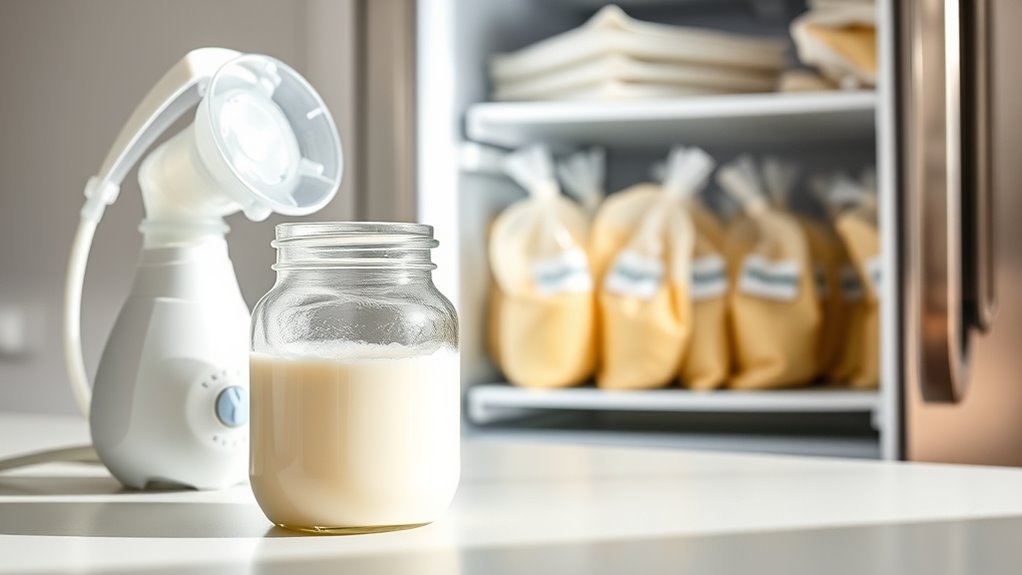
When storing expressed breast milk, you should use clean, BPA-free glass or hard plastic bottles with tight-fitting lids to keep the milk safe. These storage containers provide airtight lids that prevent contamination and preserve milk quality during refrigeration or freezing.
Breast milk storage bags are also a convenient option, designed specifically for safe storage and space-saving in your freezer or fridge. Always avoid disposable bottle liners or regular plastic bags, as they aren’t sterile and can compromise milk safety.
Before each use, thoroughly wash and sterilize bottles or containers to minimize bacterial risks. Choosing BPA-free plastic bottles or sterilized glass containers suitable for freezing and refrigeration ensures your expressed milk stays fresh and safe for your baby.
Optimal Storage Conditions and Duration for Breast Milk

Although freshly expressed breast milk can sit safely at room temperature for up to six hours, you should aim to use it within four hours for the best quality.
For safe breast milk storage, keep it in clean, airtight storage containers labeled with the date.
In the refrigerator at 39°F (4°C), breast milk remains safe for up to four days, though some breast milk guidelines allow up to eight days under very clean conditions.
When freezing, use a standard freezer at 0°F (−18°C) for storage duration up to six months, or a deep freezer for up to 12 months.
Once thawed, breast milk should be refrigerated and used within 24 hours and never refrozen.
Following these ideal storage conditions ensures your milk retains nutrients and stays safe for your baby.
Guidelines for Combining Fresh and Stored Breast Milk

If you want to combine fresh breast milk with stored milk, make sure the fresh milk has cooled to room temperature or below before mixing. Avoid adding warm or hot milk directly to frozen milk, as this can cause partial thawing and encourage bacterial growth.
Follow proper milk mixing guidelines by cooling fresh milk in the refrigerator or under cold water to match refrigerator temperature. Use clean storage containers for combining fresh and stored milk to maintain milk freshness.
Once combined, consume the milk within 24 hours to ensure safe storage time and prevent spoilage. Remember, never mix fresh milk with thawed milk that has been at room temperature too long, as this increases bacterial risks.
Careful handling during breast milk storage helps protect your baby’s health.
Proper Techniques for Thawing and Warming Frozen Milk
To preserve the nutrients and safety of your frozen breast milk, you should thaw it slowly in the refrigerator overnight or gently warm the container in warm water until fully defrosted. When thawing breast milk, avoid microwave use because it can create hot spots and damage valuable nutrients.
Once defrosted, breast milk is ready. Swirl it gently to remix separated fat and prevent nutrient loss. Never shake vigorously.
After thawing, gently swirl breast milk to mix fats—avoid vigorous shaking to preserve nutrients.
Follow storage guidelines by using thawed milk within 24 hours if refrigerated, discarding any leftovers afterward.
When warming frozen milk, proper warming techniques include placing the container in warm water rather than applying direct heat. Always perform temperature testing on your wrist before feeding to ensure the milk is warm, not hot.
These steps help you safely thaw breast milk while maintaining its quality.
Best Practices to Maintain Breast Milk Quality and Safety
When you store breast milk properly, you help preserve its nutrients and keep it safe for your baby. Use clean, BPA-free storage containers and label them with the date and time of pumping to follow storage guidelines and prevent milk expiration.
For breast milk storage, keep it at room temperature (77°F or colder) no longer than 4-6 hours. Refrigerate at 39°F (4°C) for up to 4 days. Freeze at 0°F (−18°C) for up to 6 months.
Always store milk in the back of the refrigerator for consistent temperature.
When thawing breast milk, use it within 24 hours and never refreeze. For milk warming, avoid microwaves; instead, gently warm containers in warm water to maintain quality and safety throughout safe storage times.

Frequently Asked Questions
How Long Should Breast Milk Be Stored After Pumping?
You should store breast milk up to 6 hours at room temperature, 4 days in the fridge, and 6 months in a freezer.
Once thawed, use it within 24 hours and never refreeze it.
What Is the 4 4 4 Rule for Breast Milk?
The 4-4-4 rule means you can keep breast milk at room temp for 4 hours, in the fridge for 4 days, and in the freezer for 4 months. It helps you store milk safely and preserve nutrients.
What Is the 6 6 6 Rule for Breast Milk?
The 6 6 6 rule means you can keep breast milk 6 hours at room temperature, 6 days in the fridge, and up to 6 months in the freezer.
It helps you store milk safely and maintain quality.
What Is the 30 30 30 Rule for Pumping?
The 30 30 30 rule means you should cool or refrigerate your freshly pumped breast milk within 30 minutes, keep it at room temperature no longer than 30 minutes, and store it in the fridge for up to 30 hours.
Conclusion
You can safely store breast milk in the refrigerator for up to 4 days at 39°F (4°C), giving you flexibility in feeding your baby.
If you freeze it at 0°F (−18°C), it lasts up to 6 months—and even up to 12 months in a deep freezer.
Remember, once thawed, use it within 24 hours and never refreeze.
Knowing these timelines helps you provide the freshest, safest milk possible for your little one.
Understanding how long breast milk is good after pumping and safe to store ensures your baby receives the best nutrition every time.