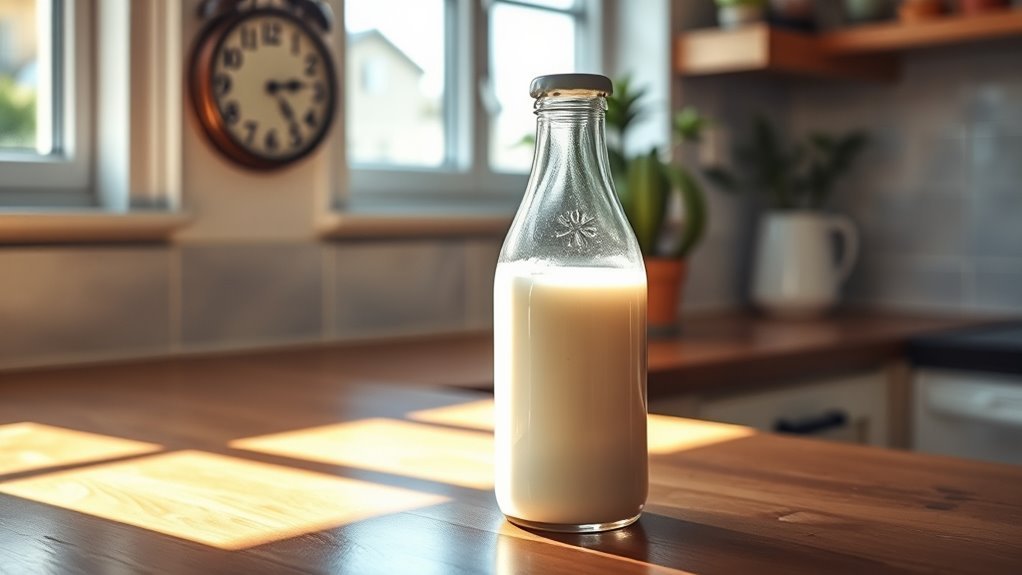
How Long Is Breast Milk Good at Room Temp? Storage & Safety Guide
Imagine a freshly expressed bottle of breast milk sitting on the counter, waiting quietly. You might wonder, how long is breast milk good at room temp? This question matters because improper storage can affect your child’s health.
Understanding the right time limits and storage practices helps you keep milk fresh and nourishing. However, there are nuances you should consider before deciding when to use or discard it.
Understanding Room Temperature and Breast Milk Safety

Although freshly expressed breast milk can stay safe at room temperature for a limited time, you should be careful about how long you leave it out. Room temperature, ideally 77°F or colder, allows fresh breast milk to remain safe for up to 4 hours.
In a warm environment above 77°F, bacterial growth speeds up, so you should use the expressed milk within 2 hours.
Following proper milk storage and refrigeration guidelines is vital for breast milk safety and preventing contamination.
To guarantee infant feeding remains safe, it’s best to refrigerate fresh breast milk within 4 hours of expression. Any milk left out beyond these timeframes risks bacterial growth and should be discarded.
Understanding these storage guidelines helps you protect your baby’s health effectively.
Recommended Time Limits for Breast Milk at Room Temperature

When you express breast milk, you can safely keep it at room temperature (77°F or below) for up to 4 hours. Beyond this time limit, bacterial growth increases, risking feeding safety and milk freshness.
If conditions are warmer or less sanitary, reduce the safe duration to 2-3 hours. To maintain quality, use or refrigerate expressed milk within the recommended storage time.
Discard any milk left out longer than advised to avoid health risks.
| Condition | Room Temperature (°F) | Safe Duration for Breast Milk |
|---|---|---|
| Ideal room temp | ≤77 | Up to 4 hours |
| Warm room or unsanitary | >77 | 2-3 hours |
| Refrigeration recommended | N/A | Within 4 hours after expression |
| Post time limit | N/A | Discard milk |
| Feeding safety focus | N/A | Adhere strictly to time limits |
Factors Affecting Breast Milk Stability Outside the Refrigerator

Since breast milk’s safety outside the refrigerator depends heavily on several factors, you need to contemplate temperature, cleanliness, and storage conditions carefully.
Room temperature plays an essential role; milk stays freshest and safest up to 4 hours at 77°F or below.
When the environment is warmer, bacterial growth accelerates, reducing safe storage time and increasing spoilage risk.
Contamination also affects milk stability. Using clean containers and hygienic handling prevents harmful bacteria from developing.
Following established guidelines helps maintain safety, so avoid leaving milk out beyond 4 to 6 hours.
Keeping these factors in mind guarantees you preserve breast milk’s freshness and minimize spoilage.
Monitoring the temperature and storage time closely will protect your baby’s health by preventing contamination and unsafe bacterial growth.
Best Containers for Storing Breast Milk at Room Temperature
Keeping breast milk safe at room temperature starts with choosing the right containers. Use clean, food-grade glass or BPA-free plastic bottles with tight-fitting lids to store your milk. Sterile containers guarantee your breast milk stays uncontaminated and fresh.
If you prefer storage bags, pick specially designed, leak-proof breast milk storage bags made for this purpose. Avoid household plastic bags or disposable liners, as they can compromise container hygiene and milk safety.
Before each use, wash containers thoroughly with soap and water or sterilize them to maintain cleanliness. Don’t forget labeling each container with the date expressed and your child’s name if needed, which helps track freshness and avoid confusion.
Proper storage containers protect your breast milk effectively at room temperature.
How to Handle Breast Milk When Refrigeration Is Not Available
If refrigeration isn’t available, you’ll need to take extra steps to keep your breast milk safe and fresh. When storing breast milk at room temperature, keep it at 77°F or colder and use it within 2-4 hours for maximum freshness.
If the room is warm, avoid leaving warm breast milk out too long. To store expressed breast milk safely without refrigeration, use a clean container and place it in an insulated cooler with ice packs.
This can keep fresh breast milk cold for up to 24 hours.
Always label the container with the expression time and date to track storage times. Before feeding, check the milk’s smell and appearance to ensure safe use. Using a breast pump and proper containers will help maintain milk quality when refrigeration isn’t an option.
Combining Freshly Expressed Milk With Milk Stored at Room Temperature
When you combine freshly expressed breast milk with milk stored at room temperature, make sure the new milk has cooled to below 77°F (25°C) before adding it. Combining warm milk with stored milk can increase bacterial growth and spoilage risks.
To guarantee safety, follow these steps:
To ensure safety, always cool fresh milk before combining and refrigerate promptly.
- Cool freshly expressed milk promptly to room temperature or below.
- Add the cooled milk to stored milk within 4 hours of expression.
- Ensure the temperature of the freshly expressed milk is equal to or lower than the stored milk.
- Once combined, refrigerate the milk and use it within 24 hours.
Signs That Breast Milk Has Spoiled at Room Temperature
Although breast milk can stay safe at room temperature for up to four hours, you need to watch for signs that it’s spoiled before feeding your baby.
Check for any clumping or separation of the milk’s fatty layer; while some separation is normal, excessive clumping combined with an off odor signals spoilage.
Pay close attention to the odor. If you detect a sour, rancid, or foul smell, bacterial growth has likely occurred, and the milk should be discarded.
Also, look for any discoloration or visible mold, which are clear signs the milk is no longer fresh and is spoiled.
Trust your senses. If the breast milk smells strange or looks unusual, don’t risk your baby’s health by using it.
Guidelines for Using Breast Milk After Room Temperature Storage
Since room temperature affects breast milk safety, you should use expressed milk within 2 to 4 hours if it’s stored at 77°F or below. Following proper storage guidelines is essential for maintaining breast milk safety and ensuring ideal use.
Here’s what you need to know:
- Use breast milk within hours based on room temperature duration: 2 to 4 hours at 77°F or below.
- If room temperature is warmer, limit storage time to 1 to 2 hours to avoid bacterial growth.
- Always prioritize temperature safety and breastfeeding guidelines to protect your baby.
- Discarding milk after the recommended room temperature duration prevents contamination risks.

Tips for Maintaining Breast Milk Quality During Short-Term Storage
Following proper timing for using breast milk at room temperature helps reduce contamination risks, but you can also take steps to maintain its quality during short-term storage. Always store breast milk in a clean, sealed container to protect it from contaminants and minimize bacterial growth.
Using a clean, sealed container at room temperature helps reduce contamination and keep breast milk fresh.
Keep the container away from direct sunlight and heat sources, as higher temperatures shorten safe storage duration. If the room temperature exceeds 77°F, use the milk within 1-2 hours to ensure safety and quality.
When collecting milk outdoors or in warm environments, refrigerate it promptly or use an insulated cooler with ice packs.
Before feeding, check the milk’s smell and appearance; if it has a sour or off odor, discard it immediately to avoid health risks.
These steps help you preserve breast milk’s freshness and safety during short-term storage.
Frequently Asked Questions
How Long Is Breast Milk Good Left Out at Room Temperature?
You can safely leave breast milk out at room temperature for up to 4 hours.
If it’s warmer than 77°F, use it within 2 hours. Don’t keep it longer to avoid bacterial growth and spoilage.
What Happens to Breast Milk After 4 Hours?
After 4 hours, breast milk starts growing bacteria and can spoil, so you shouldn’t feed it to your baby.
It’s safer to discard it or refrigerate milk promptly to keep it fresh and healthy.
What Is the 2 Hour Rule for Breast Milk?
You’ve got 2 hours before bacteria start multiplying in your breast milk at room temp. The 2-hour rule means you should use or refrigerate it within that time to keep your baby safe and healthy.
What Is the 4 4 4 Rule for Breast Milk?
The 4 4 4 rule means you can store freshly expressed breast milk at room temperature for up to 4 hours, in the fridge for 4 days, and in the freezer for 4 months.
Use or refrigerate promptly.
Conclusion
When you leave breast milk out, think of it like a ticking clock—at room temperature around 77°F, you’ve got up to 4 hours before it starts to lose its safety. If it feels warmer, that window diminishes to 2 hours.
Always store milk in clean, airtight containers and trust your senses; if it smells or looks off, don’t take the risk. Handling milk carefully guarantees your baby gets the freshest nourishment every time.
Remember, knowing how long breast milk is good at room temp helps ensure your baby’s health and safety with every feeding.