How Long Is Breast Milk Good in the Fridge
When you store breast milk in the fridge, knowing how long breast milk is good in the fridge is vital for your baby’s health. You might think a few days is safe, but factors like temperature consistency and container type can change that timeframe. Mistakes here can affect milk quality and safety.
Before you decide how long to keep it chilled, there are some key points you should understand about proper storage and handling. This knowledge ensures the milk retains its nutrients and remains safe for your baby to consume.
Choosing the Right Containers for Breast Milk Storage

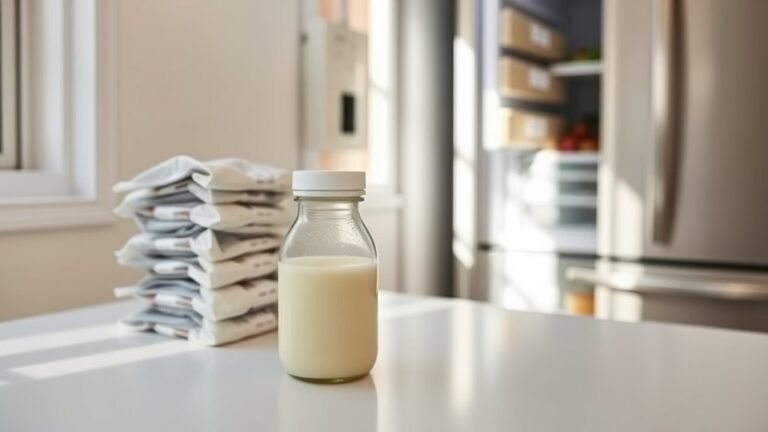
When storing breast milk, how you choose your containers makes a big difference in keeping it safe and fresh. Use clean, food-grade glass or BPA-free plastic containers with airtight, tight-fitting lids to prevent contamination.
Specially designed breast milk storage bags are also a good option, but avoid household plastic bags or disposable liners. Before each use, make sure your storage containers and bags are thoroughly sterilized to keep bacteria at bay.
It’s smart to store milk in small portions, like 2-4 ounces, so you only thaw what you need, reducing waste.
Don’t forget to label each container with the date of expression using waterproof labels and ink.
Opt for reusable plastic containers to be eco-friendly while ensuring your baby’s milk stays fresh and safe.
Best Practices for Refrigerating Expressed Breast Milk

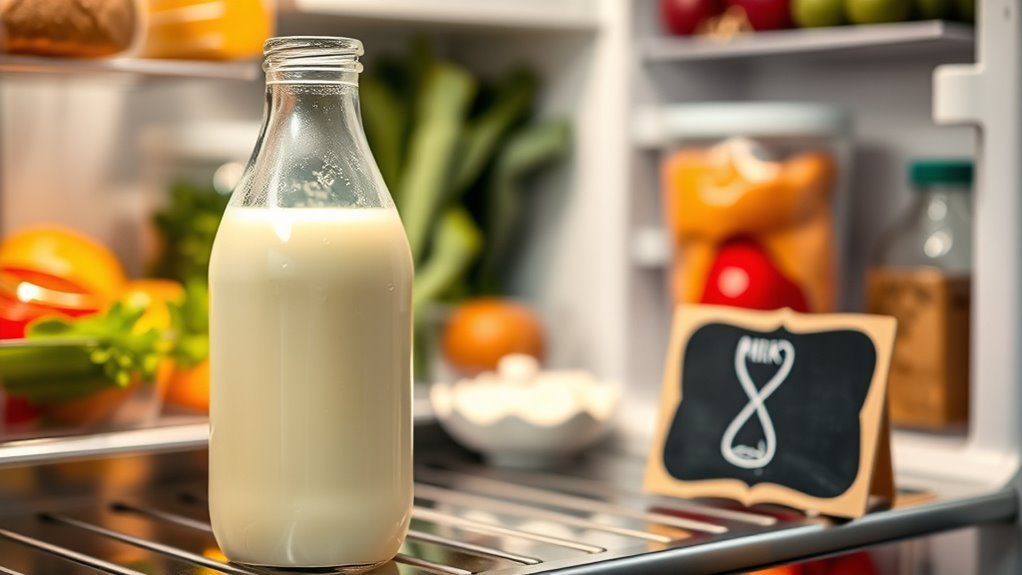
Storing your expressed breast milk properly in the refrigerator keeps it safe and fresh for your baby. Always place your milk in the back of the refrigerator, where the temperature stays steady at about 39°F (4°C).
Keep expressed breast milk fresh by storing it at the back of the fridge at a steady 39°F (4°C).
Avoid storing milk in the door, as temperature fluctuations there can lead to spoilage. Use airtight, clean storage containers to prevent contamination and help with spoilage prevention.
Label each container clearly with the date expressed, so you can track the expiration date and use refrigerated breast milk within 4 days. If milk has been stored at room temperature before refrigeration, refrigerate it promptly to maintain freshness.
Following these best practices ensures your baby receives the safest milk possible without waste.
Guidelines for Combining Fresh and Stored Breast Milk

Although combining fresh and stored breast milk can save time and reduce waste, you should never add warm milk directly to refrigerated or frozen milk. Warm milk raises the milk temperature, promoting bacterial growth and compromising milk storage safety.
Instead, cool freshly expressed milk to room temperature or below before combining breast milk with refrigerated breast milk. This milk cooling process helps maintain milk mixing guidelines and prevents bacterial contamination.
Avoid adding warm milk to frozen milk, as it can cause partial thawing, reducing milk quality. When thawing breast milk, combine only after both milks reach appropriate temperatures.
Use the mixed milk within 24 hours of thawing or mixing to ensure freshness and minimize bacterial risks. Following these steps ensures safe milk storage duration and preserves your baby’s health.
Recommended Storage Durations at Different Temperatures
Since breast milk quality depends heavily on storage conditions, understanding recommended durations at various temperatures is essential for your baby’s health. When you store milk in the refrigerator at 39°F (4°C), you can keep it safely for up to 4 days.
For ideal safety, use thawed milk within 24 to 48 hours if refrigerated. Always place stored milk in the back of the fridge, where temperature remains most consistent. This helps maintain quality and reduce nutrient loss.
Don’t forget to label each container with the date of expression to track the storage timeframe accurately.
- Refrigerate fresh milk up to 4 days at 39°F (4°C)
- Use thawed milk within 24-48 hours after thawing
- Store milk in the back of the fridge for stable temperature and quality
Safe Methods for Thawing and Warming Breast Milk
When you need to thaw frozen breast milk, doing it gradually in the refrigerator over 12 to 24 hours helps preserve its nutrients and safety. Avoid thawing breast milk at room temperature, as it can promote bacterial growth.
For warming breast milk, place the bottle in warm water or run warm water over it. Never use a microwave, which can create hot spots and degrade nutrients.
After warming, gently swirl the milk to mix any separated fat without shaking vigorously, which can break down proteins.
Use thawed breast milk within 24 hours if kept in the refrigerator, and discard any unused milk after this period to ensure your baby’s safety.
Following these safe methods keeps your breast milk both nutritious and safe to feed.
Understanding Variations in Breast Milk Storage Advice
Handling breast milk properly doesn’t stop at thawing and warming; understanding how long you can safely store it adds another layer of care. Breast milk storage advice varies due to factors like temperature control, container type, and handling practices.
Different storage guidelines recommend anywhere from 4 days to 12 months, depending on whether the milk is fresh, refrigerated, or thawed milk. Fluctuations in your refrigerator’s temperature can affect milk safety and freshness, so monitoring is key.
To navigate these variations, focus on consistent hygiene and proper labeling. Keep these tips in mind:
- Store breast milk in the back of the refrigerator, where temperature is most stable
- Label milk with collection date and time to track expiration time
- Follow specific storage durations for fresh, refrigerated, and thawed milk to maintain milk safety
Frequently Asked Questions
What Is the 6 6 6 Rule for Breast Milk?
The 6 6 6 rule means you can keep breast milk at room temperature for 6 hours, in the fridge for 6 days, and in the freezer for 6 months.
Always check your storage conditions to stay safe.
Is Breast Milk Still Good After 5 Days in the Fridge?
You might think breast milk’s fine after 5 days, but it’s best not to risk it. After 5 days, spoilage and bacteria grow, so you shouldn’t use it to keep your baby safe and healthy.
What Is the 5 5 5 Rule for Breast Milk?
The 5-5-5 rule means you can store breast milk for 5 days in the fridge, 5 months in a standard freezer, and 5 months to a year in a deep freezer, keeping it safe and nutritious for your baby.
How Will I Know if Breast Milk Is Spoiled?
Don’t beat around the bush. If your breast milk smells sour, looks curdled, changes color, or has mold, it’s spoiled.
Trust your senses and toss it to keep your baby safe and healthy.
Conclusion
Think of storing breast milk like keeping a precious flower fresh—you wouldn’t leave it by a sunny window, right? Similarly, by storing your milk at 39°F (4°C) in airtight containers at the back of your fridge, you maintain its goodness for up to 4 days.
Just like watering a plant regularly, labeling and timely use ensures your baby gets the freshest nourishment possible. Follow these simple steps, and you’ll keep that liquid gold safe and nourishing every time.
Remember, proper storage is key when considering how long breast milk is good in the fridge. By keeping it cold and sealed, you preserve its nutrients and protect it from spoilage.