How Long Is Breast Milk Good in the Fridge? Safe Storage Tips for Moms
When you express breast milk, knowing how long breast milk is good in the fridge is vital for your baby’s health. You might assume it lasts for days, but there are specific guidelines to follow to guarantee safety and nutrient quality.
Storing milk properly can make a big difference, and understanding these details helps you avoid waste and keep your little one nourished. Let’s explore what you need to keep in mind when refrigerating breast milk.
Recommended Containers for Storing Breast Milk

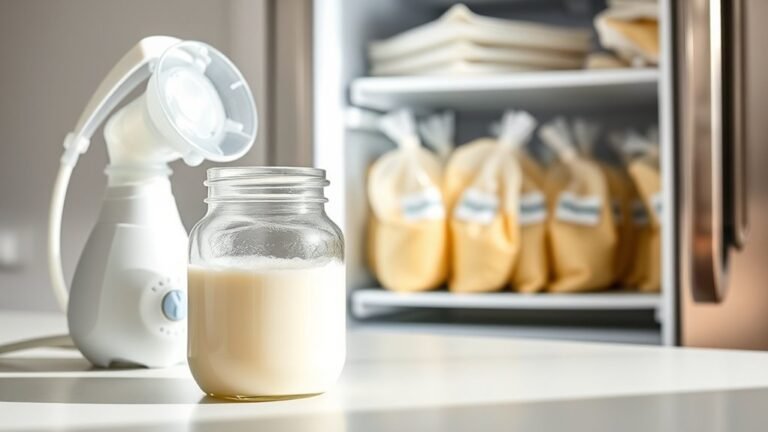
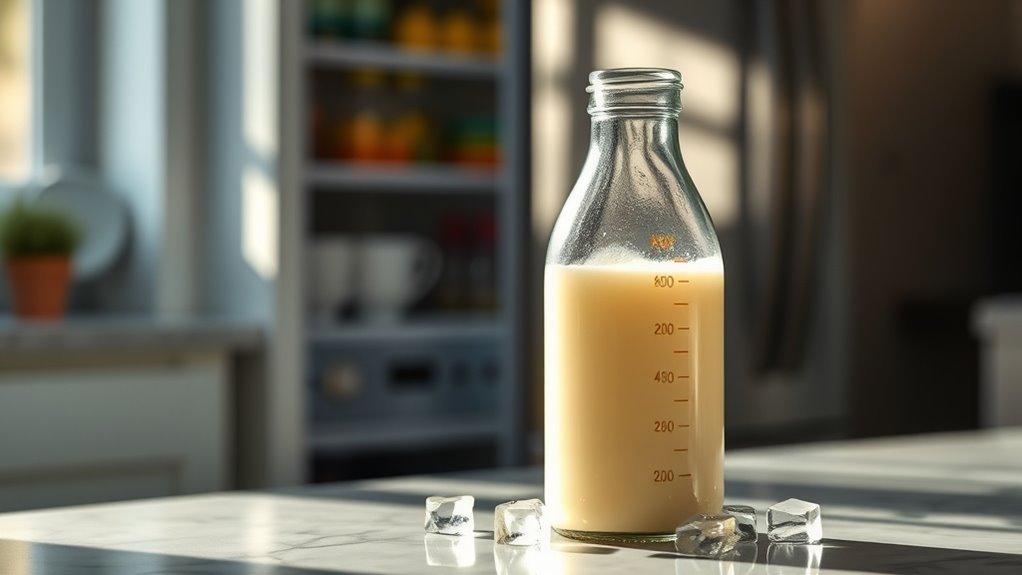
When storing breast milk, you should use clean, food-grade glass or BPA-free hard plastic containers with tight-fitting caps to keep the milk safe and fresh. These storage containers prevent contamination and help maintain milk quality.
Use clean, food-grade glass or BPA-free plastic containers with tight-fitting caps to keep breast milk fresh and safe.
Glass containers and BPA-free plastic containers both work well, but make sure they’ve airtight caps to avoid spills and exposure to air. Specially designed breast milk storage bags are also acceptable, but avoid household plastic bags or disposable liners.
Always wash and sanitize your storage containers before each use to guarantee safety.
Label each container with the date expressed using waterproof labels and ink to track freshness easily.
Store milk in small portions, around 2-4 ounces, so you can thaw only what you need and reduce waste effectively.
Best Practices for Refrigerating Expressed Milk

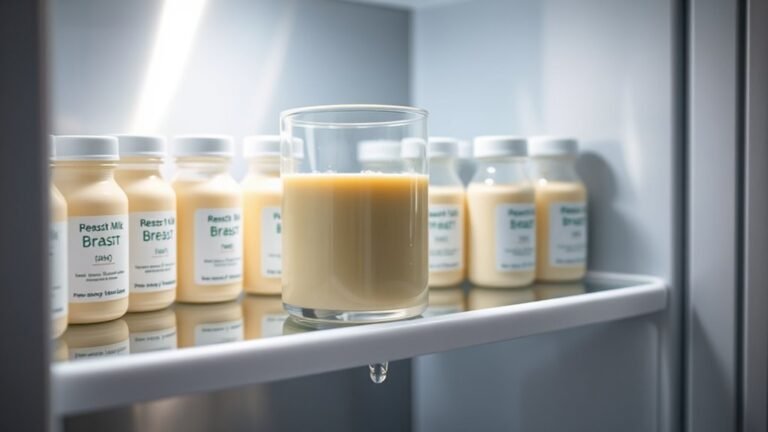
Since proper refrigeration preserves breast milk’s quality and safety, you should store it at 39°F (4°C) or below and keep it in the back of the fridge where the temperature stays most consistent.
To maintain food safety and maximize storage time, follow these best practices when you refrigerate expressed milk:
- Use a clean storage container designed for breast milk.
- Label each container with the expression date to track expiration.
- Avoid storing milk in the front of the refrigerator or the door to prevent temperature fluctuations.
- Keep a thermometer inside the fridge to monitor temperature consistently.
- When thawing refrigerated milk, do so gently and use it within recommended timeframes.
Following these steps helps ensure your milk stays fresh, safe, and nourishing for your baby.
Guidelines for Combining Fresh and Stored Milk

Properly storing expressed milk is just one part of keeping it safe and nutritious. When you combine fresh and stored milk, make sure the freshly expressed milk has cooled to refrigerator temperature (around 39°F) before adding it to already cooled milk. This step is vital to prevent spoilage by avoiding temperature spikes.
Never add warm milk safely to refrigerated or frozen milk, as it can promote bacterial growth.
Follow breast milk storage guidelines by mixing milk gently to ensure even nutrient distribution and prevent fat separation.
After combining, store in the refrigerator and use within 24 hours, adhering to the shortest storage duration between the two milk portions. This careful process helps maintain milk quality and safety for your baby.
Safe Storage Durations for Breast Milk in the Fridge
Although breast milk can stay fresh in the fridge for up to 4 days at 39°F (4°C), you should always store it in the coldest part, like the back of the fridge, to keep it safe and nutritious. Proper storage and temperature control are key to maintaining food safety.
When dealing with thawed breast milk, remember to use it within 24 hours and never exceed the original 4-day storage duration from expression. Always practice good milk labeling to track the expiration date clearly.
- Store breast milk at or below 40°F (4°C) in the refrigerator
- Keep milk in the back of the fridge for consistent temperature
- Label milk with the date of expression for proper storage
- Use thawed breast milk within 24 hours of refrigeration
- Avoid mixing thawed milk with fresh or frozen milk unless guidelines are followed
Proper Thawing and Handling of Frozen Breast Milk
When you need to thaw frozen breast milk, it’s best to plan ahead and place it in the refrigerator overnight or gently warm it under warm running water. Avoid thawing breast milk at room temperature to reduce bacterial growth.
Once thawed, immediately refrigerate the milk and label thawed milk with the date to ensure proper tracking. Use the milk within 24 hours for milk safety and never refreeze thawed milk.
Refrigerate thawed breast milk promptly, label with the date, use within 24 hours, and never refreeze.
For proper warming, gently swirl the milk or warm it under warm water instead of using a microwave, which can create hot spots and damage nutrients.
If your baby doesn’t finish the bottle, discard leftover milk to prevent contamination. Following these thawed milk handling tips preserves quality and keeps your baby safe.
Frequently Asked Questions
What Is the 6 6 6 Rule for Breast Milk?
The 6 6 6 rule means you can keep freshly expressed breast milk at room temperature for 6 hours, in the fridge for 6 days, and in the freezer for 6 months, ensuring it’s stored safely and stays fresh.
Is Breast Milk Still Good After 5 Days in the Fridge?
Would you risk your baby’s health? Breast milk isn’t safe after 5 days in the fridge. You shouldn’t use it because bacterial growth increases, so always discard milk stored beyond the recommended 4-day limit.
What Is the 5 5 5 Rule for Breast Milk?
The 5-5-5 rule means you can keep breast milk at room temperature for 5 hours, refrigerate it within 5 hours, and use it within 5 days in the fridge. This keeps your milk safe and fresh.
How Will I Know if Breast Milk Is Spoiled?
You can’t judge a book by its cover, but you can trust your senses. If breast milk smells sour, looks lumpy or discolored, or tastes off, it’s spoiled. Don’t risk feeding it to your baby.
Conclusion
When it comes to storing breast milk in your fridge, remember: “A stitch in time saves nine.” By keeping your milk at 39°F (4°C), labeling it with dates, and using the oldest milk first, you’ll guarantee it stays fresh and nutritious for up to 4 days.
Always store milk in the back of the fridge, avoid refreezing thawed milk, and use it within 24 hours. These simple steps protect your baby’s health and give you peace of mind.
Understanding how long breast milk is good in the fridge helps ensure your baby receives safe and healthy nutrition every time. Proper storage is key to maintaining the quality and safety of breast milk.