How Long Is Breast Milk Good in the Fridge
You can keep freshly expressed breast milk in your fridge for up to four days if you store it properly at or below 4°C (39°F). Proper storage and handling of breast milk are essential to ensure its safety and freshness for your baby.
Make sure to use clean containers, label them with the date, and place them at the back where the temperature is most stable. Watch for any sour smell or unusual appearance, which means it’s time to discard.
If you want to learn how to store and handle breast milk safely, there’s more helpful info ahead.
Recommended Storage Duration for Fresh Breast Milk in the Refrigerator

Although fresh breast milk can be stored safely, you should keep it in the refrigerator for no more than four days to guarantee it stays nutritious and safe for your baby.
Store fresh breast milk in the fridge for up to four days to keep it safe and nutritious.
Storing breast milk beyond this period increases the risk of bacterial growth and nutrient degradation.
Make sure your refrigerator maintains a consistent temperature at or below 4°C (39°F) to preserve milk quality.
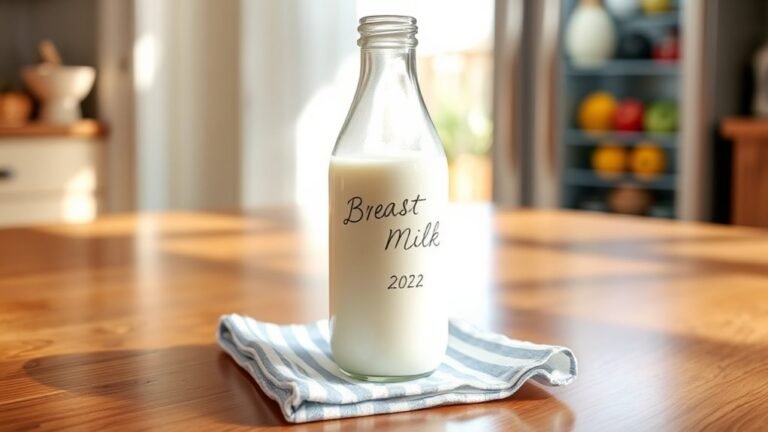
Use clean containers designed for breast milk storage, and always label them with the date you expressed the milk.
When you’re ready to use the milk, warm only the portion you need to avoid repeated heating.
Following these guidelines helps ensure your baby receives fresh, safe milk every time.
Factors Affecting Breast Milk Shelf Life in the Fridge

Since several factors influence how long breast milk stays fresh in your fridge, understanding them can help you store it safely.
The temperature of your refrigerator plays a key role; keeping it consistently at or below 4°C (39°F) slows bacterial growth and preserves milk quality.
How you handle the milk before refrigeration matters too. Minimizing exposure to room temperature reduces contamination risk.
Also, freshly expressed milk generally lasts longer than thawed milk, which should be used more quickly.
The cleanliness of your storage containers and the milk’s initial freshness impact shelf life as well.
Finally, avoid frequent opening of the fridge door, which causes temperature fluctuations and can shorten the milk’s freshness.
Being mindful of these factors ensures your baby gets safe, nutritious breast milk.
How to Properly Store Breast Milk in the Refrigerator

When you store breast milk in the refrigerator, using clean, BPA-free containers and labeling each with the date helps you keep track of freshness and safety. Proper storage guarantees your baby gets the best nutrition without contamination.
Follow these steps to store breast milk safely:
- Use small containers (2-4 ounces) to avoid wasting leftover milk.
- Leave some space at the top of each container to allow for expansion during freezing.
- Seal containers tightly to prevent odors and bacteria from entering.
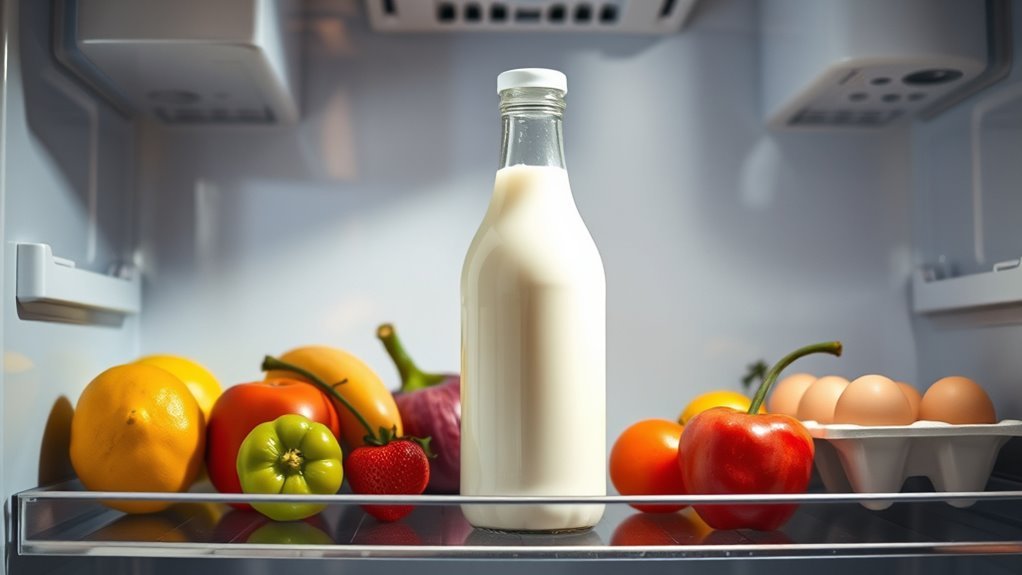
- Place milk at the back of the fridge, where temperature is most stable, not in the door.
Signs That Refrigerated Breast Milk Has Spoiled
Storing breast milk properly in the refrigerator helps maintain its quality, but it’s still important to know how to recognize when it has gone bad. You should check the milk’s smell first; spoiled breast milk often develops a sour or rancid odor.
Properly refrigerated breast milk can spoil—trust your nose to detect sour or rancid odors indicating it’s time to discard.
Also, observe the milk’s texture. If you notice curdling or separation that doesn’t mix back together after gently swirling, it’s a sign the milk has spoiled.
Watch out for any unusual colors, like pink or greenish tints, which indicate contamination.
If the milk looks or smells off, don’t risk feeding it to your baby. Trust your senses and always discard breast milk that shows these signs to ensure your baby’s safety and health.
Tips for Labeling and Organizing Breast Milk Containers
Although managing breast milk can feel overwhelming, labeling and organizing your containers properly makes the process much easier. Clear labels help you track freshness and avoid waste.
Here are four tips to keep your breast milk storage neat and efficient:
- Use waterproof labels to prevent smudging from condensation or spills.
- Write the date and time of expression clearly, so you always use the oldest milk first.
- Group containers by date in the fridge, placing older milk at the front for easy access.
- Use separate bins or trays to keep breast milk away from other foods and reduce cross-contamination.
Following these steps ensures you’re always feeding your baby fresh milk without confusion or stress.
Comparing Refrigerator Storage to Freezing Breast Milk
Because breast milk’s nutritional quality and safety depend on proper storage, you’ll want to understand the key differences between keeping it in the fridge versus freezing it. Refrigeration keeps milk fresh for short-term use, while freezing extends its shelf life considerably. However, freezing can marginally reduce some immune properties.
Here’s a quick comparison to help you decide:
| Aspect | Refrigerator Storage |
|---|---|
| Duration | Up to 4 days |
| Nutritional Impact | Minimal |
| Convenience | Ready to use immediately |
| Space | Limited capacity |
| Aspect | Freezing |
| Duration | Up to 6 months |
| Nutritional Impact | Slight reduction possible |
| Convenience | Requires thawing |
| Space | More storage space needed |
Choose based on how soon you plan to use the milk and your storage options.
Safe Practices for Thawing and Using Refrigerated Breast Milk
When you thaw refrigerated breast milk, handling it carefully guarantees your baby stays safe and gets the most nutrients. Always thaw milk in the fridge or by placing the container in warm water, not in the microwave, which can create hot spots and destroy nutrients.
After thawing, use the milk within 24 hours and never refreeze it. Gently swirl the milk to mix the separated fat; avoid shaking vigorously as it can damage the milk’s valuable components.
Here are four safe practices to follow:
- Thaw milk overnight in the refrigerator for gradual warming.
- Use thawed milk within 24 hours and discard leftovers.
- Avoid microwaving; use warm water instead.
- Gently swirl before feeding to mix separated layers.
These steps keep your baby’s milk safe and nutritious.
Common Mistakes to Avoid When Storing Breast Milk in the Fridge
Handling breast milk properly after thawing is just one part of keeping it safe. When storing breast milk in the fridge, avoid common mistakes like placing it in the door where temperature fluctuates. Instead, keep it in the back where it’s coldest.
Store breast milk in the back of the fridge, not the door, to maintain a consistent, cold temperature.
Don’t mix freshly expressed milk with older milk unless you cool the new milk first, to prevent spoilage.
Also, label each container with the date it was expressed to use the oldest milk first.
Avoid overfilling containers to allow for expansion during freezing. Never refreeze thawed milk, and don’t store milk past recommended times, usually up to 4 days in the fridge.
Frequently Asked Questions
Can Breast Milk Be Refrigerated After Being Left Out at Room Temperature?
Yes, you can refrigerate breast milk after it’s been left out, but only if it’s been at room temperature for less than four hours. After that, it’s safer to discard it to protect your baby.
Is It Safe to Mix Freshly Expressed Milk With Refrigerated Milk?
Wondering if you can blend the old with the new? Yes, you can mix freshly expressed milk with refrigerated milk, but cool the fresh milk first to match temperatures, keeping your baby’s nutrition safe and sound.
How Does Refrigeration Affect the Nutritional Value of Breast Milk?
Refrigeration slightly reduces some immune factors in breast milk, but it mostly keeps nutrients intact.
You’ll still get essential fats, proteins, and vitamins, so your baby benefits from stored milk just like fresh milk.
Can Refrigerated Breast Milk Be Reheated Multiple Times?
You can’t dance with fire twice. Reheated breast milk shouldn’t be warmed multiple times. Each time you reheat, nutrients fade and bacteria may grow, so warm only what you’ll use to keep your baby safe and nourished.
What Type of Containers Are Best for Storing Breast Milk in the Fridge?
You should use BPA-free plastic or glass containers with tight-fitting lids, or specially designed breast milk storage bags. They keep milk safe, prevent leaks, and fit well in your fridge.
Avoid regular plastic bags.
Conclusion
You might worry that storing breast milk in the fridge won’t keep it fresh long enough, but if you follow proper storage guidelines, it stays safe for up to four days.
Imagine opening the fridge to find perfectly preserved milk, ready to nourish your baby without a second thought. By labeling, organizing, and checking for spoilage signs, you’ll confidently provide the best for your little one every time.
Remember, understanding how long breast milk is good in the fridge is key to ensuring your baby gets safe and nutritious milk whenever needed.