How Long Is Heated Breast Milk Good For
When you heat breast milk, it is important to use it within two hours to keep it safe for your baby. Heated breast milk should not be reheated more than once, and any leftover milk after feeding should be discarded.
Always heat breast milk gently using warm water or a bottle warmer—not the microwave. This method helps preserve nutrients and prevents hot spots that could burn your baby.
Proper handling of heated breast milk helps keep it fresh and nutritious. If you want to learn the best ways to store, heat, and spot spoiled milk, keep exploring these tips.
Understanding the Effects of Heating on Breast Milk

Although heating breast milk is common for feeding convenience, it’s important to understand how it affects the milk’s nutritional and immunological properties. When you heat breast milk, some sensitive nutrients like vitamins B and C may degrade, reducing their effectiveness.
The heating process can also impact beneficial enzymes and antibodies that help protect your baby from infections. You’ll want to avoid overheating, as excessive heat damages these valuable components more quickly.
Using gentle warming methods, such as placing the milk container in warm water, helps preserve most of the milk’s benefits. Keep in mind that while heating may slightly reduce certain properties, breast milk still provides essential nutrition and immune support, making it preferable to formula when feeding your baby.
Safe Time Limits for Using Heated Breast Milk

Understanding how heating affects breast milk helps you handle it safely after warming. Once breast milk is heated, it’s best to use it within two hours to prevent bacterial growth.
Avoid reheating milk multiple times. Once warmed, any unused milk should be discarded.
If you’ve thawed frozen milk and heated it, treat it like fresh milk and use it quickly. Don’t refreeze or store for later.
Always keep warmed milk at room temperature for no more than two hours. If your baby doesn’t finish the bottle, toss the leftover milk rather than saving it.
Following these time limits ensures your baby gets fresh, safe milk without risking contamination or nutrient loss. Staying mindful of these guidelines protects your baby’s health every feeding.
Proper Methods for Heating Breast Milk

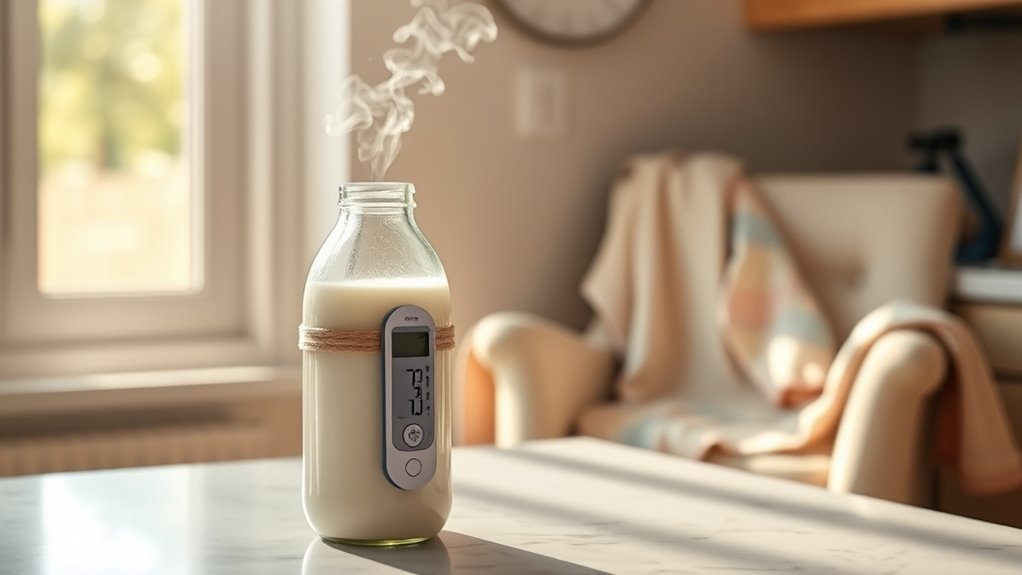
When you heat breast milk, you want to do it gently to preserve its nutrients and avoid hot spots that could burn your baby’s mouth. The best way is to place the bottle or bag in a bowl of warm water for a few minutes, swirling occasionally to distribute heat evenly.
Avoid microwaving breast milk since it heats unevenly and can destroy valuable nutrients. You can also use a bottle warmer designed specifically for breast milk, following the manufacturer’s instructions carefully.
Always check the milk’s temperature by dropping a few drops on your wrist before feeding. Never boil breast milk or heat it directly on the stove, as this can degrade its quality. Heating slowly and evenly ensures your baby gets safe, nutritious milk every time.
Signs That Heated Breast Milk Has Gone Bad
How can you tell if heated breast milk has gone bad? You need to trust your senses and be cautious. When breast milk spoils, it often has distinct signs that are hard to miss. Watch for these clear indicators:
- Off smell: Sour or rancid odors mean the milk isn’t safe.
- Unusual color or texture: If it looks curdled or has separated excessively, it’s a red flag.
- Taste change: If you notice a bitter or odd taste, don’t offer it to your baby.
Always check these signs before feeding. If you suspect the milk has spoiled, it’s best to discard it to keep your baby safe and healthy.
If you suspect spoiled milk, discard it to ensure your baby’s safety and health.
Don’t take risks with questionable milk. Fresh or properly stored milk is always a safer choice.
Best Practices for Storing Breast Milk Before and After Heating
Although breast milk is a natural source of nourishment, proper storage before and after heating is essential to maintain its safety and nutritional value. Store freshly expressed milk in clean, BPA-free containers and label them with the date.
Keep it refrigerated if you plan to use it within 4 days or freeze for longer storage. When you heat breast milk, do so gently using a warm water bath or bottle warmer. Never microwave.
After warming, use the milk within 2 hours and avoid reheating. Any leftover milk should be discarded to prevent bacterial growth.
Always store breast milk at the back of the fridge or freezer, where the temperature is most consistent.
Following these steps helps ensure your baby gets safe, nutrient-rich breast milk every time.
Differences Between Fresh, Refrigerated, and Frozen Breast Milk Heating
Since fresh, refrigerated, and frozen breast milk each have different properties, you need to handle and heat them accordingly to preserve their quality. Fresh milk warms quickly and evenly, so you can gently heat it in warm water.
Refrigerated milk might separate, requiring gentle swirling to mix fats before warming. Frozen milk demands slow thawing in the fridge or warm water, never microwaving, to avoid hot spots.
Keep these points in mind:
- Fresh milk: Heat only what your baby will consume immediately.
- Refrigerated milk: Use within 24 hours after warming.
- Frozen milk: Thaw completely before heating; never refreeze once thawed.
Understanding these differences helps you maintain the milk’s nutrients and ensure your baby’s safety.
Tips to Preserve Nutrients When Heating Breast Milk
To preserve the valuable nutrients in breast milk, you should heat it gently and avoid high temperatures that can degrade important enzymes and antibodies. Use a warm water bath instead of a microwave or stovetop to evenly warm the milk without creating hot spots.
Stir the milk gently to distribute heat but avoid vigorous shaking, which can break down some beneficial proteins. Always test the temperature before feeding to ensure it’s warm, not hot.
Heat only the amount your baby will consume to prevent reheating leftovers, which can further reduce nutrient quality. Finally, heat breast milk just once; repeated warming can compromise its nutritional and immunological properties.
Frequently Asked Questions
Can I Reheat Breast Milk More Than Once?
You shouldn’t reheat breast milk more than once because heating can break down valuable nutrients and increase bacteria growth.
Instead, warm only the amount your baby will drink to keep it safe and nutritious.
Is Microwaving Breast Milk Safe?
No, you shouldn’t microwave breast milk because it heats unevenly and can create hot spots that might burn your baby.
Instead, warm it gently by placing the bottle in warm water or using a bottle warmer.
How Does Heating Breast Milk Affect Allergies?
Heating breast milk can reduce some immune factors, but it doesn’t cause allergies.
You shouldn’t overheat it, though, because high temperatures might break down proteins that help protect your baby from allergens and infections.
Can Heated Breast Milk Be Used for Formula Mixing?
No, you shouldn’t use heated breast milk for formula mixing. Mixing can cause bacterial growth and spoilage.
Always prepare formula separately with clean water and powder to keep your baby safe and healthy.
What Are Alternatives to Heating Breast Milk?
You can try warming breast milk by placing the bottle in a bowl of warm water or using a bottle warmer. Avoid microwaving to preserve nutrients, and sometimes feeding it at room temperature works just fine.
Conclusion
Think of heated breast milk like a warm hug that can only last so long—once it cools down, the magic fades. You’ve got about two hours to use it safely after warming. Just like reheating soup too many times spoils the flavor, repeatedly heating breast milk can break down its precious nutrients.
By following proper heating and storage tips, you’ll keep your baby’s milk nourishing and fresh, giving them the best start every time. Remember, how long is heated breast milk good for depends on careful handling to preserve its quality and safety.