How Long Is Thawed Breast Milk Good For? Storage & Safety Guidelines
When you thaw breast milk, you want to be sure it’s still safe and nutritious for your baby. Understanding how long thawed breast milk is good for helps prevent waste and protects your little one’s health. Knowing the proper storage and handling techniques is essential in maintaining the quality of thawed breast milk.
The answer to how long thawed breast milk remains safe isn’t always straightforward. It depends on factors like storage temperature and the method of thawing. Let’s explore the key aspects that influence the shelf life of thawed breast milk.
Understanding Thawed Breast Milk Safety

Although thawed breast milk offers essential nutrients, you need to use it within 24 hours to keep it safe. Once thawed, proper handling and temperature control are vital to minimize bacterial growth and contamination.
Store thawed breast milk in the refrigerator at or below 4°C (39°F) immediately and avoid leaving it at room temperature for more than 2 hours. Extended exposure to room temperature increases the risk of bacterial contamination, compromising safety.
Remember, you should never refreeze thawed milk because it affects quality and safety.
By adhering to these guidelines, you regulate storage time effectively and preserve the milk’s nutrients and immune properties.
Prioritizing refrigeration and timely use within 24 hours ensures that thawed breast milk remains safe and beneficial for your baby.
Recommended Storage Duration for Thawed Milk

When you thaw breast milk, it’s important to use it within 24 hours if you store it in the refrigerator to guarantee its safety and nutritional value. Here’s what you need to know about the recommended storage duration for thawed milk:
- Store thawed breast milk in the refrigerator and use within 24 hours; don’t refreeze.
- If thawed milk is kept at room temperature (77°F or colder), use it within 2 hours.
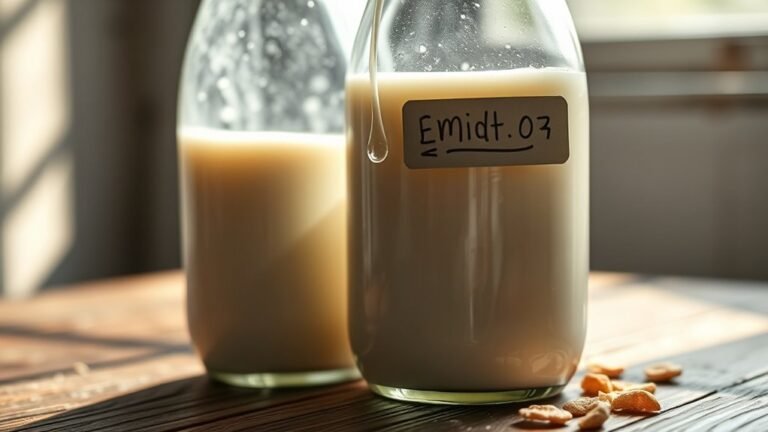
- Label thawed milk with the date of thawing to track storage duration accurately.
- Discard any thawed milk left unused after 24 hours to avoid risks; fresh milk can be stored longer in the freezer before thawing.
Following these guidelines ensures your baby receives safe, nutritious milk every time.
Effects of Temperature on Thawed Milk Quality

Because temperature directly impacts the safety and nutritional value of thawed breast milk, you should store it at 39°F (4°C) and use it within 24 hours. Proper temperature control through refrigeration slows bacterial growth and reduces spoilage, ensuring milk safety.
If thawed breast milk stays at room temperature above 77°F for over two hours, bacteria multiply quickly, risking your baby’s health.
Storage temperature also affects nutrient preservation; colder conditions better maintain immune factors and vitamins.
Higher temperatures accelerate fat degradation and protein breakdown, diminishing the milk’s quality.
By consistently keeping thawed breast milk refrigerated at the recommended temperature, you preserve its essential nutrients and immune benefits while minimizing spoilage.
Signs Your Thawed Breast Milk Has Gone Bad
If you notice a sour or rancid smell coming from thawed breast milk, you should discard it immediately since this clearly signals spoilage.
To guarantee your baby’s safety, watch for these signs that indicate thawed milk has gone bad:
- Sour smell or foul odor. A strong rancid or off scent means expiration.
- Discoloration. Yellow or brown tints suggest spoilage.
- Presence of mold. Any unusual growth is a definite reason to discard.
- Clumps or curdling. Milk that separates unusually shows it’s no longer safe.
Always trust these signs to avoid feeding spoiled milk. Prioritize your baby’s health by discarding any breast milk exhibiting these spoilage indicators.
Best Practices for Refrigerating Thawed Milk
Recognizing signs that thawed breast milk has gone bad helps you protect your baby, but proper refrigeration plays a big role in keeping it safe. Once you thaw breast milk, refrigerate it immediately at or below 4°C (39°F).
For best storage, keep thawed milk in the back of the refrigerator, away from the door, to maintain a consistent temperature.
Always label the container with the date and time of thawing so you can keep track and ensure it’s used within 24 hours.
If any milk remains after this period or shows unusual odor or color, discard it promptly.
Following these best practices ensures your baby gets safe, nutritious milk every time you feed them.
Why Refreezing Thawed Milk Is Not Advisable
When you thaw breast milk, you shouldn’t refreeze it since doing so can encourage bacterial growth and compromise your baby’s safety. Refreezing thawed breast milk goes against CDC recommendations and established storage guidelines because:
- It increases bacterial growth, raising health risks for your infant.
- The quality of the milk declines, affecting taste and smell.
- Nutrient loss occurs, reducing essential enzymes and immune properties.
- Each freeze-thaw cycle further diminishes the milk’s safety and benefits.
To protect your baby, always use thawed milk within 24 hours if refrigerated, and never refreeze it. Following these storage guidelines ensures you maintain the milk’s nutritional value and safeguard your child’s health.
Nutritional Changes After Thawing
Although freezing breast milk preserves many of its nutrients, thawing initiates a gradual decline in some vitamins, enzymes, and immune-boosting factors. You’ll notice that the nutritional content starts to degrade soon after the thawing process begins.
Immune factors, essential for your baby’s health, reduce during storage and thawing, especially if milk is left at room temperature.
Nutritional degradation accelerates markedly when thawed milk is stored beyond 24 hours at room temperature, so refrigeration is key to slowing this loss.
To ensure maximum freshness and retain as much nutritional value as possible, use thawed breast milk within 24 hours and avoid refreezing.
Keeping storage duration short and monitoring conditions helps maintain the benefits of vitamins, enzymes, and immune factors for your baby’s well-being.
Proper Thawing Techniques to Preserve Milk
To preserve the nutrients and safety of thawed breast milk, you should warm it gradually using lukewarm water or a bottle warmer instead of a microwave. Proper thawing is key to maintain milk quality and prevent hot spots that can burn your baby or destroy nutrients.
Warm thawed breast milk gently with lukewarm water or a bottle warmer to protect nutrients and avoid hot spots.
Follow these steps for safe handling:
- Thaw frozen milk overnight in the refrigerator or under warm running water for quicker use.
- Avoid refreezing thawed milk to prevent degradation and bacterial risks.
- After thawing, gently swirl the milk to mix separated fat without shaking vigorously.
- Always use thawed breast milk within 24 hours and store it properly in the refrigerator until feeding.
Tips for Handling and Using Thawed Breast Milk
Since thawed breast milk can spoil quickly, you should use it within 24 hours if stored in the refrigerator. Following proper storage guidelines helps maintain milk freshness and guarantees breast milk safety.
Avoid refreezing thawed breast milk, as this increases the risk of bacterial growth.
When warming milk, never use a microwave; instead, warm it gently in warm water or a bottle warmer to preserve nutrients and avoid hot spots.
Handle milk carefully by swirling it gently to mix separated fats rather than shaking vigorously.
After feeding, always discard leftovers to prevent bacterial contamination.
Good milk handling and adherence to refrigeration recommendations are essential to keep your baby safe and healthy while maximizing the benefits of your stored breast milk.
Frequently Asked Questions
How Long Can Breastmilk Last After Being Thawed?
You can keep thawed breast milk in the fridge for up to 24 hours. Don’t leave it at room temperature for more than 2 hours, and never refreeze it once it’s thawed. Use it promptly!
What Is the 3-3-3 Rule for Breast Milk?
You might be surprised, but the 3-3-3 rule is simple: store freshly expressed milk at room temp for 3 hours, refrigerate it up to 3 days, and freeze it for 3 months to keep it safe and nutritious.
Why Is Thawed Breast Milk Only Good for 2 Hours?
Thawed breast milk’s only good for 2 hours because bacteria can multiply quickly at room temperature.
You don’t want to risk your baby getting sick, so it’s best to use or discard it promptly.
What Is the 6 6 6 Rule for Breast Milk?
You store, you chill, you freeze. 6 hours at room temp, 6 days refrigerated, 6 months frozen. This 6-6-6 rule helps you keep breast milk safe, fresh, and nourishing for your little one.
Conclusion
Now that you know how vital proper storage is, you might wonder—how long can thawed breast milk truly stay safe? The answer is shorter than you think.
Keep it in the fridge no longer than 24 hours, or just 2 hours at room temperature, or you risk losing its nutrients and safety. Don’t be tempted to refreeze it; doing so could harm your baby.
Stay vigilant—your baby’s health depends on it. Proper handling and knowing how long thawed breast milk lasts are essential to ensure your baby gets the safest and most nutritious feeding possible.