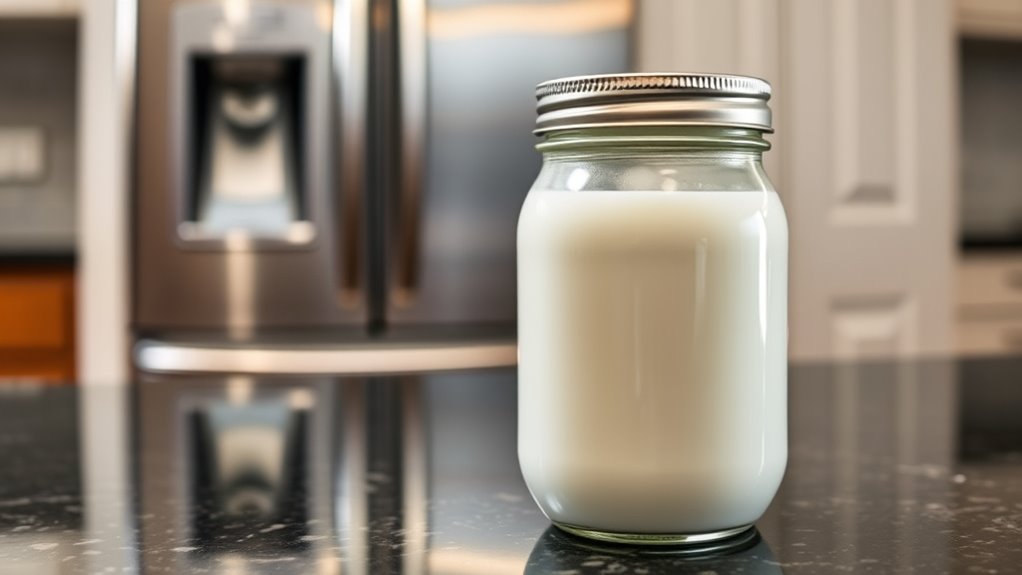
How Long Will Coconut Milk Keep in the Refrigerator?
You can keep opened coconut milk in your fridge for about 5 to 7 days, depending on whether it’s canned, carton, or homemade. Proper storage is key to maintaining its freshness and flavor. Make sure to store it in an airtight container and keep your fridge below 40°F (4°C).
Watch for sour smells or a clumpy texture, which means it’s gone bad. These signs indicate that the coconut milk is no longer safe to use. Proper storage keeps it fresh and tasty for your dishes.
Keep going if you want tips on extending its freshness and spotting spoilage signs.
Understanding Different Types of Coconut Milk

Although coconut milk comes in various forms, you’ll typically encounter three main types: canned, carton, and homemade.
When you grab a can, expect a rich, creamy milk with a high fat content, perfect for curries and desserts.
Carton coconut milk, often found in the refrigerated section, is usually diluted and designed for drinking or lighter cooking. It’s less creamy but convenient for everyday use.
Homemade coconut milk is made by blending fresh coconut meat with water, giving you full control over thickness and freshness.
Each type reacts differently once opened or refrigerated, so knowing which one you’re dealing with helps you store it properly and use it before it spoils.
Understanding these differences guarantees you get the best flavor and texture in your recipes.
Typical Shelf Life of Coconut Milk in the Fridge

Knowing the type of coconut milk you have is key to understanding how long it will last in your fridge. Fresh, canned, and carton varieties each have different shelf lives once refrigerated.
Typically, canned coconut milk lasts about 7 days after opening, while carton coconut milk usually stays good for 5 to 7 days. Fresh coconut milk, being more perishable, lasts only 2 to 3 days.
Always check for signs of spoilage regardless of type.
| Coconut Milk Type | Typical Shelf Life in Fridge |
|---|---|
| Fresh | 2-3 days |
| Canned (opened) | Up to 7 days |
| Carton (opened) | 5-7 days |
| Unopened (any) | Until expiration date |
How to Properly Store Coconut Milk After Opening

Once you’ve opened your coconut milk, you’ll want to transfer it to an airtight container to keep it fresh and prevent it from absorbing other fridge odors. Use a clean glass or plastic container with a tight lid. Avoid leaving the milk in the original can, as exposure to air can cause it to spoil faster.
Label the container with the date you opened it, so you can track its freshness. Store the container on a refrigerator shelf rather than the door, where temperatures fluctuate more. Keep the fridge temperature at or below 40°F (4°C) to maintain quality.
Stir the coconut milk before using, as separation is normal. Proper storage guarantees your coconut milk stays fresh for up to 4-7 days after opening.
Signs Your Coconut Milk Has Gone Bad
Even with proper storage, coconut milk won’t stay fresh indefinitely. You should watch for clear signs it’s gone bad.
Properly stored, coconut milk still has a limited shelf life—always check for signs of spoilage before use.
First, check the smell—if it’s sour or off, don’t use it.
Next, look at the texture; if you see clumps, mold, or excessive separation that doesn’t mix back smoothly, it’s time to toss it.
The color matters too—any darkening or unusual cloudiness indicates spoilage.
Also, taste a small amount if everything else seems fine, but spit it out if it tastes sour or strange.
Trust your senses; if anything about the coconut milk feels off, it’s safer to discard it rather than risk illness or ruining your dish.
Effects of Expired Coconut Milk on Taste and Texture
If you use expired coconut milk, you’ll likely notice changes in both its taste and texture that can negatively impact your dish. The once smooth and creamy liquid may become lumpy or curdled, making it unappealing and difficult to blend well.
The flavor also shifts. Rather than the sweet, nutty richness you expect, it can develop sour or off-putting notes, which overpower your recipe. These changes can ruin the balance in soups, curries, or desserts, leaving a strange aftertaste.
Using expired coconut milk compromises the overall quality, so it’s best to check freshness before adding it. If you detect any odd texture or sour smell, it’s a clear sign your coconut milk has passed its prime and shouldn’t be used in your cooking.
Tips for Extending the Freshness of Coconut Milk
Although coconut milk naturally has a limited shelf life, you can take simple steps to keep it fresh longer. Proper storage and handling play a big role in preserving its flavor and texture. Here’s how you can extend the freshness of your coconut milk:
Transfer unused milk to an airtight container to prevent exposure to air. Store it in the coldest part of your refrigerator, not the door.
Avoid contaminating the milk by using clean utensils every time. Shake or stir well before use, as separation is natural but doesn’t mean spoilage.
Use within 3 to 5 days once opened to enjoy the best quality.
Following these tips will help you make the most of your coconut milk before it loses its freshness.
Using Leftover Coconut Milk Creatively
When you have leftover coconut milk, don’t let it go to waste. There are plenty of delicious ways to incorporate it into your meals.
You can add it to smoothies for a creamy tropical twist or use it as a base for homemade curries and soups to deepen the flavor. Coconut milk also works great in baking; try substituting it for dairy in cakes, muffins, or pancakes to add moisture and richness.
For a revitalizing treat, whip it into a coconut milk ice cream or blend it with fruit for a dairy-free popsicle. Even coffee or tea gets an exotic upgrade with a splash of coconut milk.
Get creative and enjoy the versatility of this creamy, flavorful ingredient!
Comparing Homemade vs. Store-Bought Coconut Milk Storage
Exploring creative uses for leftover coconut milk naturally leads to questions about how long it stays fresh. When you compare homemade and store-bought coconut milk, storage times and methods differ.
Homemade coconut milk lacks preservatives, so it usually lasts 2-3 days in the fridge. Store-bought versions often contain stabilizers, extending shelf life up to 7 days once opened.
Homemade coconut milk lasts 2-3 days refrigerated, while store-bought can stay fresh up to 7 days after opening.
To keep your coconut milk fresh:
- Store both types in airtight containers.
- Refrigerate immediately after use.
- Shake well before each use.
- Smell and check for texture changes.
- Freeze if you won’t use it soon.
Understanding these differences helps you maximize freshness and reduce waste, whether you whip up coconut milk yourself or buy it pre-made.
Frequently Asked Questions
Can Coconut Milk Be Frozen for Longer Storage?
Yes, you can freeze coconut milk for longer storage. Just pour it into an airtight container, leaving space for expansion.
When you thaw it, shake well to recombine, as separation is normal after freezing.
Is Canned Coconut Milk Safe Past the Expiration Date?
Think of the expiration date as a sunset. Once past, the canned coconut milk’s safety dims.
You shouldn’t use it beyond that date, as spoilage risks rise, even if it looks or smells fine.
How Does Coconut Milk Affect People With Nut Allergies?
You don’t need to worry if you have a nut allergy because coconut milk isn’t a tree nut; it’s a fruit. However, always check labels for cross-contamination warnings, as some products might be processed near nuts.
Can Coconut Milk Be Used in Skincare Routines?
You can definitely use coconut milk in your skincare routine; it’s the cream of the crop for moisturizing and soothing.
Just remember to patch test first, so you don’t end up jumping from the frying pan into the fire.
What Are the Environmental Impacts of Coconut Milk Production?
You’ll find coconut milk production impacts include deforestation, habitat loss, and high water use. By choosing sustainably sourced options, you can help reduce environmental damage and support eco-friendly farming practices.
Conclusion
Now that you know how to store coconut milk properly, you can avoid wasting it. For example, Sarah kept her opened coconut milk in an airtight container and used it within five days, preventing spoilage and saving money.
Remember, keeping it cold and sealed extends freshness, so trust your senses for any off smells or changes.
With these tips, you’ll always enjoy creamy, fresh coconut milk in your recipes without worry. Proper storage is key to maximizing the shelf life of coconut milk in the refrigerator.