How Many Cups of Milk Are in a Gallon
If you’re measuring milk, know that one US gallon equals 16 cups since a gallon holds 128 fluid ounces and a cup is 8 ounces. So, when a recipe calls for a gallon, you can confidently use 16 cups of milk. This makes scaling up or down simple, whether you need half or multiple gallons.
Understanding this helps you measure accurately and avoid mistakes, and there’s more to explore on how this affects your cooking and recipes.
Understanding the Gallon Measurement

Although it might seem straightforward, understanding the gallon measurement is key before you figure out how many cups of milk it contains.
Grasping the gallon measurement is essential before determining how many cups of milk it holds.
When you hear “gallon,” you’re dealing with a volume measurement used primarily in the United States for liquids like milk, water, or gasoline.
A gallon is a fixed unit, but it’s important to know that the US gallon differs from the UK gallon, which is larger.
In the US system, a gallon equals 128 fluid ounces. This standardized volume helps you convert gallons into smaller units, like cups, easily.
By grasping this measurement, you’ll avoid confusion when cooking, shopping, or measuring liquids.
Standard Cup Size in US Measurements

A standard cup in US measurements holds exactly 8 fluid ounces, making it a convenient unit for recipes and everyday use. When you measure liquids like milk, knowing this precise volume helps you follow instructions accurately.
Unlike some countries that use metric cups, the US cup is fixed at 8 fluid ounces, which equals about 237 milliliters. Whether you’re baking, cooking, or just pouring yourself a drink, this consistent size ensures your measurements are reliable.
Keep in mind that a “cup” in cooking is different from a measuring cup used for dry ingredients, but for liquids, it’s always 8 fluid ounces.
Understanding this standard size keeps your kitchen work precise and your dishes tasting just right every time.
How Many Cups Are in One Gallon?

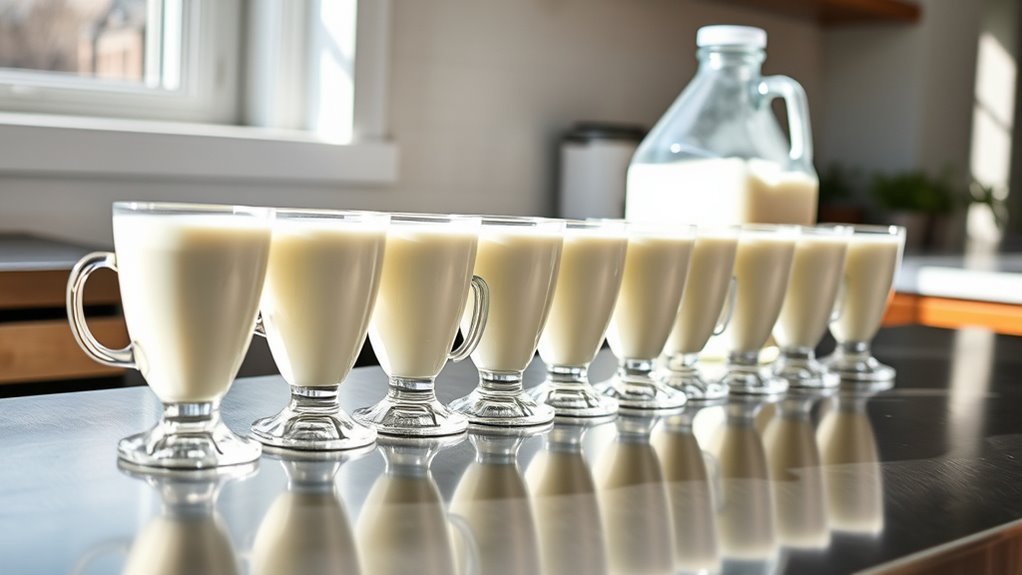
Now that you know a US cup holds 8 fluid ounces, you can easily figure out how many cups fit into a gallon. Since one US gallon equals 128 fluid ounces, dividing 128 by 8 gives you 16 cups in one gallon.
This is helpful when measuring liquids like milk for recipes or daily consumption.
Here’s a quick reference table:
| Volume Unit | Fluid Ounces | Number of Cups |
|---|---|---|
| 1 Gallon | 128 fl oz | 16 cups |
| 1/2 Gallon | 64 fl oz | 8 cups |
| 1 Quart | 32 fl oz | 4 cups |
Knowing these conversions guarantees you measure accurately every time.
Converting Gallons to Cups for Milk
Wondering how to convert gallons of milk into cups for your recipes or daily needs? It’s straightforward: one gallon equals 16 cups. So, if you have a gallon of milk, you can measure out 16 cups from it.
When you need less than a gallon, just multiply the number of gallons by 16 to get the equivalent cups. For example, half a gallon equals 8 cups.
This conversion helps whether you’re baking, cooking, or tracking your daily milk intake.
Remember to use a standard measuring cup to guarantee accuracy. Once you know this simple conversion, measuring milk becomes quick and hassle-free, letting you focus more on your cooking or diet without worrying about complicated math.
Importance of Accurate Measurements in Recipes
Because precise ingredient amounts can make or break a dish, you’ll want to measure milk and other components accurately every time you cook or bake. Milk contributes not only to flavor but also to texture, moisture, and chemical reactions in recipes.
Using too much or too little can cause your baked goods to turn out dense, dry, or overly soggy. When you measure milk correctly, you ensure consistent results and maintain the balance between wet and dry ingredients.
This accuracy helps you achieve the desired rise, crumb, and taste. Whether you’re converting gallons to cups or using smaller units, precise measurement keeps your cooking reliable and enjoyable.
Common Mistakes When Measuring Milk
Although measuring milk seems straightforward, many people make simple errors that affect their recipes. You might think pouring directly from the container is fine, but small mistakes can add up.
Here are three common pitfalls to watch out for:
1. Ignoring the meniscus
Always measure at eye level and read the bottom curve of the milk surface to get an accurate amount.
2. Using the wrong measuring cup
Liquid measurements require liquid measuring cups, not dry ones, to ensure precision.
3. Not leveling off the measurement
If you’re using a measuring cup with volume lines, pour slowly and check that the milk matches the exact line.
Avoid these mistakes to keep your recipes consistent and delicious every time.
Using Measuring Tools for Precision
When you want to measure milk accurately, choosing the right tools makes all the difference. Using a clear measuring cup with marked increments helps you avoid guesswork. A liquid measuring cup with a spout lets you pour without spilling, ensuring precision.
Avoid using dry measuring cups, which aren’t designed for liquids. Also, placing the cup on a flat surface and reading the measurement at eye level prevents errors.
| Tool Type | Best For |
|---|---|
| Liquid Measuring Cup | Pouring and precise volume |
| Measuring Spoons | Small quantities |
| Digital Scale | Weight-based accuracy |
Using these tools properly will help you get the exact amount of milk you need every time.
Differences Between US and UK Gallons
If you’ve ever compared milk measurements internationally, you’ll notice that gallons aren’t the same everywhere. The US gallon and UK gallon differ in volume, which can affect recipes and conversions. Here’s what you need to recognize:
- The US gallon equals 128 US fluid ounces, which is about 3.785 liters.
- The UK (imperial) gallon equals 160 UK fluid ounces, or roughly 4.546 liters.
- Because the UK gallon is larger, it holds about 20% more milk than the US gallon.
When you’re working with gallons, always check which system you’re using. This ensures accurate measurements, especially in cooking or buying liquids. Mixing these up can lead to unexpected results or wasted ingredients.
Tips for Scaling Recipes With Gallons and Cups
Understanding the differences between US and UK gallons helps you avoid confusion when scaling recipes. When you need to adjust a recipe, always convert all measurements to the same system first.
For example, if a recipe calls for 1 gallon of milk, know that a US gallon equals 16 cups, while a UK gallon equals 18.2 cups. Use simple multiplication or division to scale up or down, keeping units consistent.
If you’re doubling, multiply the number of cups by two; if halving, divide by two. Using a kitchen scale alongside volume measurements can improve accuracy.
Finally, write down your conversions to keep track and prevent mistakes. These steps ensure your recipe turns out just right every time.
Alternative Ways to Measure Milk in the Kitchen
Although measuring cups are common, you can use several alternative methods to measure milk accurately in the kitchen. Sometimes, you mightn’t have a measuring cup handy, or you want a quicker way to get the right amount.
Here are three effective alternatives:
- Liquid Measuring Jugs: These often have clear markings in cups, ounces, and milliliters, making it easy to measure milk precisely.
- Kitchen Scale: Weigh milk by grams or ounces, then convert the weight to volume using milk’s density (approximately 1.03 g/mL).
- Standard Containers: Use containers with known volumes, like a pint or quart bottle, to estimate milk amounts without complicated tools.
Using these methods guarantees your recipes come out perfectly, even if you skip the traditional measuring cup.
Frequently Asked Questions
Can You Freeze Milk Measured in Gallons?
Yes, you can freeze milk measured in gallons. Just use a container with extra space for expansion, and thaw it slowly in the fridge.
Keep in mind, texture might change, but it’s still good for cooking or baking.
How Long Does Milk Last After Opening a Gallon?
You’ll have about 5 to 7 days to use milk after opening a gallon, as long as you keep it refrigerated and sealed tightly.
Always check for sour smell or off taste before drinking.
Is Whole Milk Better Than Skim Milk?
You’ll find whole milk contains about 3.25% fat, making it creamier and richer than skim milk, which has nearly zero fat.
If you want more flavor and nutrients, whole milk’s better; for fewer calories, skim works.
What Are the Nutritional Differences in Milk Types?
You’ll find whole milk has more fat and calories, while skim milk has less fat but similar protein and calcium.
You might prefer 2% for a balance between creaminess and lower fat content.
Can Milk Spoil Faster if Measured Incorrectly?
You won’t see milk sprinting to spoil just because you measured it wrong, but if you pour too much out and leave the rest exposed, it’ll definitely spoil faster.
Conclusion
Now that you know a gallon holds 16 cups of milk, you’re practically a kitchen math wizard! Imagine whipping up giant recipes without a clue—total chaos! Getting these measurements right isn’t just helpful; it’s lifesaving for your cooking sanity.
So grab your measuring cup, trust the numbers, and conquer every recipe like a pro. After all, a little precision now means you’ll never face a milk disaster worthy of a kitchen apocalypse!
Understanding how many cups of milk are in a gallon makes all the difference in your culinary adventures. Keep this knowledge handy, and your recipes will turn out perfectly every time.