How Much Does a Gallon of Milk Cost Now?
A gallon of milk now typically costs between $3.50 and $4.00, though prices will vary depending on where you live and whether you choose organic or conventional milk. Milk prices can fluctuate due to several factors, including location, season, and type of milk. Understanding milk cost trends can help you make better purchasing decisions.
You might pay more in cities or during winter when supply dips. Inflation and seasonal changes also affect costs, pushing prices higher at times. These fluctuations are common and impact what you pay at the store.
If you want to understand why prices change and how to save on your next purchase, there’s more useful info ahead. Knowing the reasons behind milk price variations can help you plan your grocery budget effectively.
Current Average Price of a Gallon of Milk

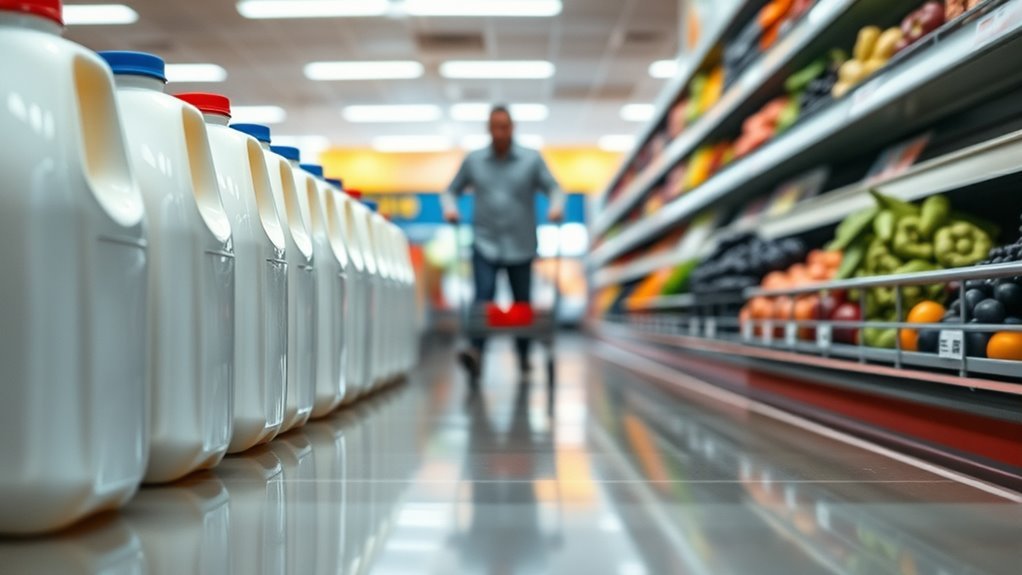
Wondering how much you’ll pay for a gallon of milk these days? On average, a gallon of milk in the U.S. costs around $3.50 to $4.00.
Expect to pay about $3.50 to $4.00 for a gallon of milk in the U.S. today.
This price reflects a mix of factors like production costs, demand, and supply chain expenses.
You might notice slight fluctuations at your local store, but this range gives you a solid idea of what to expect. Keep in mind that organic or specialty milk varieties often carry a higher price tag, sometimes exceeding $6.00 per gallon.
If you’re budgeting for groceries, this average cost is a helpful benchmark. Staying aware of current prices can help you plan your shopping trips better and avoid surprises at the checkout.
Regional Variations in Milk Prices

While the national average for a gallon of milk gives you a general idea, the price you pay can vary quite a bit depending on where you live.
In metropolitan areas, you might notice higher prices due to increased transportation and storage costs.
Conversely, rural regions near dairy farms often offer milk at lower prices since distribution is more direct.
States like California and Wisconsin, known for large dairy industries, typically have more competitive pricing.
If you’re on the East Coast or in the Northeast, expect to pay a bit more due to higher living costs.
Understanding these regional differences helps you anticipate what you’ll spend at your local store rather than relying solely on the national average.
This way, you can budget effectively and shop smart.
Factors Influencing Milk Price Fluctuations

What causes the price of milk to rise and fall so often? You’ll find several key factors at play. Seasonal changes affect milk production; cows produce more milk in spring and less in winter, influencing supply.
Feed costs also impact prices. If feed becomes expensive, farmers pass that cost onto consumers. Weather events like droughts or floods can disrupt feed availability and farm operations, causing price spikes.
Additionally, demand shifts play a role. Holidays or school schedules can increase milk buying, pushing prices up temporarily. Transportation costs matter, too. Fuel price changes affect how much it costs to get milk to stores.
Understanding these factors helps you grasp why milk prices never stay constant for long.
Impact of Inflation on Dairy Products
Besides supply and demand factors, inflation plays a significant role in the cost of dairy products. When inflation rises, the prices of feed, fuel, and labor needed for milk production go up.
You’ll notice this directly affects how much you pay at the store. As farmers face higher expenses, they often pass those costs along to consumers like you.
Additionally, transportation and packaging costs increase during inflationary periods, further driving up milk prices.
If inflation remains high, you may see these price hikes persist or even accelerate.
Understanding inflation’s impact helps you anticipate changes in your grocery bills and budget accordingly.
Seasonal Trends Affecting Milk Costs
Because milk production fluctuates throughout the year, you’ll notice milk prices change with the seasons. During spring and early summer, cows produce more milk due to abundant fresh pasture. You’ll often find prices lower then, as supply increases.
In contrast, winter months bring reduced milk output since cows rely more on stored feed, which raises production costs. Consequently, milk prices tend to rise during this period.
Additionally, demand patterns affect costs; holidays and back-to-school seasons often boost milk consumption, nudging prices up. Weather events like droughts or extreme cold can also disrupt supply, impacting costs.
Comparing Organic vs. Conventional Milk Prices
Seasonal changes influence milk prices, but the type of milk you choose also plays a big role in cost differences. Organic milk generally costs more because of stricter farming practices and certification expenses. Conventional milk, produced with standard methods, tends to be cheaper and more widely available.
When deciding which to buy, consider your budget and preference for organic products.
| Milk Type | Average Cost per Gallon | Key Factor |
|---|---|---|
| Organic Milk | $6.00 – $7.50 | Certification costs |
| Conventional | $3.50 – $4.50 | Mass production |
| Price Gap | $2.50 – $3.00 | Farming practices |
Knowing these price ranges helps you make smart choices at the store without surprises.
How Supply Chain Issues Affect Milk Pricing
When supply chain disruptions occur, they directly impact the cost of milk you see on the shelves. You might notice prices rising because delays in transportation increase shipping costs.
When trucks or shipments are late, stores receive less milk, which reduces supply. With demand constant or growing, this limited availability pushes prices up.
Additionally, shortages of packaging materials or labor can slow production, further tightening supply. You also face higher costs when fuel prices spike, as dairy farms and distributors pay more to transport milk.
These combined factors mean you often pay more during supply chain hiccups. Understanding this helps you see why milk prices fluctuate beyond just farm-level changes, reflecting the broader challenges in getting milk from producers to your home.
Tips for Saving Money on Milk Purchases
Supply chain challenges can make milk pricier, but there are smart ways you can cut costs without sacrificing quality. First, buy milk in bulk when it’s on sale and store it properly to extend freshness.
Check local farmer’s markets or co-ops for competitive prices and fresher options. Don’t forget to compare prices across stores and consider store brands; they often cost less and taste just as good.
Use apps or digital coupons to snag discounts before you shop. If you don’t consume milk quickly, consider shelf-stable or powdered milk as budget-friendly alternatives.
Finally, plan your purchases around weekly deals and avoid impulse buys to keep your milk spending under control. These strategies help you save without compromising on the milk you enjoy daily.
Future Outlook for Milk Prices
Although milk prices have fluctuated recently, experts expect some stabilization in the near future. You’ll likely see less dramatic price swings as supply chains improve and dairy production balances with demand.
However, factors like weather conditions, feed costs, and energy prices will still influence costs. If droughts or feed shortages hit, prices could rise temporarily.
On the other hand, advances in farming technology and increased efficiency might help keep prices steady or even lower them slightly over time.
Knowing this, you can plan your grocery budget more confidently.
Staying informed about market trends and local conditions will help you anticipate changes and make smarter buying decisions when it comes to milk.
Frequently Asked Questions
How Long Does Milk Typically Stay Fresh After Opening?
You can expect milk to stay fresh about 5 to 7 days after opening if you keep it refrigerated properly. Just make sure to seal it tightly and check for any sour smell or off taste before using.
What Are the Nutritional Differences Between Whole and Skim Milk?
You’ll find whole milk has more fat and calories, giving you extra energy and creaminess.
Skim milk cuts fat and calories but keeps protein and calcium, making it a lighter, healthier choice if you’re watching intake.
Can Milk Be Frozen to Extend Its Shelf Life?
Sure, freeze your milk and turn your fridge into a dairy time capsule! Just remember, freezing might change its texture, so shake well after thawing.
It’s perfect for cooking, but sipping straight might be weird.
Are There Common Milk Alternatives That Cost Less Than Dairy Milk?
Yes, you’ll often find soy or almond milk costing less than dairy milk, especially store brands.
Prices vary by region and brand, but these plant-based options can be budget-friendly alternatives for you.
How Is Milk Tested for Safety and Quality Before Sale?
You test milk for safety by checking bacterial counts, antibiotics, and contaminants. Quality tests include fat content, pasteurization effectiveness, and taste.
Labs use equipment like spectrometers and cultures to guarantee milk’s safe and fresh before sale.
Conclusion
Just like milk nourishes your body, understanding its price nurtures your wallet. As you navigate fluctuating costs—from regional shifts to inflation’s squeeze—remember that each gallon represents more than a number; it’s a ripple in the broader economy.
By staying informed and savvy, you can turn the tide in your favor. So, keep your eyes on the carton and your budget ready—because knowing the cost today helps you pour a brighter tomorrow. Checking how much a gallon of milk costs now is essential for managing your grocery expenses effectively.