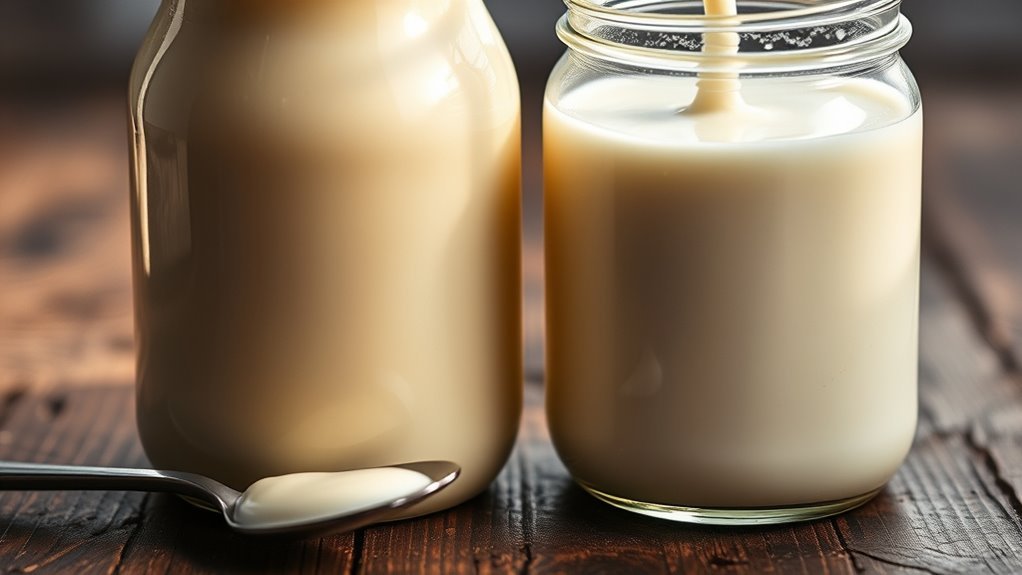
Is Condensed Milk the Same as Evaporated Milk?
If you’ve ever stared at a recipe calling for condensed milk and wondered if evaporated milk could step in, you’re not alone. Understanding the difference between condensed milk and evaporated milk is essential for successful cooking and baking. These two pantry staples might seem interchangeable at first glance, but they each bring something quite different to the table.
Condensed milk is sweetened and thick, adding richness and sweetness to dishes. Evaporated milk, on the other hand, is unsweetened and more fluid, offering creaminess without extra sugar. Knowing their unique qualities can make or break your dish, so it’s worth exploring what sets them apart before you decide which one to use.
What Is Evaporated Milk?

What exactly is evaporated milk? Evaporated milk is fresh milk that’s had about 60% of its water removed through slow heating, distinguishing it from condensed milk. This process makes it thicker and creamier, with a slightly caramelized flavor.
It’s homogenized and sterilized in cans, which gives it a long shelf life when unopened. Unlike condensed milk, evaporated milk is unsweetened, making it a versatile dairy substitute in recipes where you want richness and creaminess without added sugar.
You’ll find it available in whole, low-fat, and skim varieties, so you can choose what fits your needs. If you want to add creaminess without sweetness, evaporated milk is your go-to ingredient.
What Is Sweetened Condensed Milk?

While evaporated milk offers richness without sweetness, sweetened condensed milk takes a different approach by combining concentrated milk with a significant amount of sugar.
By removing much of the water content and adding 40-45% sugar content, sweetened condensed milk becomes thick and syrupy.
Removing water and adding 40-45% sugar makes sweetened condensed milk thick, syrupy, and irresistibly sweet.
This process, involving simmering milk with sugar, creates a velvety texture and caramel-like sweetness.
Thanks to its high sugar content, sweetened condensed milk enjoys a long shelf life, as the sugar acts as a natural preservation agent.
You’ll often find it as a key dessert ingredient in recipes like fudge, caramel, and key lime pie.
Unlike evaporated milk, it’s intentionally sweetened and not a direct substitute for unsweetened milk in cooking or baking.
Key Differences Between Evaporated Milk and Condensed Milk

Although both evaporated milk and condensed milk come from concentrated milk, they differ markedly in sweetness and texture. Evaporated milk is unsweetened, created by removing about 60% of water from regular milk through a heating production process.
Condensed milk, on the other hand, is sweetened with 40-45% added sugar, giving it a rich caramel flavor and syrupy consistency. When you stock your pantry staples, knowing these differences matters.
- Evaporated milk is unsweetened with a neutral, slightly caramelized taste
- Condensed milk is heavily sweetened, thick, and syrupy
- Both undergo water removal, but only condensed milk includes added sugar
Understanding sugar content and texture helps you choose the right milk product for your recipes.
Common Culinary Uses for Evaporated Milk
Since evaporated milk offers a rich, creamy texture without added sweetness, you can use it to enhance a variety of dishes. Its culinary uses include adding depth and richness to soups, sauces, and comfort foods like mushroom pasta or mashed potatoes.
You can also use evaporated milk as a substitute for regular milk or cream in baking recipes, such as pumpkin pie and bread pudding, to achieve a smooth consistency.
In desserts, it plays a key role in homemade caramel sauces and custards, boosting flavor without extra sugar.
Additionally, evaporated milk works well in beverages like coffee or tea, lending a velvety texture.
Common Culinary Uses for Sweetened Condensed Milk
If you want to add rich sweetness and a creamy texture to your recipes, sweetened condensed milk is a go-to ingredient. Its thick texture and high sugar content make it perfect for enhancing moisture and richness in various culinary uses.
Whether you’re baking or making beverages, condensed milk delivers a unique flavor and velvety texture.
Condensed milk adds a distinct flavor and smooth, creamy texture to both baked goods and drinks.
Here are some popular ways to use sweetened condensed milk in your kitchen:
- Create luscious caramel sauces by heating and reducing it, ideal for drizzling over desserts.
- Incorporate it into no-bake desserts and fudge recipes for extra sweetness and moisture.
- Use it as a key ingredient in beverages like Vietnamese iced coffee and Thai iced tea to add creaminess without extra sugar. Sweetened condensed milk truly elevates both desserts and drinks with its versatile role.
How to Substitute Evaporated Milk and Condensed Milk in Recipes
When you need to substitute evaporated milk for condensed milk, you’ll want to add sugar to match the sweetness and thickness of condensed milk. For a homemade substitute, heat evaporated milk with sugar until it thickens, then use it in your baking or cooking.
Conversely, when swapping condensed milk with evaporated milk, reduce or omit sugar in the recipe to avoid excessive sweetness. Adjusting sweetness and texture is key for the best results.
| Substitute Scenario | Key Adjustment |
|---|---|
| Evaporated milk for condensed milk | Add 1 cup sugar per 12 oz |
| Condensed milk for evaporated milk | Reduce or omit sugar |
| Homemade condensed milk | Heat evaporated milk + sugar |
This ensures your recipe’s flavor and texture stay balanced.
Storage Tips and Shelf Life of Evaporated and Condensed Milk
Although unopened cans of evaporated and condensed milk can last over a year in a cool, dry place, proper storage after opening is essential to maintain their quality and safety. The shelf life of these products depends heavily on storage conditions. Once you open a can, refrigeration is a must.
Evaporated milk stays good for 3 to 5 days in an airtight container, while condensed milk can last up to one month if sealed properly. Always check the expiration date on unopened cans and watch for spoilage signs like off smells or discoloration before use.
- Store unopened cans away from heat and direct sunlight to preserve shelf stability
- Use airtight containers for opened cans to prevent contamination
- Regularly inspect for spoilage signs to ensure safety and quality

Frequently Asked Questions
What Can I Use if I Don’t Have Evaporated Milk?
If you don’t have evaporated milk, you can reduce regular milk by simmering it until thick or mix ¾ cup milk with ¼ cup heavy cream.
You can also add butter to milk for similar richness.
Which Is Healthier Condensed Milk or Evaporated Milk?
You’ll find evaporated milk healthier since it has no added sugar and retains natural nutrients like calcium and vitamin D.
Condensed milk’s high sugar content makes it less suitable if you’re watching your calorie or sugar intake.
What Happens if I Use Sweetened Condensed Milk Instead of Evaporated Milk in Fudge?
If you swap evaporated milk for sweetened condensed milk, your fudge turns sweeter, thicker, and softer, like trading a whisper for a shout. You’ll need to cut other sugars to keep balance and avoid a caramel overload.
Can I Use Condensed Milk Instead of Evaporated Milk in Mac and Cheese?
You can use condensed milk instead of evaporated milk in mac and cheese, but it’ll be much sweeter and thicker. Cut back on sugar and dilute it with water to avoid an overly sweet, sticky, caramelized dish.
Conclusion
Now that you know condensed milk and evaporated milk aren’t two peas in a pod, you can choose the right one without second-guessing. Whether you need sweet, syrupy richness or creamy, unsweetened texture, picking the right milk can make or break your recipe.
So next time you’re cooking or baking, keep their differences in mind—you’ll be ahead of the game and avoid any kitchen mishaps! Understanding the differences between condensed milk and evaporated milk is key to achieving the perfect flavor and consistency in your dishes.