How Long Is Breast Milk Good After Thawing? Safe Storage Guidelines
When you thaw breast milk, you want to make sure it stays safe and nutritious for your baby. Knowing how long breast milk is good after thawing is key to avoiding waste and preventing any risk of spoilage.
But the answer isn’t just about time—it also depends on how you store and handle the milk. Understanding these details can help you make the best choice for your little one’s health.
Guidelines for Using Thawed Breast Milk Safely

Although thawed breast milk remains nutritious, you should use it within 24 hours if it’s stored in the refrigerator at 4°C (39°F).
To maintain feeding safety, always store thawed breast milk in clean storage containers and label them with the thawing date.
Follow the FIFO method by using the oldest milk first.
Avoid keeping thawed milk at room temperature for more than 2 hours before feeding or refrigeration.
Never refreeze thawed breast milk; discard unused milk after 24 hours to prevent spoilage.
Before feeding, warm the milk safely by testing it on your wrist and never microwave, as uneven heating can harm your baby.
Recommended Storage Duration for Thawed Milk

You should use thawed breast milk within 24 hours when stored in the refrigerator to keep it safe and nutritious. The recommended storage duration for thawed milk is *essential* for ensuring safety and nutrient preservation.
After thawing, you can keep milk at room temperature for up to 2 hours before feeding, but don’t exceed this to avoid bacterial growth. Once feeding begins, discard any leftover milk promptly to prevent contamination.
Never refreeze thawed milk, as this compromises safety and nutrient quality. By adhering to the 24-hour guideline in the refrigerator, you maintain the best balance between convenience and health.
Proper Thawing Techniques for Frozen Breast Milk

Knowing how long thawed breast milk stays good helps you plan the best way to thaw it safely. To thaw breast milk effectively, place the frozen container in the refrigerator overnight or submerge it in warm water. Avoid microwaving to preserve breast milk safety.
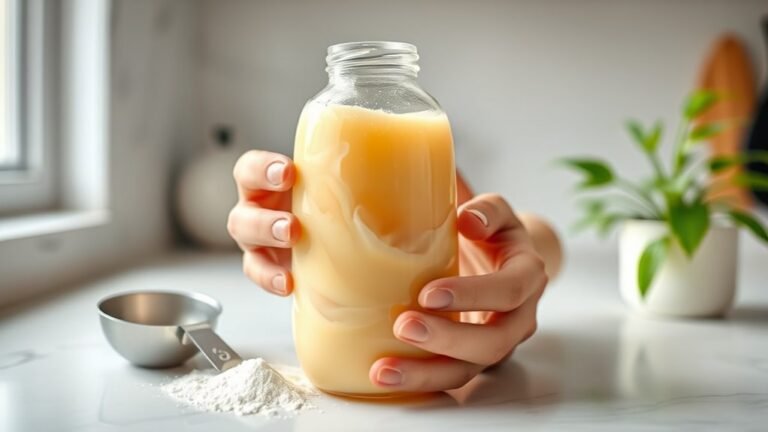
After thawing, gently swirl the milk to mix separated fat; don’t shake vigorously. Always store thawed breast milk in the refrigerator and use within 24 hours.
Gently swirl thawed breast milk to mix fat and use within 24 hours refrigerated for best quality.
Before feeding, perform a temperature check by testing a few drops on your wrist to ensure proper warming.
Never refreeze thawed breast milk, and discard any leftover milk after feeding to maintain hygiene. Following these thawing techniques ensures ideal storage time and keeps your baby’s milk safe and nutritious.
Signs That Thawed Breast Milk Is No Longer Safe
When thawed breast milk shows a sour smell or unusual texture, it’s a clear sign that it’s no longer safe to feed your baby. You should always check for an off smell or foul odor, as these indicate spoiled milk.
A curdled texture or lumpy appearance also means you need to discard the milk immediately. While some change in color or separation is normal, trust your senses to assess safety.
Remember, the shelf life after thawing is limited, so using or discarding within 24 hours is crucial.
| Signs of Spoiled Milk | What to Do |
|---|---|
| Sour smell or off odor | Discard immediately |
| Curdled or lumpy texture | Do not feed baby |
| Foul odor or off smell | Ensure safety: discard |
How to Store Thawed Milk in the Refrigerator
Although thawed breast milk remains safe for up to 24 hours in the refrigerator, proper storage techniques are essential to maintain its quality and prevent contamination.
After thawing, transfer the milk to a clean, sealed container to avoid exposure to air and odors.
Always place the container at the back of the refrigerator, where the temperature stays consistent around 4°C (39°F).
Proper storage means labeling the container with the date and time of thawing, so you know exactly when to use it within the 24-hour window.
Never refreeze thawed milk, as this can degrade its nutrients and safety.
Tips for Handling Leftover Milk After Feeding
After thawing and storing your breast milk properly, managing any leftover milk after feeding becomes the next important step. Always store leftover milk in a clean, sealed container and refrigerate it immediately to keep it fresh.
Be sure to label each container with the date to maintain proper rotation. Use the “first in, first out” method to ensure you use older milk before newer batches.
Remember, leftover milk should be used within 24 hours after feeding. If milk has been at room temperature for more than 2 hours or has been fed to your baby already, discard it to prevent bacterial growth. Following these tips for handling leftover milk after you thaw breast milk helps maintain safety and quality for your little one.
Why Refreezing Thawed Milk Is Not Recommended
Since thawed breast milk is sensitive to temperature changes, you shouldn’t refreeze it to avoid bacterial growth and nutrient loss.
Refreezing thawed milk exposes it to repeated temperature fluctuations, which increase the risk of bacterial contamination and compromise milk quality.
Refreezing thawed milk risks bacterial growth and diminishes its quality due to temperature changes.
Each freeze-thaw cycle diminishes the nutritional integrity of breast milk, reducing beneficial antibodies and altering its texture, smell, and taste.
This not only affects safety but also the overall value of the milk for your baby.
Using thawed breast milk promptly ensures you minimize bacteria multiplication and maintain its nutritional benefits.
To protect your baby’s health, prioritize safety by avoiding refreezing thawed milk and consume it within the recommended 24-hour window after thawing.
Preserving Nutritional Quality During Storage and Thawing
Maintaining the nutritional quality of breast milk during storage and thawing requires careful handling. To guarantee nutrient preservation, freeze milk rapidly in small airtight containers to prevent spoilage and extend storage duration.
When thawing breast milk, use the refrigerator and consume it within 24 hours to maintain its nutritional quality. Avoid refreezing thawed milk, as refreezing risks nutrient degradation and bacterial growth.
During the thawing process, gently mix the milk to redistribute separated fats and nutrients, preserving its overall profile. Warm the milk using warm water instead of microwaving to protect sensitive components.

Frequently Asked Questions
How Long Is Breastmilk Good for After It’s Been Thawed Out?
You should use thawed breast milk within 24 hours if refrigerated. Don’t refreeze it, and if left out at room temperature, use it within 2 hours. Always label the date to keep track.
What Is the 3-3-3 Rule for Breast Milk?
The 3-3-3 rule for breast milk is like a trusty map: you can keep it 3 hours at room temperature, 3 days in the fridge, and 3 months in the freezer.
Stick to this to keep milk fresh and safe.
Why Is Thawed Milk Only Good for 24 Hours?
Thawed milk’s only good for 24 hours because bacteria start growing after thawing, even in the fridge. Keeping it longer risks contamination and spoiling, so you should always use it within that time to keep your baby safe.
How Long Does Frozen Milk Last Once Thawed?
Think of thawed milk like a ticking clock. It lasts 24 hours in your fridge and just 2 hours at room temperature. Don’t refreeze it, and always check for spoilage before feeding your baby.
Conclusion
You should use thawed breast milk within 24 hours when stored properly in the fridge at 4°C. For example, imagine Sarah, who thawed a batch for her baby’s evening feed but noticed a sour smell the next day—she wisely discarded it to keep her baby safe.
Always check for spoilage, never refreeze thawed milk, and store it in a clean, sealed container. Following these steps helps guarantee your baby gets the best nutrition safely.
Understanding how long breast milk is good after thawing ensures that you provide safe and healthy feeding for your baby. Proper storage and timely use are key to maintaining the quality of thawed breast milk.