How to Make Buttermilk Out of Regular Milk in 3 Simple Steps
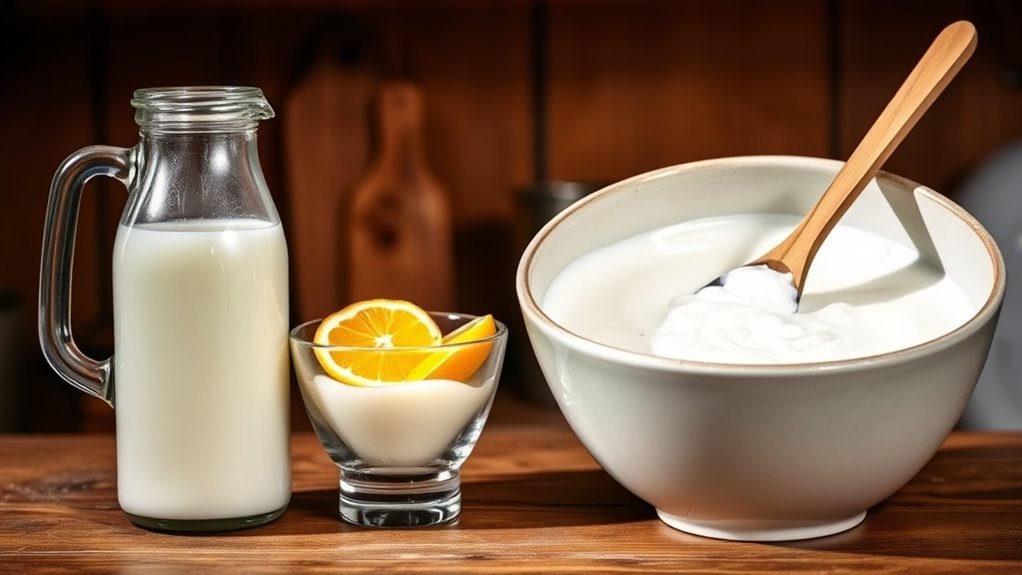
To make buttermilk from regular milk, pick an acidic ingredient like lemon juice or white vinegar. Add 1 tablespoon of it to 1 cup of room-temperature milk, then stir gently.
Let the mixture sit for 5 to 10 minutes at room temperature until it thickens and curdles slightly. You’ll get that tangy, creamy texture your recipes need.
Keep going to uncover tips for perfect consistency and best uses in your dishes.
Choose Your Acidic Ingredient

How do you pick the best acidic ingredient for homemade buttermilk? You want something that reacts well with milk, creating that signature tang and thickness.
Common options include lemon juice, white vinegar, and cream of tartar.
Popular choices for homemade buttermilk: lemon juice, white vinegar, or cream of tartar.
Lemon juice adds a fresh citrus note, which works great if you want a subtle flavor twist.
White vinegar is neutral and reliable, giving you consistent results without altering taste much.
Cream of tartar, a powdered acid, is less common but effective if you prefer a smoother texture.
Your choice depends on what you have on hand and the flavor profile you prefer.
Just select a clean, pure acid to avoid unwanted flavors or residues.
This ensures your homemade buttermilk turns out perfect every time.
Mix the Acid With Milk

Once you’ve chosen your acidic ingredient, combine it with milk to start the curdling process that creates buttermilk’s signature texture and tang. Measure one cup of milk at room temperature, as cold milk slows the reaction.
Add one tablespoon of your acid—lemon juice or white vinegar works best. Pour the acid directly into the milk and stir gently to distribute it evenly. Avoid shaking vigorously; a gentle mix ensures the acid integrates without breaking down the milk too much.
This simple step triggers milk proteins to thicken and sour, replicating the natural fermentation in traditional buttermilk.
Mixing thoroughly sets the foundation for rich, tangy buttermilk ready to enhance your recipes. Remember, precise ratios and gentle mixing are key for consistent results.
Let the Mixture Rest and Thicken

After gently mixing the acid into the milk, let the mixture sit undisturbed to allow it to thicken and develop that classic buttermilk tang. Place the container on your kitchen counter at room temperature, typically around 70°F (21°C).
The resting period usually takes about 5 to 10 minutes. During this time, the acid reacts with the milk proteins, causing the milk to curdle slightly and thicken. Avoid shaking or stirring the mixture while it rests, as this can disrupt the process.
You’ll notice the milk becoming thicker and slightly lumpy, which is normal. Once it reaches the desired consistency, give it a gentle stir to combine any separated parts.
Your homemade buttermilk is now ready to use in your favorite recipes.
Frequently Asked Questions
Can I Use Non-Dairy Milk to Make Buttermilk?
Yes, you can use non-dairy milk like almond or soy to make buttermilk. Just add lemon juice or vinegar, let it sit for 5-10 minutes, and you’ll get a similar tangy, thickened result for your recipes.
How Long Can Homemade Buttermilk Be Stored in the Fridge?
You might think homemade buttermilk lasts forever, but it doesn’t. You can store it in the fridge for about 1 to 2 weeks.
Just keep it sealed tightly and check for any sour smell before use.
What Are the Best Recipes to Use Homemade Buttermilk In?
You’ll love using homemade buttermilk in pancakes, biscuits, and cornbread for extra fluffiness. It’s also perfect for marinades, dressings, and creamy sauces, adding tang and tenderness to your favorite dishes every time.
Can Homemade Buttermilk Be Frozen for Later Use?
Freezing homemade buttermilk is like pressing pause on freshness. It’s possible but changes texture.
You can freeze it, but expect separation. Thaw it slowly and stir well before using to keep your recipes tasting great.
How Does Homemade Buttermilk Differ From Store-Bought Buttermilk?
You’ll find homemade buttermilk tastes fresher and has a thinner texture compared to store-bought, which often contains stabilizers and live cultures for consistency.
Homemade versions can vary more in tanginess and thickness.
Conclusion
Just like how a tiny seed transforms into a blooming flower with a little time and care, your regular milk turns into tangy buttermilk by simply adding acid and waiting. Remember, patience is key—letting the mixture rest lets those flavors develop fully.
Next time a recipe calls for buttermilk, you won’t need a special trip to the store. You’ve got everything you need right in your kitchen!
By following these simple steps, you can easily make buttermilk out of regular milk. This homemade substitute is perfect for baking, cooking, and adding that delicious tang to your favorite dishes.