How Long Is Breast Milk Good in the Fridge? Storage & Safety Guidelines
You might think storing breast milk in the fridge is simple, yet many overlook how quickly its quality can change. Knowing how long breast milk is good in the fridge is essential for your baby’s health. If you don’t store it properly or know the right time limits, you could risk your baby’s health.
Understanding the best containers, labeling methods, and storage spots can make all the difference. Let’s explore how to keep your milk fresh and safe for your little one.
Recommended Containers for Storing Breast Milk

When storing breast milk, you should use clean, food-grade glass or BPA-free hard plastic containers with tight-fitting lids to keep it safe and fresh. These storage containers are designed to maintain milk quality and prevent contamination.
Make sure to wash your plastic containers thoroughly with soap and water, then sterilize or rinse them well before use. Breast milk storage bags are also an option, but you need to follow the manufacturer’s instructions carefully to ensure safety.
Avoid using disposable bottle liners or household plastic bags, as they aren’t sterilized or suitable for long-term storage. Choose food-grade containers that work well for both refrigeration and freezing.
Air-tight lids are essential to protect the milk from exposure to air and odors while keeping it fresh.
Labeling and Portioning Guidelines

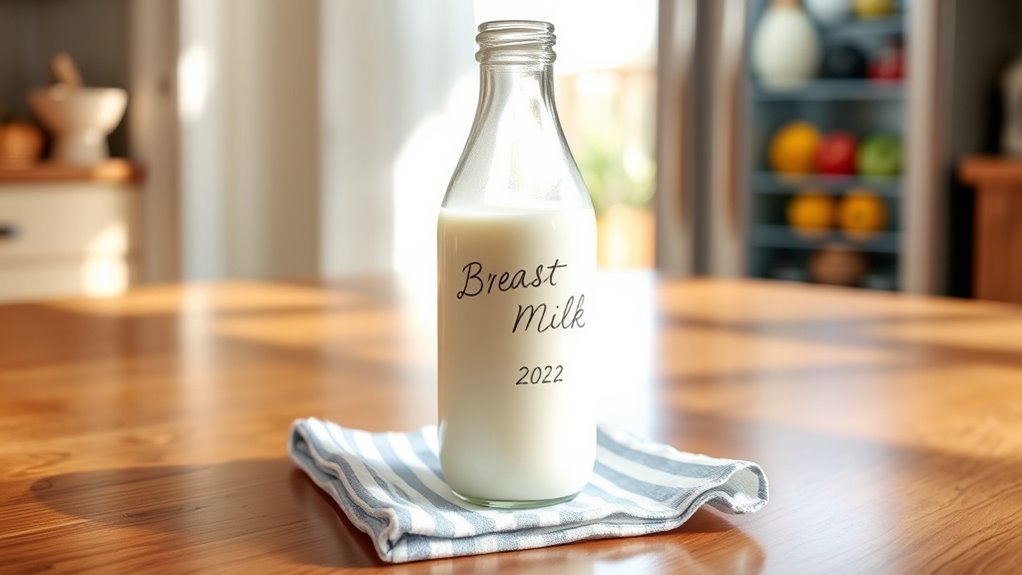
Although proper storage is essential, labeling and portioning breast milk correctly guarantees you keep track of freshness and minimize waste. Always label your storage containers with the date of expression using waterproof labels and ink.
Portion your milk into small amounts (2-4 ounces) to fit feeding needs and avoid throwing away excess milk. Organize containers by placing the oldest milk at the front or top to use before expiration.
If storing at childcare facilities, mark each container with your child’s name for clear identification. Make sure labeling is complete before refrigerating to maintain accurate records.
| Labeling Tip | Portion Size | Organizing Strategy |
|---|---|---|
| Use waterproof labels | 2-4 oz per container | Front or top placement |
| Include date of expression | Match feeding needs | First in, first out usage |
| Add child’s name if needed | Avoid large volumes | Track expiration easily |
Optimal Refrigerator Storage Location

Labeling and organizing your breast milk properly sets you up to store it in the right spot in your refrigerator.
For best placement, always keep your milk in the back of the refrigerator where temperature control is most consistent and coolest.
Avoid storing milk in the door compartments, as frequent opening causes temperature fluctuations that can reduce milk quality.
Using a refrigerator thermometer helps you monitor and maintain the ideal temperature at or below 39°F (4°C), ensuring safe storage conditions.
A refrigerator thermometer ensures breast milk stays safely chilled at or below 39°F (4°C).
Proper storage location directly impacts storage time, helping your breast milk stay fresh and safe for up to 4 days.
Maximum Storage Duration in the Refrigerator
To keep your breast milk safe and nutritious, you should use it within 4 days when stored in the refrigerator at or below 39°F (4°C). This maximum storage duration guarantees your milk stays fresh and supports infant safety by reducing bacterial growth risks.
When you keep breast milk in the fridge, proper storage is essential: place it at the back where the temperature is most stable.
While breast milk may lose some nutrients after 4 days, it remains safe for your baby if used within this timeframe.
Avoid extending storage beyond 4 days, as this can compromise milk quality and safety.
Following these guidelines helps you confidently provide your infant with the best nutrition through safe and effective refrigerator storage.
Handling and Combining Fresh and Stored Milk
Properly handling and combining fresh and stored breast milk helps maintain its safety and nutritional value. Always cool freshly expressed breast milk in the refrigerator within 4 hours to prevent bacterial growth before combining milk.
When mixing fresh milk with refrigerated milk, ensure the fresh milk is thoroughly cooled so you don’t raise the temperature of the stored milk, which can compromise milk safety. Avoid adding warm or hot milk to refrigerated or frozen milk, as it can cause partial thawing and promote bacteria growth.
If you’re using thawed milk, add it only to cold milk and use the combined milk within recommended storage times. Label all combined milk with the date of the earliest milk to help track freshness and ensure safe feeding.
Best Practices for Thawing Frozen Breast Milk
When you need to thaw frozen breast milk, the safest method is to transfer it to the refrigerator and let it thaw overnight. This guarantees proper temperature control and maintains milk safety.
If you’re short on time, you can thaw breast milk by placing the container in warm water until it reaches the desired temperature, but never use a microwave.
Avoid thawing breast milk at room temperature for more than four hours to reduce bacterial growth. Once thawed milk is in the refrigerator storage, make sure to use it within 24 hours.
Signs of Spoiled Breast Milk
Recognizing signs of spoiled breast milk helps you avoid feeding your baby harmful bacteria. You should always check for a sour smell or rancid odor, which signals fermentation or milk spoilage.
If the breast milk has an unusual sour smell or tastes soapy, it’s likely spoiled and unsafe. Also, look for discoloration, such as a yellowish tint, which indicates the milk is no longer fresh.
A curdled texture or thick consistency is another clear sign the milk has gone bad. These changes mean the milk has undergone fermentation or bacterial growth, making it unsuitable for your baby.
Trust your senses. If you notice any of these signs, discard the breast milk to keep your baby safe and healthy.
Effects of Room Temperature on Milk Safety
Since room temperature directly affects how quickly breast milk spoils, you should be mindful of how long you leave it out. Freshly expressed milk can safely stay at room temperature between 66-72°F for up to 4 to 6 hours.
However, temperature effects become critical when the room gets warmer. If it exceeds 77°F, you need to either refrigerate or use the milk within 4 hours to prevent bacterial growth.
Warmer environments and poor ventilation shorten breast milk at room temperature’s safe window.
To maintain milk safety, store expressed breast milk promptly in the fridge whenever possible. This ensures freshness and reduces the risk of contamination, helping you provide the best for your baby without worrying about spoilage during storage in the fridge or at room temperature.
Safe Use of Leftover Breast Milk
Although leftover breast milk can be a convenient resource, you need to handle it carefully to keep your baby safe. Refrigerated breast milk should be used within 24 hours, and milk left at room temperature must be used within 2 hours.
Always store milk in small portions using storage bags to minimize waste. Never reheat or reuse milk that’s been out over 2 hours. Discard it to avoid contamination. Here’s a quick guide for safe use:
| Condition | Time Limit | Action |
|---|---|---|
| Room temperature | Use within 2 hours | Discard after 2 hours |
| Refrigerated milk | Use within 24 hours | Store in storage bags |
| Leftover from feeding | Use within 2 hours | Discard if unused |
Monitoring Refrigerator and Freezer Temperatures
To keep your breast milk safe and fresh, you need to monitor your refrigerator’s temperature closely and make sure it stays at or below 40°F (4°C). Use an appliance thermometer to check the refrigerator temperature regularly, especially during power outages.
Proper cold storage prevents bacterial growth and reduces the risk of milk spoilage, ensuring your breast milk stays good for the recommended storage duration of up to 4 days.
Always store milk in the back of the fridge, where temperatures are most stable, rather than in the door.
Also, keep an eye on your freezer temperature to maintain ideal conditions for longer-term storage.
Consistent temperature control is key to preserving the quality and safety of your breast milk.

Frequently Asked Questions
What Is the 6 6 6 Rule for Breast Milk?
The 6-6-6 rule means you can store freshly expressed breast milk at room temperature for 6 hours, in the fridge for 6 days, and in the freezer for 6 months. This keeps it safe and nutritious for your baby.
Is Breast Milk Still Good After 5 Days in the Fridge?
Breast milk after 5 days in the fridge isn’t ideal. You should check for any changes in smell, color, or texture before using it, but it’s safest to stick to using milk within 4 days to protect your baby.
What Is the 5 5 5 Rule for Breast Milk?
You wouldn’t leave fresh milk out for days, yet the 5-5-5 rule tells you breast milk stays safe 5 hours at room temp, 5 days refrigerated, and 5 months frozen, guiding your feeding choices confidently.
How Will I Know if Breast Milk Is Spoiled?
You’ll know breast milk is spoiled if it smells sour, looks curdled or yellow, tastes bitter, or has a clumpy texture.
If it’s stored too long or improperly, it’s safer to throw it out.
Conclusion
You want to keep your breast milk fresh and safe, so storing it properly in clean containers at or below 39°F is essential. While it’s tempting to grab milk from the door or use it past four days, doing so risks spoilage and loss of nutrients.
By labeling, placing milk in the coldest fridge spot, and trusting your senses over convenience, you protect your baby’s health. Balancing care with caution every time you reach for that bottle ensures your breast milk stays good in the fridge and maintains its quality for your little one.