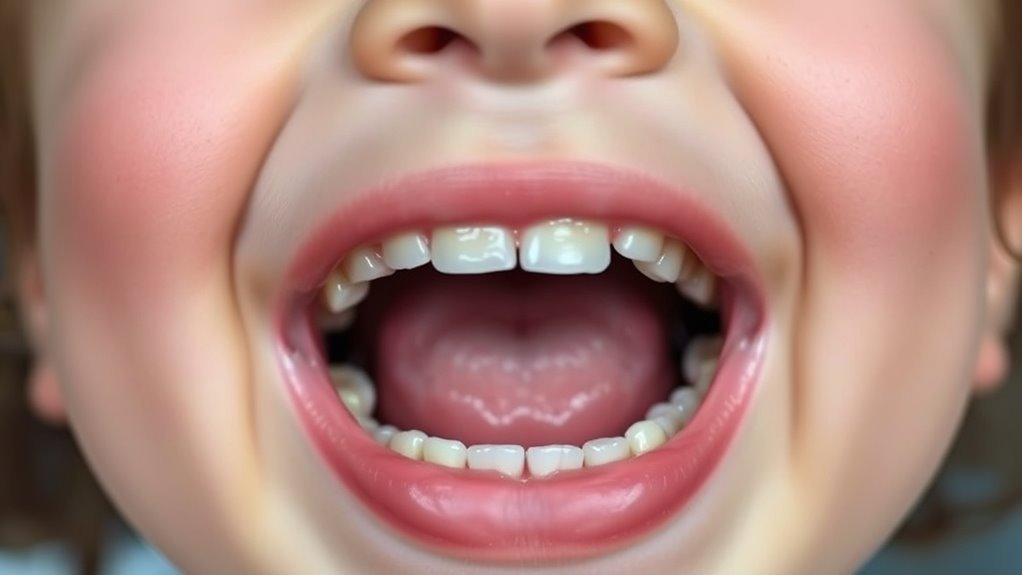
How Many Milk Teeth Do You Lose in Total?
You lose a total of 20 milk teeth throughout childhood, including 8 incisors, 4 canines, and 8 molars. These temporary teeth play an essential role in helping you chew, speak, and hold space for your permanent teeth.
Shedding of milk teeth usually begins around age six and continues until about twelve. Typically, your front teeth fall out first, followed by the others as your adult teeth come in.
Taking good care of your teeth during this transition is vital to ensure healthy permanent teeth. To understand the whole process and what affects it, keep exploring these key details.
Understanding Milk Teeth and Their Purpose

Although milk teeth are temporary, they play an essential role in your child’s development. You mightn’t realize it, but these first teeth help your child chew food properly, speak clearly, and maintain space for permanent teeth to grow in the right places.
When your child smiles or talks, those tiny teeth give support to their facial muscles and shape their jaw. If milk teeth fall out too early or are lost due to decay, it can lead to problems with alignment later on.
The Total Number of Milk Teeth Lost

Now that you know why milk teeth matter, it’s helpful to understand how many you’ll eventually lose. In total, you’ll shed 20 milk teeth throughout childhood. These temporary teeth pave the way for your permanent set, making room for adult teeth to emerge properly.
Here’s a quick breakdown of those 20 teeth:
- 8 incisors (4 top, 4 bottom)
- 4 canines (2 top, 2 bottom)
- 8 molars (4 top, 4 bottom)
- No premolars in milk teeth; they come later with adult teeth
Knowing the total number helps you track your dental development and keeps you prepared for this natural phase. Losing these teeth is a sign your adult smile is on its way!
The Timeline of Losing Milk Teeth

When do you start losing your milk teeth? Typically, this process begins around age six. You’ll notice your first loose tooth, often a lower front incisor, making way for a permanent tooth.
Between ages six and twelve, you’ll gradually lose all 20 milk teeth. The front teeth usually come out first, followed by the molars and canines.
By the time you’re 12, most kids have a full set of adult teeth, except for wisdom teeth, which appear later.
The timeline can vary slightly from person to person, but this six-year span covers the typical shedding period.
Paying attention to this natural progression helps you understand how your smile transforms during childhood.
Factors Influencing the Shedding Process
Since every child develops differently, several factors influence how and when you lose your milk teeth. Your unique genetic makeup plays a significant role, determining the timing and sequence of shedding.
Nutrition also matters; a balanced diet supports healthy tooth development. Additionally, your overall health can impact the process. Illness or certain medical conditions might delay or speed up tooth loss.
Ultimately, habits such as thumb sucking or using a pacifier beyond infancy can affect how your teeth come out.
Here are key factors that influence the shedding process:
- Genetics shape your tooth development timeline.
- Nutrition provides essential minerals for strong teeth.
- Health status can accelerate or delay tooth loss.
- Oral habits might alter how teeth loosen and fall out.
Caring for Milk Teeth During Transition
Caring for your milk teeth during the changeover phase is crucial to guarantee a smooth shift to permanent teeth. You should encourage your child to maintain good oral hygiene by brushing twice daily and flossing gently to prevent cavities and infections.
Avoid sugary snacks and drinks that can weaken the enamel and cause decay. If a milk tooth feels loose, don’t force it out; let it fall naturally to avoid pain or damage to the emerging adult tooth.
Regular dental check-ups help monitor progress and address any issues early. By supporting healthy habits, you ensure your child’s mouth stays comfortable and ready for the new teeth, setting a strong foundation for lifelong dental health.
Frequently Asked Questions
Can Losing Milk Teeth Affect Speech Development?
Yes, losing milk teeth can affect your speech development temporarily. As your teeth fall out, you might struggle with certain sounds, but your new teeth and practice will help you speak clearly again over time.
Are There Any Cultural Traditions Related to Losing Milk Teeth?
Yes, you’ll find many cultural traditions around losing milk teeth. Some throw them on the roof for good luck, while others leave them under the pillow for a gift.
These customs celebrate growing up uniquely.
What Happens if a Milk Tooth Is Lost Prematurely?
If you lose a milk tooth prematurely, your adult teeth might shift or grow crooked. You’ll want to see a dentist, who can use space maintainers to guide proper dental development and prevent future problems.
Do Milk Teeth Have Roots Like Permanent Teeth?
Yes, your milk teeth do have roots like permanent teeth. However, their roots gradually dissolve as your adult teeth develop underneath, allowing the baby teeth to loosen and fall out naturally when the time comes.
Can Dental X-Rays Predict When Milk Teeth Will Fall Out?
Yes, dental x-rays can help you predict when your milk teeth will fall out by showing the development and position of permanent teeth underneath. This lets your dentist estimate the timing of tooth loss and eruption accurately.
Conclusion
Losing milk teeth is a natural part of growing up, and you’ll typically lose a total of 20. For example, imagine Sarah, who started losing her teeth at age six and finished by twelve, making way for her adult smile.
Remember, everyone’s timeline can vary, so don’t worry if yours is a bit different. Taking good care of your milk teeth during this shift helps guarantee a healthy, confident grin for years to come.
Proper dental care during this period is essential to maintain oral health. By looking after your milk teeth, you support the development of strong, healthy adult teeth and a beautiful smile.