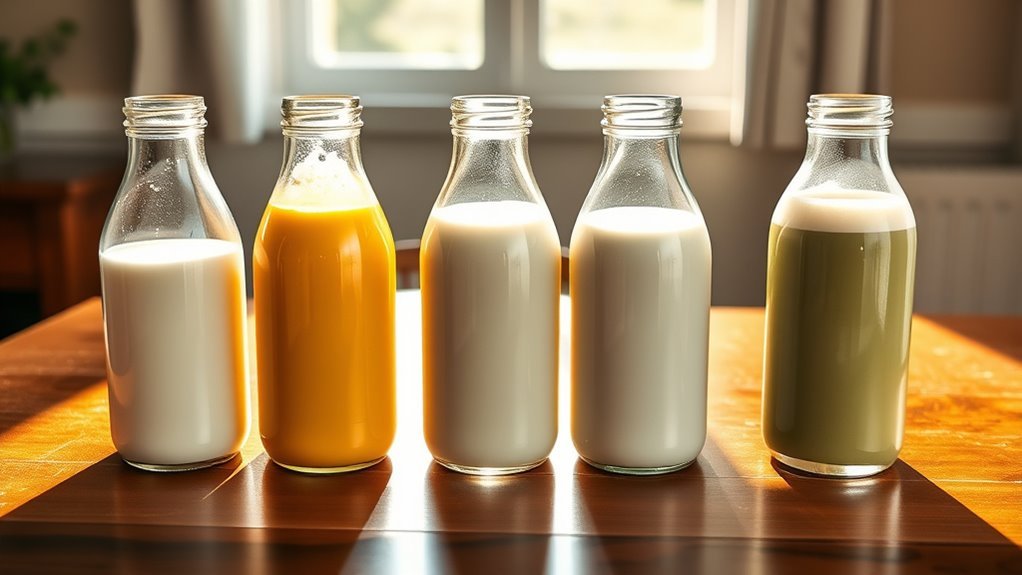
5 Best Milks to Drink for Health in 2026
If you want a healthy milk in 2026, consider almond milk for its low calories and vitamin E content. Oat milk is a great choice for added fiber and heart health benefits, while soy milk stands out for its high protein and heart-healthy isoflavones.
Cow’s milk offers quality protein and supports bone health if you tolerate dairy. Pea protein milk provides a creamy, allergen-free option that is rich in protein and promotes sustainability.
Each type of milk has unique perks that fit different lifestyles and nutrition needs. Keep exploring to find the milk that suits you best.
Almond Milk

Almond milk offers a nutritious, low-calorie alternative to dairy that suits many diets. If you’re looking to reduce calories or avoid lactose, almond milk fits perfectly. It’s naturally low in sugar and contains healthy fats, which support heart health.
You’ll find it’s also rich in vitamin E, an antioxidant that helps protect your cells. When choosing almond milk, opt for unsweetened versions to avoid added sugars. It works well in smoothies, cereals, and coffee, making it a versatile option.
Keep in mind, almond milk has less protein than cow’s milk, so you might want to balance it with other protein sources. Overall, almond milk is a great choice if you want a light, plant-based dairy alternative that supports your wellness goals.
Oat Milk

Although oat milk contains more calories than some other plant-based milks, it’s packed with fiber and nutrients that benefit your digestion and heart health. You’ll find beta-glucans in oat milk, a type of soluble fiber that helps lower cholesterol levels and supports a healthy gut.
Plus, it’s naturally creamy and slightly sweet, making it a great addition to coffee, smoothies, or cereal. If you’re lactose intolerant or avoiding dairy, oat milk provides a nutritious alternative without sacrificing taste or texture.
Just watch out for added sugars in flavored varieties, and opt for fortified options to get extra vitamins like B12 and calcium.
Soy Milk

If you enjoy oat milk for its creamy texture and health benefits, you might also appreciate soy milk as another nutritious dairy alternative.
Soy milk stands out for its high protein content, offering about 7 grams per cup, making it an excellent choice if you want to support muscle health and stay full longer.
With about 7 grams of protein per cup, soy milk supports muscle health and keeps you feeling full longer.
It’s naturally low in saturated fat and contains heart-healthy isoflavones, which may help reduce cholesterol levels.
Soy milk is also often fortified with calcium and vitamin D, enhancing its nutritional profile.
Keep in mind, if you have soy allergies or thyroid issues, consult a healthcare professional before adding it to your diet.
Cow’s Milk
While some people prefer plant-based alternatives, cow’s milk remains a popular choice due to its rich nutrient content, including high-quality protein, calcium, and vitamins like B12 and D. If you want a natural source of these essential nutrients, cow’s milk delivers in a well-rounded way.
It supports bone health, muscle function, and energy metabolism, which is why many include it in their diets. However, if you’re lactose intolerant or allergic, cow’s milk mightn’t be suitable.
Also, opting for low-fat or skim versions can help you reduce saturated fat intake without losing nutritional benefits. Keep in mind that choosing organic or grass-fed options might offer extra omega-3s and antioxidants.
Pea Protein Milk
Because it’s packed with protein and easy to digest, pea protein milk has become a favorite for those seeking a nutritious dairy alternative. You’ll appreciate its creamy texture and subtle flavor, which work well in smoothies, coffee, or cereal.
Plus, it’s naturally free from common allergens like dairy, soy, and nuts, making it a safe choice if you have sensitivities.
Here’s why you might choose pea protein milk:
- High protein content: Offers about 8 grams per serving, supporting muscle health and satiety.
- Sustainable production: Uses less water and land compared to dairy and nut milks.
- Nutrient-rich: Often fortified with calcium, vitamin D, and B12 for balanced nutrition.
Switching to pea protein milk can boost your diet with plant-based benefits.
Frequently Asked Questions
How Does Milk Choice Impact Gut Health and Digestion?
Your milk choice impacts gut health by influencing digestion and microbiome balance. Some milks contain probiotics or prebiotics, aiding digestion, while lactose-free options reduce discomfort if you’re lactose intolerant. This helps keep your gut happy and functional.
Are There Environmental Benefits to Choosing Plant-Based Milks?
Think of plant-based milks as eco-friendly superheroes; they use less water, emit fewer greenhouse gases, and require less land. By choosing them, you’re actively protecting the planet while enjoying your favorite creamy drink.
What Are the Differences in Calcium Absorption Between Milk Types?
You absorb calcium best from cow’s milk because it naturally contains more bioavailable calcium. Some plant milks fortify calcium, but absorption can vary due to additives and compounds like oxalates that reduce calcium uptake.
Can Milk Alternatives Support Muscle Recovery Post-Exercise?
Think of milk alternatives as a gentle rain nourishing your muscles after a workout. Yes, they can support recovery if fortified with protein and calcium, helping rebuild fibers and replenish essential nutrients efficiently.
How Do Milk Options Affect Hormone Levels in the Body?
Milk options can impact your hormone levels differently; dairy milk contains natural hormones that might influence your body, while plant-based milks usually don’t.
Choosing alternatives can help you avoid potential hormone imbalances.
Conclusion
So, whether you’re team almond, oat, soy, classic cow, or the mysterious pea protein, you’ve got options that promise to keep you healthy—because apparently, milk isn’t just milk anymore. Who knew your morning cereal was a battleground for nutrition trends?
Just remember, no matter which milk you pick, it’s probably still best not to chug it straight from the carton—unless you want your fridge to stage a protest. Drink smart, stay healthy!
Choosing from the best milks to drink for health in 2026 means you can enjoy variety while supporting your wellness goals. Keep these options in mind for a nutritious boost every day.