How Long Can Breast Milk Stay in the Refrigerator €“ a How-To Guide
You can safely store freshly expressed breast milk in your refrigerator for up to four days at 4°C (39°F) or lower to keep nutrients intact and prevent spoilage. Proper breast milk storage is essential to maintain its quality and ensure your baby receives the best nutrition.
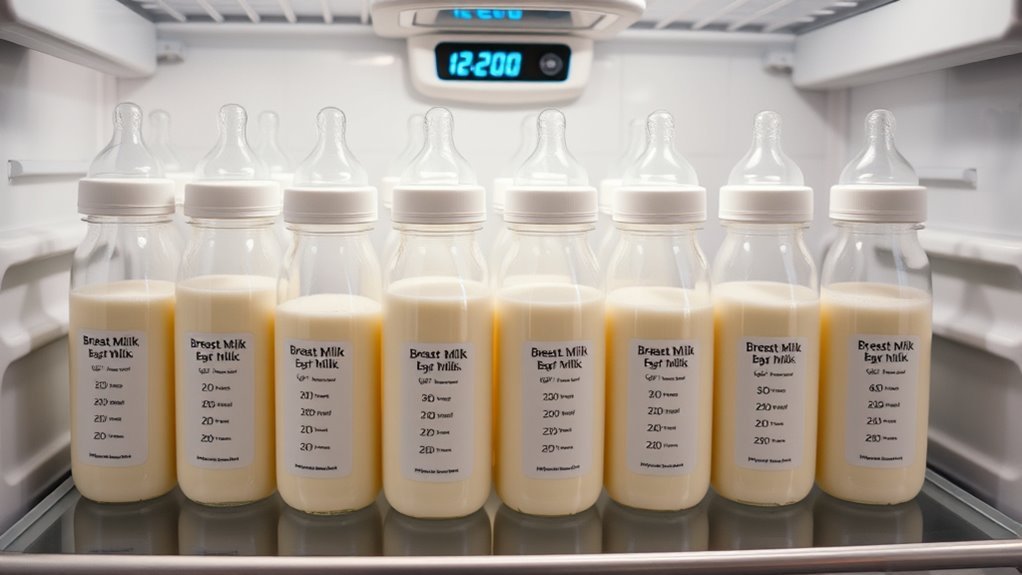
Use clean, BPA-free containers, label them with the date and time, and place the milk toward the back of the fridge, not the door. Avoid mixing fresh milk with older milk in the same container to maintain freshness and safety.
To guarantee the best quality and learn about proper reheating and storage tips, keep exploring helpful guidelines. Following these steps will help you manage your breast milk storage effectively.
Understanding Breast Milk Storage Guidelines

Although breast milk is a natural and nourishing food, you need to store it properly to keep it safe and fresh. When you express milk, use clean containers designed for breast milk storage, like BPA-free bottles or milk storage bags. Label each container with the date and time you pumped to track freshness easily.
Always refrigerate the milk as soon as possible to slow bacterial growth. Avoid leaving it at room temperature for more than two hours.
Also, don’t top off older milk with freshly expressed milk in the same container. Instead, store new milk separately.
Following these guidelines helps maintain milk quality and reduces the risk of spoilage, ensuring your baby gets the best nutrition every time.
Ideal Refrigerator Temperature for Breast Milk

To keep your breast milk safe and fresh, you need to set your refrigerator to the right temperature. The ideal range is between 32°F and 39°F (0°C to 4°C). This range slows bacterial growth and preserves milk quality without freezing it.
Temperatures above 40°F (4°C) can cause milk to spoil faster, while temperatures below freezing can damage the milk’s nutrients and texture. Use a reliable refrigerator thermometer to regularly check the temperature, as appliance settings can sometimes be inaccurate.
Avoid storing breast milk in the refrigerator door since temperature fluctuates there due to frequent opening. Instead, place milk containers on a shelf toward the back where it’s coldest.
Keeping your fridge within this ideal range guarantees your breast milk stays fresh and nutritious for your baby.
How Long Freshly Expressed Milk Lasts in the Fridge

Maintaining the right refrigerator temperature helps preserve your breast milk’s freshness, but knowing how long freshly expressed milk lasts in the fridge is just as important.
Generally, you can store freshly expressed breast milk in the refrigerator for up to four days at 4°C (39°F) or lower.
Freshly expressed breast milk stays safe in the fridge for up to four days at 4°C or below.
If you won’t use it within that timeframe, freezing it promptly is the best option to retain nutrients and quality.
Always store the milk in clean, BPA-free containers and place it toward the back of the fridge, where temperatures are most stable.
Avoid storing milk in the door since frequent temperature fluctuations can reduce its shelf life.
Signs That Breast Milk Has Spoiled
When breast milk spoils, it develops distinct signs that you can spot before feeding your baby. First, check the smell: spoiled milk often has a sour or rancid odor, unlike the mild, sweet scent of fresh milk.
Next, look at the color; spoiled milk might turn yellowish or grayish instead of its usual creamy white. Also, notice the texture. If the milk appears clumpy, curdled, or separated beyond normal fat separation, it’s best to discard it.
Trust your instincts; if anything seems off, don’t risk feeding it to your baby. Properly stored breast milk should look and smell fresh, so these signs help you ensure your baby’s safety and comfort with every feed.
Proper Containers for Refrigerating Breast Milk
Recognizing signs that breast milk has spoiled helps you avoid feeding your baby unsafe milk, but storing it properly starts with choosing the right containers. Use clean, BPA-free plastic or glass containers with tight-fitting lids to keep your milk fresh and prevent leaks.
Breast milk storage bags designed specifically for freezing milk are also a great option, but avoid regular plastic bags since they can easily leak or tear. Make sure containers are sterilized before use to reduce bacteria growth.
Fill containers with appropriate amounts to avoid waste, leaving some space at the top for expansion if you plan to freeze the milk. Using containers made for breast milk storage ensures your milk stays safe and maintains its nutritional quality until feeding time.
Tips for Labeling and Organizing Stored Milk
Because breast milk can spoil if stored too long, labeling and organizing your containers is essential to keep track of freshness. Start by clearly marking each container with the date and time you expressed the milk. This helps you use the oldest milk first, reducing waste.
Next, keep your milk containers grouped by date in the refrigerator to avoid confusion. Here are three tips to streamline this process:
- Use waterproof labels or masking tape with a permanent marker to ensure dates don’t fade.
- Store containers in the back of the fridge where temperatures are most stable.
- Maintain a simple inventory list to track quantities and dates, updating it as you add or remove milk.
Following these steps helps you manage your breast milk efficiently and safely.
How to Safely Reheat Refrigerated Breast Milk
Although reheating breast milk requires careful attention, you can safely warm refrigerated milk by following a few simple steps.
First, avoid using a microwave, as it heats unevenly and can destroy nutrients. Instead, place the bottle or storage bag in a bowl of warm water or use a bottle warmer set to a gentle temperature.
Swirl the milk gently to mix the fat, but don’t shake vigorously. Check the temperature by dropping a few drops on your wrist—it should feel warm, not hot.
Use the milk within two hours after warming, and never reheat it more than once.
If the milk smells sour or looks curdled, discard it. Following these steps ensures your baby gets safe, nutrient-rich milk every time.
Combining Milk From Different Pumping Sessions
When you pump multiple times throughout the day, you can combine the milk from different sessions to create a single feeding, but you need to follow proper storage guidelines to keep it safe.
First, cool freshly pumped milk in the refrigerator before mixing it with already chilled milk.
Second, always add the newest milk to the older milk container, not the other way around, to minimize bacterial growth.
Third, label the combined milk with the date of the oldest milk to ensure you use it within recommended storage times.
When to Freeze Breast Milk Instead of Refrigerating
If you know you won’t use your breast milk within a few days, freezing it’s the best way to preserve its nutrients and freshness. You should freeze milk when you pump more than your baby can consume in 3-4 days.
Freezing also works well if you’re going back to work or want to build a stash for emergencies. Remember to store milk in small portions to avoid waste and label each container with the date.
Avoid putting fresh milk on top of frozen milk to prevent partial thawing. When you freeze milk promptly after pumping, you lock in its quality longer than refrigeration allows.
Freezing extends storage up to 6 months, giving you flexibility and peace of mind when planning feedings.
Common Mistakes to Avoid With Breast Milk Storage
Because proper storage is essential for your baby’s health, avoiding common mistakes with breast milk storage can make a big difference. Here are three key pitfalls to watch out for:
1. Not labeling milk properly
Always mark the date and time on your milk containers to use the oldest milk first and avoid spoilage.
2. Mixing warm and cold milk
Don’t add freshly expressed warm milk to already chilled milk; cool it first to prevent temperature fluctuations that encourage bacterial growth.
3. Overfilling storage containers
Leave some space in bottles or bags to allow for expansion if you freeze the milk, preventing leaks or container damage.
Frequently Asked Questions
Can Breast Milk Be Refrigerated After Adding Formula?
You shouldn’t refrigerate breast milk after adding formula because bacteria from the formula can contaminate the milk. Mix only what your baby will consume immediately to keep it safe and avoid storing the combination in the fridge.
Is It Safe to Refrigerate Breast Milk in the Door Compartment?
You wouldn’t want to risk your baby’s health by storing breast milk in the fridge door. It’s like playing temperature roulette! Keep it on the main shelves where temperatures stay steady and your milk stays safe longer.
How Does Breast Milk Storage Differ for Premature Babies?
You need to store breast milk for premature babies more carefully, usually using freshly expressed milk or milk stored for shorter times to preserve nutrients and immune factors essential for their delicate health.
Can Breast Milk Be Refrozen After Thawing in the Fridge?
You can’t refreeze breast milk after thawing in the fridge. It’s like trying to catch lightning in a bottle twice!
Once thawed, use it within 24 hours to keep your baby safe and healthy.
Does Maternal Diet Affect the Shelf Life of Stored Breast Milk?
No, your diet doesn’t influence breast milk’s shelf life. However, eating well guarantees your milk stays nutritious.
Just store it properly, and you’ll keep it safe for your baby regardless of what you eat.
Conclusion
Now that you know how long breast milk can stay in the refrigerator and the best storage practices, you’re better equipped to keep your baby’s milk fresh and safe.
Remember, using proper containers and checking for spoilage signs are key. Why risk your baby’s health when a little care goes a long way?
Follow these tips, and you’ll feel confident every time you reach for that bottle. Your baby deserves nothing less!
By understanding how long breast milk can stay in the refrigerator, you ensure your baby gets the safest and most nutritious milk possible. Keep these storage guidelines in mind for peace of mind every day.