How Long Is Frozen Breast Milk Good and How to Store It Safely
You can keep your frozen breast milk good for up to 12 months if you store it properly at 0°F (-18°C) or lower. Proper storage of frozen breast milk is essential to maintain its quality and safety. Use clean, BPA-free containers, label with the date, and freeze immediately after expressing.
Store milk toward the back of the freezer to avoid temperature changes. Thaw it slowly in the fridge and use within 24 hours. Follow safe freezing and thawing methods to maintain nutrition and safety.
There’s more to learn about organizing, warming, and spotting milk that’s no longer fresh. Proper handling ensures your baby receives the best nutrition from stored breast milk.
Optimal Conditions for Freezing Breast Milk

When you freeze breast milk, maintaining ideal conditions is essential to preserve its nutrients and quality. First, use clean, BPA-free containers or special breast milk storage bags designed for freezing. Label each container with the date you expressed the milk.
Freeze the milk as soon as possible after expressing to retain freshness. Set your freezer temperature to 0°F (-18°C) or lower to keep the milk safe and fresh. Avoid storing breast milk in the freezer door, where temperatures fluctuate more.
Instead, place containers toward the back of the freezer for consistent cold.
Freeze milk in small portions, like 2 to 4 ounces, so you only thaw what you need. This prevents waste and maintains the milk’s beneficial properties.
Recommended Storage Times for Frozen Breast Milk

Although freezing preserves breast milk’s nutrients, you should follow recommended storage times to guarantee its safety and quality.
Freezing keeps breast milk nutritious, but adhering to storage guidelines ensures safety and quality.
Storing breast milk too long can reduce its nutritional value and increase the risk of bacterial growth once thawed.
To keep your milk safe and fresh, stick to these guidelines:
- Use breast milk stored in a standard freezer compartment (inside a fridge) within 2 weeks.
- If you have a separate freezer unit with a constant temperature of 0°F (-18°C), store milk up to 6 months.
- For deep freezers that maintain -4°F (-20°C) or lower, you can store breast milk safely for up to 12 months, though using it within 6 months is ideal.
Always label the date before freezing to track storage time accurately.
Differences Between Freezer Types and Their Impact

Since different freezers maintain varying temperatures and conditions, the type you use directly impacts how well your breast milk stays fresh and safe.
A standalone deep freezer keeps a consistent temperature, usually around 0°F (-18°C), which is ideal for long-term storage up to 6-12 months.
In contrast, freezer compartments inside a refrigerator often experience temperature fluctuations due to frequent door openings, so breast milk stored there should be used within 3-6 months.
Chest freezers generally maintain better cold stability than upright ones, reducing the risk of thawing and refreezing.
If your freezer has a frost-free feature, it cycles through defrosting, which might slightly affect milk quality over time, so monitor storage duration carefully.
Choosing the right freezer type guarantees your milk stays safe and nutritious.
Best Practices for Labeling and Organizing Milk Containers
Choosing the right freezer is just one part of keeping your breast milk safe and fresh. Labeling and organizing your milk containers properly guarantees you always use the oldest milk first and avoid waste.
Here’s how you can stay on top of it:
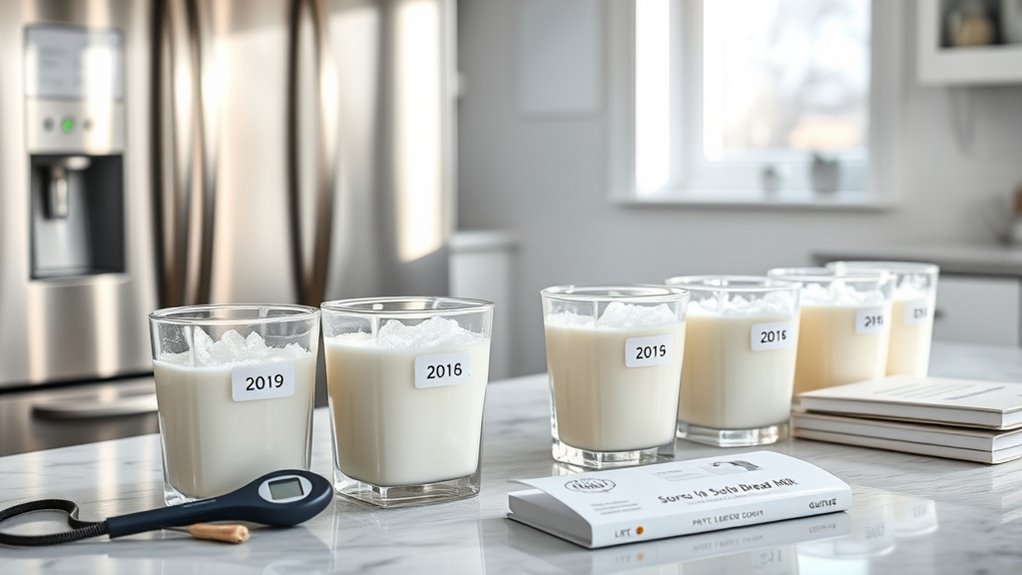
- Label Clearly: Write the date and time of expression on each container using a waterproof marker or pre-printed labels. Include your baby’s name if needed for daycare.
- Use Consistent Containers: Stick to a specific size and type of storage container to fit your freezer space efficiently and stack neatly.
- Organize by Date: Arrange milk in the freezer by date, with the oldest in front. Consider using bins or trays to keep containers grouped and easy to access.
These steps help you manage your frozen milk supply safely and smoothly.
How to Safely Thaw Frozen Breast Milk
When you’re ready to use frozen breast milk, thaw it carefully to preserve its nutrients and safety. The best way is to thaw it in the refrigerator overnight, allowing it to defrost gradually.
If you need it sooner, place the sealed container in a bowl of warm water, gently swirling it occasionally. Avoid using hot water or microwaving, as these methods can destroy valuable nutrients and create hot spots that might burn your baby.
Once thawed, gently swirl the milk to mix any separated fat without shaking vigorously. Use the thawed milk within 24 hours and never refreeze it.
Always thaw only the amount you plan to use to minimize waste and maintain the milk’s quality.
Signs That Frozen Breast Milk Has Gone Bad
After thawing your breast milk, it’s important to check for signs that it may no longer be safe to feed your baby. Even with proper storage, milk can spoil, so trust your senses before use.
- Smell: Fresh breast milk has a mild, sweet scent. If it smells sour, rancid, or off, discard it immediately.
- Appearance: While some separation is normal (fat rises to the top), milk that looks curdled, clumpy, or unusually discolored shouldn’t be used.
- Texture: If the milk feels slimy or sticky after thawing, it’s a sign of spoilage.
Tips for Maintaining Nutrient Quality During Storage
Although freezing helps preserve breast milk, you’ll want to take certain steps to maintain its nutrient quality during storage. First, freeze your milk in small, usable portions to reduce waste and avoid repeated thawing and refreezing.
Use airtight, BPA-free containers or specialized breast milk storage bags to prevent contamination and freezer burn. Label each container with the date to ensure you use the oldest milk first.
Store breast milk in airtight, BPA-free containers or bags labeled with the date to avoid contamination and freezer burn.
Keep your freezer at a consistent temperature of 0°F (-18°C) or lower, and avoid storing milk in the door where temperatures fluctuate.
Finally, try to freeze milk as soon as possible after pumping to lock in nutrients.
Following these tips helps keep your frozen breast milk as nutritious as possible for your baby’s growth.
Using Frozen Breast Milk: Warming and Feeding Guidelines
To preserve the nutrients and make certain of your baby’s safety, you should warm frozen breast milk gently and avoid overheating it. Rapid heating or microwaving can create hot spots that may burn your baby and damage valuable nutrients. Instead, warm the milk by placing the container in a bowl of warm water or using a bottle warmer.
Follow these simple guidelines:
- Warm only the amount your baby will consume to avoid waste.
- Gently swirl the milk to mix separated fat; don’t shake vigorously.
- Test the temperature by placing a few drops on your wrist before feeding.
Always use thawed milk within 24 hours and never refreeze it after warming to ensure freshness and safety.
Avoiding Common Mistakes in Breast Milk Storage
When you store breast milk, avoiding common mistakes guarantees your baby gets the safest, most nutritious milk possible. Don’t refreeze thawed milk, and always label containers with date and time to use the oldest milk first.
Avoid overfilling containers to allow for expansion during freezing. Also, never use regular plastic bags not designed for breast milk storage.
| Common Mistake | How to Avoid It |
|---|---|
| Refreezing thawed milk | Use thawed milk within 24 hours |
| Overfilling containers | Leave space for expansion |
| Unlabeled milk | Label with date and time of expression |
Frequently Asked Questions
Can Frozen Breast Milk Be Refrozen After Thawing?
You shouldn’t refreeze breast milk once it’s thawed. Instead, use it within 24 hours after thawing and keep it refrigerated.
Refreezing can break down nutrients and increase bacterial growth, risking your baby’s health.
How Does Freezing Affect the Taste of Breast Milk?
Freezing can give breast milk a little chill makeover, subtly changing its taste. You’ll notice a slight difference, but your baby will still enjoy its comforting, natural flavor, just with a hint of frosty freshness.
Is It Safe to Mix Freshly Expressed Milk With Frozen Milk?
Yes, you can mix freshly expressed milk with frozen milk safely, but cool the fresh milk first in the fridge before combining. This helps preserve nutrients and prevents bacteria growth, keeping the milk safe for your baby.
Can Medications Taken by the Mother Affect Frozen Breast Milk?
Absolutely, medications you take can sneak into your frozen milk, like undercover agents!
How Long Can Breast Milk Be Kept at Room Temperature Before Freezing?
You can keep breast milk at room temperature for up to four hours before freezing it. Make sure to store it in a clean, covered container to maintain its quality and safety for your baby.
Conclusion
You want the best for your baby, so storing frozen breast milk properly matters. Imagine Sarah, who froze milk for her newborn but labeled containers with dates and stored them in a deep freezer. When feeding time came, she safely thawed and warmed the milk, ensuring her baby got all the nutrients.
By following these simple steps, you’ll keep breast milk fresh and nutritious, giving your little one the best start every time. Remember, understanding how long frozen breast milk is good and how to store it safely is key to maintaining its quality and safety for your baby.