How Long Is Breast Milk Good For
Did you know that freshly expressed breast milk can stay fresh in the fridge for up to 4 days? Understanding how long breast milk is good for at different temperatures is essential for keeping it safe and nutritious. Many parents are unsure about how freezing affects breast milk quality or how long it can be stored.
Knowing the right storage guidelines helps ensure your baby receives the best nutrition without risking spoilage. Let’s explore the key tips for storing breast milk safely and efficiently.
Recommended Storage Containers for Breast Milk

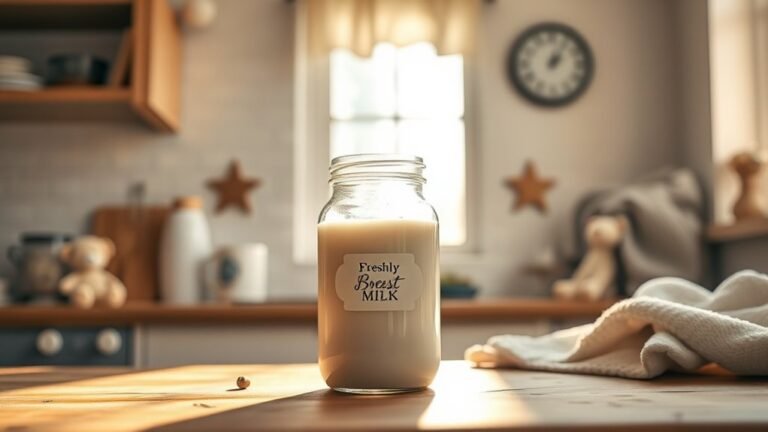
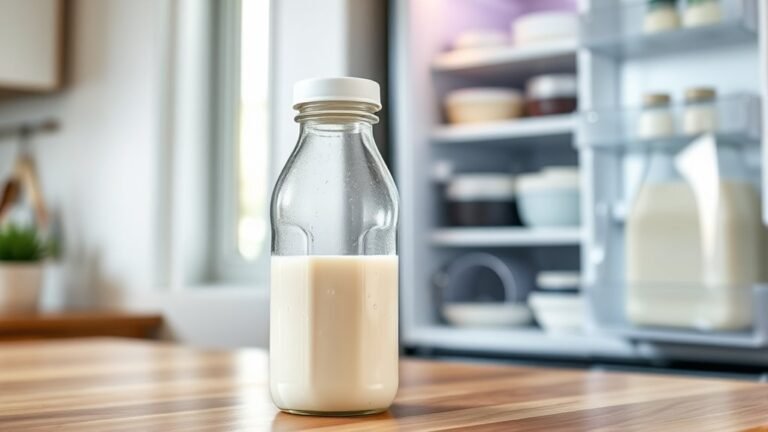
When storing breast milk, you should use clean, food-grade glass or BPA-free hard plastic containers with tight-fitting lids to keep the milk safe and fresh. These storage containers prevent contamination and preserve the milk’s nutrients effectively.
Use clean, food-grade glass or BPA-free plastic containers with tight lids to keep breast milk safe and fresh.
Glass containers are durable and easy to sanitize, while BPA-free plastic options offer lightweight convenience. You can also use specially designed milk storage bags, but avoid household plastic bags or disposable liners as they aren’t safe for long-term storage.
Always guarantee your containers are thoroughly washed and sanitized before use.
Store breast milk in small portions, typically 2 to 4 ounces, to minimize waste and make thawing easier.
Using airtight lids and properly sanitized containers is key to maintaining milk quality during storage.
Best Practices for Labeling and Organizing Breast Milk

Properly labeling and organizing your breast milk is essential to guarantee its safety and freshness. Always use waterproof container labels with the date expressed and, if applicable, your child’s name for easy identification, especially at childcare facilities.
Store your milk in appropriate storage containers, placing them in the back of the fridge or freezer where temperatures are stable. Follow the first in, first out method by positioning newer milk behind older milk to ensure you use the oldest supply first.
Keep detailed storage logs noting dates and amounts to track expiration dates and monitor freshness effectively. Maintaining organized storage not only prevents waste but also helps you manage your milk supply confidently and safely, ensuring your baby always receives fresh, properly stored milk.
Optimal Refrigerator Storage Times for Breast Milk

Although freshly expressed breast milk is best used within 24 hours, you can securely store it in the refrigerator for up to 4 days at 39°F (4°C). For best quality, keep breast milk in a clean, airtight container and place it at the back of the fridge, away from the door.
Label each container with the date to track expiration and avoid using milk past 4 days, as nutrient loss and bacterial growth increase.
| Storage Time | Location in Fridge | Quality & Safety |
|---|---|---|
| Up to 24 hours | Anywhere | Best quality, highest nutrients |
| 1–4 days | Back of the fridge | Safe, slight nutrient decline |
| Over 4 days | Not recommended | Risk of spoilage and bacterial growth |
Proper refrigerator storage guarantees your baby gets the safest, freshest breast milk possible.
Guidelines for Freezing Breast Milk Safely
Since freezing breast milk extends its shelf life considerably, you can store it in your freezer for up to 6 months in a standard freezer or up to 12 months in a deep freezer without compromising quality.
To freeze breast milk safely, follow these storage guidelines:
Use storage bags or containers filled three-quarters full to allow expansion, and place them in the back of the freezer, away from the door, for consistent temperature.
Label each container with the date and use the oldest frozen breast milk first to ensure freshness.
After thawing breast milk in the refrigerator, use it within 24 hours and never refreeze it to protect full-term infants’ health.
Avoid storing milk at room temperature or mixing fresh milk with previously frozen milk during thawing.
Combining Fresh and Previously Stored Breast Milk
Freezing breast milk helps preserve it for months, but you’ll often need to combine fresh milk with your stored supply. When combining breast milk, always cool your fresh milk before adding it to refrigerated milk or stored breast milk.
Avoid mixing warm milk with frozen milk, as this temperature difference risks partial thawing and bacterial growth. Follow milk storage guidelines closely by swirling gently to mix without creating foam or introducing bacteria.
Add fresh milk to your stored supply within 24 hours to maintain temperature safety and nutrient quality. Remember, thawed breast milk mixed with warm milk should be used within 24 hours or discarded.
How to Thaw Frozen Breast Milk Properly
When you need to thaw frozen breast milk, plan ahead by placing it in the refrigerator overnight or gently warming the sealed container in warm water to bring it to room temperature. Avoid thawing breast milk at room temperature for extended periods to maintain freshness and safety.
When thawing breast milk, follow these tips to properly store your milk and preserve its nutrients:
Use warm water to slowly bring frozen milk to room temperature without damaging essential nutrients.
Never use a microwave to thaw frozen breast milk, as it can create hot spots and degrade beneficial components.
Once thawed, swirl gently to mix separated fat without shaking, and use within 24 hours without refreezing.
These steps ensure thawing breast milk is safe and maintains quality similar to freshly expressed milk.
Safe Warming Techniques for Breast Milk
Although breast milk is naturally nutritious, warming it safely guarantees your baby receives its full benefits without risking harmful bacteria or nutrient loss. To warm breast milk, avoid microwaves; instead, place the storage container in warm water or run warm water over it.
When thawing breast milk, do so in the refrigerator overnight or with warm running water, never at room temperature. Always test the temperature on your wrist before feeding.
Use warmed milk within 2 hours and discard leftover milk to prevent bacterial growth.
| Step | Method | Notes |
|---|---|---|
| 1 | Warm water bath | Gently warms milk |
| 2 | Running warm water | Quick warming |
| 3 | Avoid microwave | Prevents hot spots |
| 4 | Test temperature | Use wrist for comfort check |
| 5 | Discard leftovers | Prevent bacterial growth |
Recognizing Signs of Spoiled Breast Milk
If you notice a sour or soapy smell in your breast milk, it’s a clear sign that it has spoiled and should be discarded. Spoiled breast milk often exhibits an odor change similar to sour dairy, signaling bacterial growth.
Beyond smell, watch for other signs of spoilage to keep your baby safe.
Look out for:
- Color change: Yellowing or greenish hues can indicate spoilage, especially with an off odor.
- Clumping or curdling: Visible lumps or foam suggest the milk is no longer safe.
- Sour smell: A rancid or soapy scent is a definitive indicator.
If you detect any of these, don’t risk feeding your baby; discard the milk immediately to avoid potential health issues.
Handling and Storage Tips for Breast Milk on the Go
Since maintaining breast milk’s freshness is essential during outings, you’ll want to use an insulated cooler bag with ice packs to keep it cold for up to 24 hours.
Use an insulated cooler bag with ice packs to keep breast milk fresh for up to 24 hours during outings.
When you store milk on the go, always use clean, airtight containers or BPA-free bottles to prevent contamination.
Label each container with the date and time of expression to guarantee it’s used within safe limits.
Avoid leaving breast milk at room temperature for more than 4 hours, as bacteria can grow quickly.
If you thaw frozen milk for travel, keep it chilled in the cooler bag and never refreeze it.
Once home, store any unused milk in the refrigerator or freezer promptly.
Before feeding, gently swirl the milk to mix fat, but don’t shake it vigorously to preserve nutrients.
Special Considerations for Storing Milk for Premature or Sick Infants
When you store breast milk for premature or sick infants, you need to follow stricter guidelines to guarantee their safety and nutrition. Use sterile, airtight containers and clearly label each with the date and time of expression.
Since these infants are vulnerable to infections, proper handling is critical. Keep in mind:
- Stored milk should be refrigerated and used within 24 hours or frozen for no longer than three months, unless your healthcare provider advises otherwise.
- Thawed milk must be used promptly, typically within 24 hours, to preserve nutrients and minimize infectious risks.
- Always follow any specialized storage protocols recommended by medical professionals to optimize the milk’s quality and safety.
Frequently Asked Questions
What Is the 4 4 4 Rule for Breast Milk?
The 4-4-4 rule means you can store breast milk 4 hours at room temperature, 4 days in the fridge, and 4 months in the freezer. It helps you keep milk safe and reduce waste efficiently.
How Long Is Breastmilk Good for After Pumped?
You can keep pumped breast milk at room temperature for up to 4 hours, refrigerate it for 4 days, or freeze it for 3 to 6 months.
Always use thawed milk within 24 hours and never refreeze.
What Happens to Breast Milk After 4 Hours?
After 4 hours, breast milk starts turning into a ticking time bomb, where bacteria can multiply rapidly. You shouldn’t feed it to your baby, or it could cause illness.
Always refrigerate or freeze to keep it safe.
How Long Is Breast Milk Good for Once a Baby Drinks From a Bottle?
Once your baby drinks from a bottle, you should use the leftover breast milk within 1 to 2 hours to keep it safe.
After that, it’s best to discard it to prevent bacterial growth and contamination.
Conclusion
Storing breast milk properly is like keeping a precious treasure safe—doing it right guarantees your baby gets the best nutrition every time. Fresh milk lasts up to 4 days in the fridge and up to 6 months frozen. Always label and organize your milk carefully.
Combine milk gently and warm it safely to preserve its quality. By following these simple guidelines, you’ll protect your baby’s health and give them the nourishment they need. Knowing how long breast milk is good for helps ensure your baby receives safe, nutritious milk, no matter where you are.