How Long Is Breast Milk Good in the Freezer? Storage & Safety Guide
You might think breast milk stays fresh indefinitely when frozen, but its quality actually diminishes over time. Understanding how long breast milk is good in the freezer is essential for keeping your baby safe and healthy. Knowing exactly how long you can safely store it in your freezer matters more than you might expect.
From choosing the right containers to understanding temperature guidelines, there are key factors that influence how well your milk holds up. Let’s explore what you need to keep in mind to ensure your stored milk remains safe and nutritious.
Recommended Storage Durations for Frozen Breast Milk

Although freezing breast milk extends its shelf life, you should aim to use milk stored in a standard home freezer within 6 months to maintain its quality. Different freezer types affect storage durations, with deep freezers at 0°F (-18°C) or below allowing frozen breast milk to last up to 12 months safely.
For milk stored in a freezer’s main compartment, the best storage time is about 2 weeks to ensure maximum nutrient retention and milk preservation. Keep in mind that the longer milk stays frozen, the more vitamin C and other nutrients diminish, impacting milk quality.
Following proper storage guidelines and labeling each container with the expiration date helps you manage freezer safety and use the oldest milk first for your baby’s benefit.
Choosing the Right Containers for Freezing Breast Milk

To keep your frozen breast milk fresh and nutrient-rich, choosing the right containers plays a big role. Proper containers protect your milk from freezer burn and make storage easier.
Selecting the right containers is key to preserving frozen breast milk’s freshness and nutrients.
When freezing breast milk, consider these storage options:
- Pre-sterilized storage bags: space-efficient and disposable, ideal for freezing breast milk.
- Reusable glass bottles: durable and safe for long-term storage.
- BPA-free plastic bottles: sturdy with tight-fitting lids to prevent leaks.
- Silicone milk trays: perfect for freezing small portions, which you can transfer to storage bags later.
Avoid thin plastic containers or regular ziplock bags, as they may crack or leak when frozen.
Choosing the right storage containers ensures your milk stays safe and organized for your baby.
Best Practices for Freezing and Labeling Milk

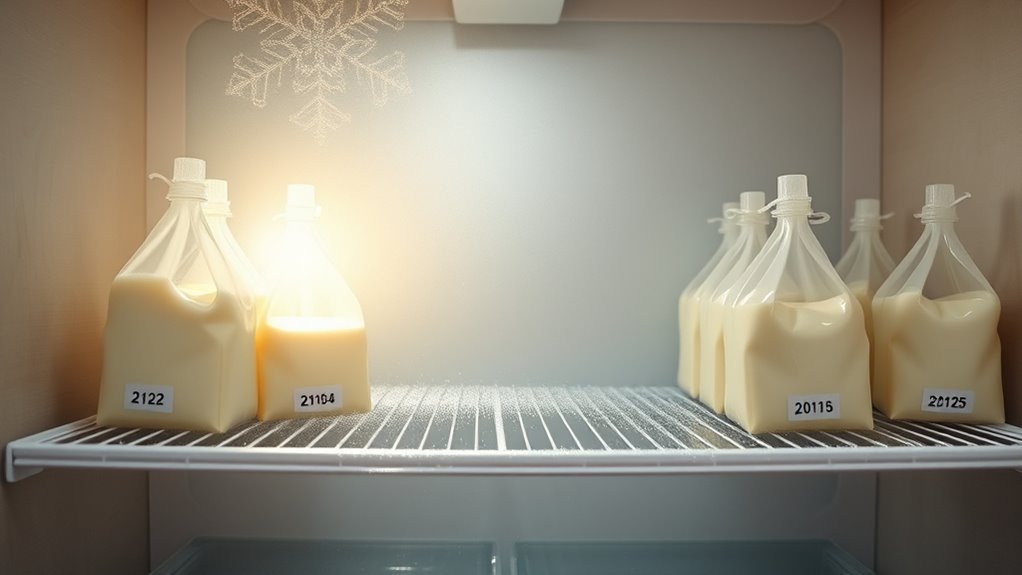
When freezing breast milk, you should use pre-sterilized, BPA-free storage bags or bottles and leave about an inch of space at the top to allow for expansion. Freeze in small portions (2-4 oz) to reduce waste.
Proper labeling is essential: mark each container with the date and baby’s name using waterproof markers or labels. Store milk in the back of the freezer to keep a stable temperature.
| Best Practice | Reason |
|---|---|
| Use BPA-free storage bags | Ensures safe storage without toxins |
| Leave space in containers | Allows milk to expand when freezing |
| Label with date & name | Tracks expiration and prevents mix-ups |
These steps ensure safe storage and easy identification, preserving milk quality during freezing.
How to Organize and Rotate Frozen Breast Milk
Since managing frozen breast milk can quickly become overwhelming, organizing and rotating your stash effectively will save you time and reduce waste.
To optimize freezer organization and space maximization, follow these steps:
- Label each bag with the date of expression using clear handwriting or printed labels.
- Store milk flat in storage bins arranged by date to maximize space and enable quick identification.
- Use the FIFO method to prioritize the oldest milk first, ensuring you use milk within recommended storage time.
- Maintain an inventory tracking list to monitor the volume and age of your frozen breast milk regularly.
Thawing Frozen Breast Milk Safely
Although thawing breast milk requires careful handling, you can safely do it by placing the container in the refrigerator overnight or warming it gently in a bowl of warm water. Avoid microwaving to preserve milk safety and nutrients.
Once thawed, use within 24 hours for safe storage and never refreeze thawed milk. Gently swirl to mix separated fat; vigorous shaking can harm milk quality. Follow these thawing guidelines for proper milk handling:
| Method | Time Required | Notes |
|---|---|---|
| Refrigerator | Overnight (8-12 hrs) | Safest, preserves nutrients |
| Warm Water | A few minutes | Quick, avoid hot water |
| Avoid Microwave | N/A | Can cause hot spots |
| Use Within | 24 hours | After thawing in fridge |
| Refreezing | Not recommended | Increases bacterial risk |
Signs That Frozen Breast Milk Has Gone Bad
If you notice a sour or rancid smell coming from your frozen breast milk, it’s a clear sign it has gone bad and shouldn’t be used. Odor acts as a vital freshness indicator, signaling spoiled milk.
Besides smell, watch for these visual signs and other clues:
- Color changes: yellowish or brownish tints suggest deterioration.
- Off taste: if you carefully test a small amount, an unusual flavor means spoilage.
- Freezer burn or ice crystals: while not always spoilage, they can affect quality.
- Expiration time: milk stored beyond recommended periods (usually 6-12 months) may lose safety and freshness.
Always trust your senses and expiration time to avoid feeding your baby compromised frozen breast milk.
Can You Refreeze Thawed Breast Milk?
Noticing signs that frozen breast milk has gone bad naturally raises questions about how to handle thawed milk. You should never refreeze thawed breast milk.
Once milk has been thawed, especially if it’s been warmed, refreezing compromises its safety, quality, and nutrients.
If you thaw milk in the refrigerator, keep it cold and use it within 24 hours; don’t put it back in the freezer. Proper storage and labeling with the thaw date help you track expiration and ensure freshness.
Any unused portion after 24 hours must be discarded to avoid risk.
Following these guidelines protects your baby from potential bacterial contamination and nutrient loss, maintaining the milk’s intended benefits during refrigeration and after thawing.
Temperature Considerations for Freezer Storage
When you store breast milk in the freezer, keeping the temperature steady is crucial to preserve its quality and safety. Freezer fluctuations can increase nutrient loss and spoilage risk, so maintaining a consistent temperature is key for milk preservation. Here’s what you should do:
Maintaining a steady freezer temperature is essential to preserve breast milk’s quality and prevent spoilage.
- Use a deep freezer, which keeps milk safe for up to 12 months, though ideal quality is best within 6 months.
- Keep the freezer temperature at or below 0°F (-18°C) for safe storage duration.
- Store milk in the back of the freezer to avoid temperature changes from door openings.
- Monitor the freezer temperature regularly with a thermometer to ensure consistent temperature and reduce spoilage risk.
Following these steps helps you maintain breast milk’s nutritional value and safety.
Frequently Asked Questions
How Long Is Breastmilk Good for in a Regular Freezer?
You can keep breast milk in a regular freezer for up to 6 months to maintain its best quality. After that, it’s still safe for up to 12 months but may lose some nutritional value.
What Is the 6 6 6 Rule for Breast Milk?
You thought freezing breast milk was a science experiment? The 6-6-6 rule says: six months in the freezer, six months in the fridge, six months in your memory. Use it before it loses its superpowers.
How Can You Tell if Frozen Breast Milk Has Gone Bad?
You’ll know frozen breast milk has gone bad if it smells sour or rancid after thawing, looks yellowish or lumpy, or has an unusual odor.
Always check these signs before feeding your baby to keep them safe.
What Is the 4 4 4 Rule for Breast Milk?
You’ll follow the 4-4-4 rule by storing breast milk 4 hours at room temperature, 4 days in the fridge, and 4 months in a standard freezer.
This simple guideline keeps milk safe and nutritious for your baby.
Conclusion
You want to give your baby the best, so freezing breast milk properly is key. While your standard freezer keeps milk safe for about six months, a deep freezer extends that to a year, though freshness fades like a setting sun.
Organize and label your milk carefully, or risk confusion and waste. Thaw with care and use quickly—because frozen milk can nourish or spoil, depending on how you treat it.
Understanding how long breast milk is good in the freezer helps ensure your baby receives safe, nutritious milk every time. Proper storage and timely use are essential for maintaining the quality of frozen breast milk.