How Long Is Fresh Breast Milk Good for Storage? Safe Guidelines & Tips
Think of fresh breast milk like a delicate flower—it blooms with nutrients but wilts if not cared for properly. Knowing how long fresh breast milk is good for storage is essential for maintaining its quality and safety. You might wonder exactly how long you can safely store it without losing its goodness or risking your baby’s health.
Understanding the right containers, temperatures, and storage times is key. Getting these details right can make a big difference in your feeding routine and peace of mind.
Recommended Containers for Breast Milk Storage

When storing breast milk, you should use clean, food-grade glass or hard plastic containers that are BPA-free to keep the milk safe. These containers are ideal for breast milk storage because they’re durable and won’t leach harmful chemicals.
You can also use specially designed breast milk storage bags, as long as they’ve a leak-proof seal to prevent spills and contamination. Avoid disposable bottle liners or household plastic bags since they mightn’t be leak-proof or safe for storage.
Always make sure your storage containers have tight-fitting lids to maintain freshness and hygiene. Before first use and after each feeding, sterilize the containers thoroughly to eliminate bacteria.
Properly cleaning and sterilizing your breast milk storage containers guarantees your baby receives safe, nutritious milk every time.
Optimal Storage Temperatures for Fresh Breast Milk

Although fresh breast milk can stay safe at room temperature for a few hours, you should store it properly to maintain its quality and nutrients.
Ideal storage temperatures help preserve nutrients and prevent bacterial growth. Here’s a quick guide for storing fresh breast milk:
| Storage Method | Recommended Temperature & Duration |
|---|---|
| Room Temperature | Up to 4 hours (best within 2-4) |
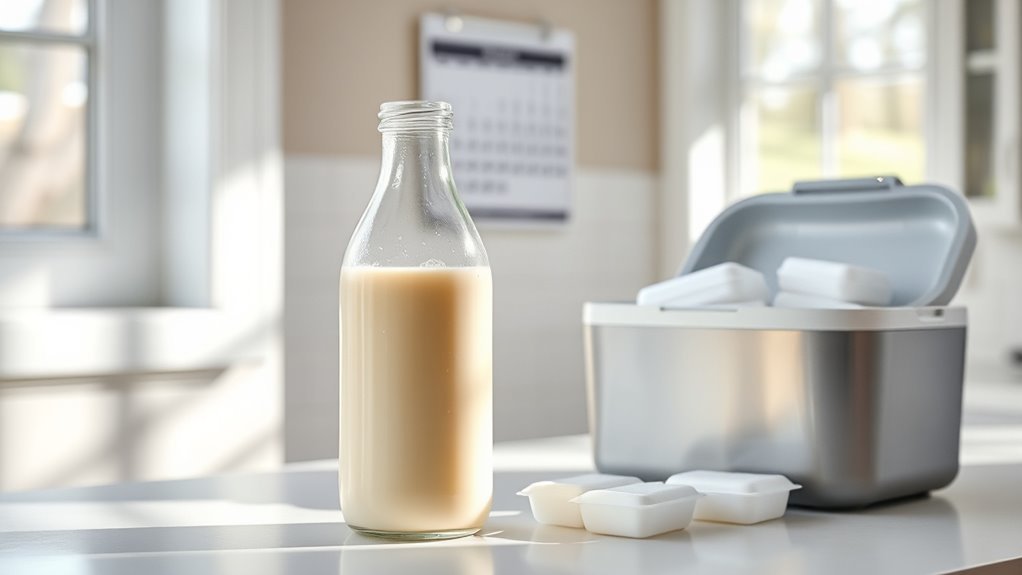
| Cooler with Ice Packs | Up to 24 hours |
| Refrigerator | ≤ 39°F, use within 4 days |
| Freezer | 0°F or lower, up to 6 months |
| Thawed Milk | Use within 24 hours, no refreezing |
Storing fresh breast milk properly in the refrigerator or freezer ensures it stays safe and nutritious for your baby.
Avoid leaving thawed milk at room temperature for long to keep it safe.
Labeling and Portioning Expressed Milk

Properly labeling and portioning expressed breast milk plays a crucial role in maintaining its freshness and safety. When you store fresh breast milk, clear labeling and smart portioning can prevent waste and contamination. Follow these key steps:
- Label each container with the date pumped using waterproof labels and ink; add your child’s name if storing at childcare.
- Portion milk into small amounts, usually 1-2 or 2-4 ounces, based on your baby’s feeding needs to avoid wasting leftover milk.
- Always use the oldest milk first to ensure freshness and safe feeding.
Using appropriate containers and following these labeling and portioning tips helps you manage storage efficiently and supports the prevention of spoilage or contamination.
Safe Storage Duration at Room Temperature
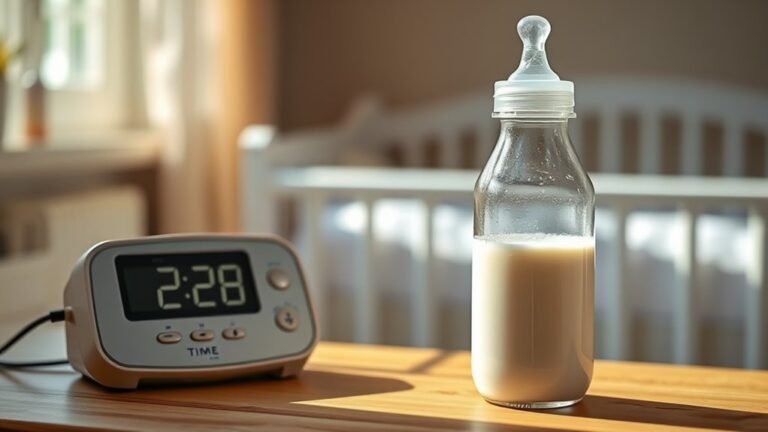
Since room temperature affects how long breast milk stays fresh, you should use or refrigerate freshly expressed milk within 4 hours if the temperature is 77°F or cooler.
Use or refrigerate freshly expressed breast milk within 4 hours if room temperature is 77°F or below.
When storing breast milk at room temperature, the safe storage duration is up to 4 hours; beyond this, bacterial growth increases, compromising breast milk safety.
If the room temperature rises above 77°F, you must shorten storage time to a maximum of 2 hours to prevent spoilage.
Because breast milk is perishable, it’s essential to monitor storage time closely to ensure safe infant feeding.
Milk left out longer than recommended should be discarded to avoid health risks.
Properly managing room temperature storage is key to maintaining the quality and safety of your expressed milk before refrigeration.
Refrigeration Guidelines for Fresh Breast Milk
After storing freshly expressed breast milk at room temperature for up to 4 hours, refrigerating it promptly helps preserve its quality and safety.
To guarantee ideal refrigeration of fresh breast milk, follow these guidelines:
- Store milk in the back of the refrigerator, where the temperature stays consistently at or below 39°F (4°C).
- Label each container with the expression date to track storage time and avoid expiration beyond 4 days.
- Discard any milk stored longer than 4 days to prevent bacterial growth and maintain safety.
Freezing Fresh Breast Milk: Best Practices
When you freeze fresh breast milk, dividing it into small 2-4 ounce portions helps reduce waste and makes thawing easier. Use a clean, airtight container or a specialized breast milk storage bag to prevent leaks and contamination.
Freeze immediately after collection, ideally within 24 hours, to preserve nutrients and guarantee the best quality. Label each container with the date, and store them in the back of a deep freezer where temperature stays most consistent.
For proper storage, keep frozen breast milk for up to 6 months for ideal nutrient retention, though it can last 6-12 months if needed.
When thawing, use thawed breast milk within 24 hours and never refreeze it. Following these freezing breast milk best practices ensures safe storage times and maintains milk quality for your baby.
Combining Fresh and Stored Breast Milk
Although combining fresh and stored breast milk can save time and reduce waste, you must cool freshly expressed milk to room temperature or colder before mixing it with refrigerated or frozen milk. Warm milk can partially thaw frozen milk, promoting bacterial growth.
Cool fresh milk before mixing with stored to prevent thawing and bacterial growth.
To safely combine milk, follow these steps:
- Cool fresh breast milk in the refrigerator or an ice water bath before mixing.
- Add fresh milk only to refrigerated or thawed milk, never directly onto frozen milk.
- Store the combined milk in the refrigerator and use within 24 hours.
Proper storage and handling help maintain milk quality and safety. Always discard any leftover milk after feeding to prevent contamination.
Following these guidelines ensures your baby receives safe, nutritious milk every time.
Proper Thawing Methods for Frozen Milk
Since frozen breast milk retains its nutrients best when thawed gently, you should always plan ahead and thaw it in the refrigerator overnight. This thawing method guarantees safety and preserves the milk’s quality.
If you need milk sooner, place the container in a bowl of lukewarm water for 20-30 minutes, which is a safe alternative. Avoid using hot water or microwaves, as they can destroy nutrients and create dangerous hot spots.
After thawing, gently swirl or invert the container to mix the fat layer back into the milk. Don’t shake it vigorously.
Use thawed breast milk within 24 hours and discard any leftovers. Reusing or refreezing thawed milk compromises safety and nutrition, so always follow these guidelines to keep your baby’s milk fresh and safe.
Handling and Feeding Thawed Breast Milk
Properly thawed breast milk needs careful handling to keep it safe and nutritious for your baby. When you handle thawed breast milk, always use clean hands and sterilized storage containers to avoid contamination.
Follow these key steps:
- Store thawed breast milk in the refrigerator and use within 24 hours; never refreeze it.
- Before feeding, gently swirl the milk to mix the fat layer and perform temperature testing on your wrist to ensure it’s warm but not hot.
- Discard leftovers if the milk sits out at room temperature for over 1-2 hours.

Preventing Contamination During Storage and Use
To keep breast milk safe for your baby, you need to prevent contamination during storage and use by handling it with care. Start with thorough hand washing using soap and water to minimize bacterial growth.
Always use sterilized containers designed for breast milk storage to guarantee clean handling. Label each storage container with the date expressed, so you can monitor storage duration accurately.
Use sterilized containers and label each with the expression date for safe breast milk storage.
Store milk at the proper temperature in the back of the refrigerator or freezer, avoiding door shelves where temperature fluctuates.
Never add fresh milk to already stored milk, as this risks contamination.
Also, don’t leave breast milk at room temperature for more than four hours to limit bacterial growth.
Following these contamination prevention steps helps maintain your baby’s safety and the milk’s quality.
Frequently Asked Questions
How Long Is Freshly Pumped Breast Milk Good For?
You should use freshly pumped breast milk within 4 hours at room temperature, but if you refrigerate it promptly, it stays good for up to 4 days.
Freezing extends storage even longer for your convenience.
What Is the 4 4 4 Rule for Breast Milk?
You might think breast milk lasts forever, but the 4-4-4 rule keeps it real: store it 4 hours at room temp, 4 days in the fridge, and freeze it for up to 4 months to stay safe and fresh.
What Is the 3 3 3 Rule for Breast Milk?
The 3-3-3 rule means you should use fresh breast milk within 3 hours at room temperature, refrigerate it within 3 days, and freeze it for up to 3 months to keep it safe and nutritious for your baby.
What Is the 6 6 6 Rule for Breast Milk?
Wondering about the 6-6-6 rule? It means you can keep fresh breast milk 6 hours at room temp, 6 days refrigerated, and 6 months frozen.
Just label it and stick to these safe storage times!
Conclusion
So, you’ve mastered the art of expressing milk—congratulations! Just remember, your liquid gold isn’t a superhero; it won’t survive forever on your counter or in the fridge. Use it within 4 hours at room temp, or stash it properly in the fridge or freezer like a responsible adult.
Unless you want your baby sipping on a science experiment, stick to the guidelines. Because “fresh” doesn’t mean “forever,” no matter how magical you think that milk is!
Knowing how long fresh breast milk is good for storage is key to keeping your baby safe and healthy. Always follow storage times to ensure your milk maintains its quality and nutritional value.