What Happens If You Drink Sour Milk and How to Handle It
If you accidentally drink sour milk, you might wonder what could happen next and how to respond. Sour milk contains bacteria and acids that can upset your stomach or cause discomfort. Understanding what happens if you drink sour milk and how to handle it is important to prevent any potential issues.
While sour milk is not always dangerous, it can lead to stomach upset, nausea, or mild food poisoning symptoms in some cases. Knowing the right steps to take afterward can make a big difference in how you feel.
If you experience symptoms like vomiting, diarrhea, or severe stomach pain, it’s best to seek medical attention. Otherwise, staying hydrated and resting can help your body recover. Understanding the risks and immediate actions can help you avoid unnecessary illness or complications.
Why Milk Turns Sour and Spoils

Although milk starts fresh and sweet, it turns sour when lactic acid bacteria ferment the lactose, producing lactic acid that changes its flavor and pH. This bacterial activity leads to milk spoilage, causing that tangy taste and thickened or curdled texture you might notice.
Milk sours as lactic acid bacteria ferment lactose, altering flavor and texture through increased acidity.
Even pasteurized milk isn’t immune; over time, bacterial overgrowth can still occur. You’ll find that environmental factors, like warm temperatures and leaving milk out too long, speed up this spoilage process.
The bacteria thrive in these conditions, breaking down lactose and increasing acidity.
Understanding why milk spoils helps you handle it better, whether you want to avoid wasting it or use sour milk in cooking.
Recognizing that bacteria cause spoilage clarifies why freshness matters and how to slow down the process.
Identifying Signs of Sour or Spoiled Milk

When milk sours or spoils, you’ll notice distinct changes that help you identify it’s no longer safe to drink. Sour milk has a strong, tangy odor that stands out from fresh milk’s mild smell.
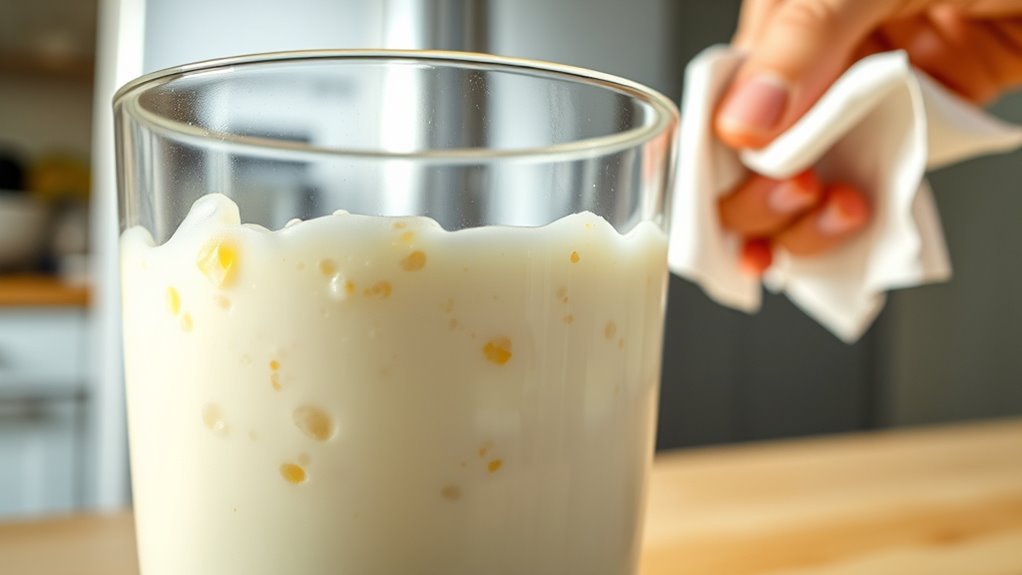
Look for spoilage signs like a thick, slimy, or lumpy texture, which means the milk’s gone bad. Discoloration, such as yellowing or off-white hues, also signals spoilage.
If you notice any visible mold or unusual growth on the surface, discard the milk immediately. Tasting the milk can confirm spoilage, but it’s best to avoid this to prevent food poisoning.
Recognizing these spoilage signs helps you avoid consuming sour milk and protects you from potential health risks.
Health Risks Associated With Drinking Sour Milk

If you accidentally drink sour milk, you might experience nausea, vomiting, diarrhea, or abdominal cramps due to the bacteria and lactic acid it contains. These gastrointestinal symptoms result from harmful bacteria that can mimic food poisoning.
The severity depends on how much you consume and your immune system’s strength. Small sips usually cause mild effects, while larger amounts raise the risk of infection and prolonged discomfort.
| Symptom | Cause | Severity |
|---|---|---|
| Nausea | Harmful bacteria | Mild to moderate |
| Vomiting | Lactic acid irritation | Moderate |
| Diarrhea | Bacterial overgrowth | Moderate to severe |
| Abdominal cramps | Digestive tract upset | Mild to moderate |
| Food poisoning | Pathogen ingestion | Varies |
Recognize these signs early to assess your condition properly.
Immediate Steps to Take After Consuming Sour Milk
Since sour milk can cause unpleasant symptoms, you should immediately rinse your mouth with water to clear away any lingering taste and odor.
After that, monitor symptoms like nausea, stomach cramps, diarrhea, or vomiting, which may appear within a few hours.
It’s important to stay hydrated by drinking clear fluids or electrolyte solutions to prevent dehydration, especially if you experience digestive upset.
Avoid trying to induce vomiting unless a healthcare professional specifically advises you to do so.
Keep an eye on your condition, and if symptoms worsen, persist beyond 24 hours, or you notice severe pain or signs of dehydration, seek medical attention promptly.
Taking these immediate steps can help manage any adverse effects from drinking sour milk effectively.
Safe Culinary Uses for Sour Milk
After managing any immediate discomfort from drinking sour milk, you might wonder if the milk is still usable. Sour milk has several safe culinary uses when handled properly.
You can use it in baking recipes like pancakes, muffins, and quick breads, where heat guarantees food safety by destroying bacteria.
Its acidity makes it perfect for marinating meats or fish, tenderizing proteins while inhibiting bacterial growth.
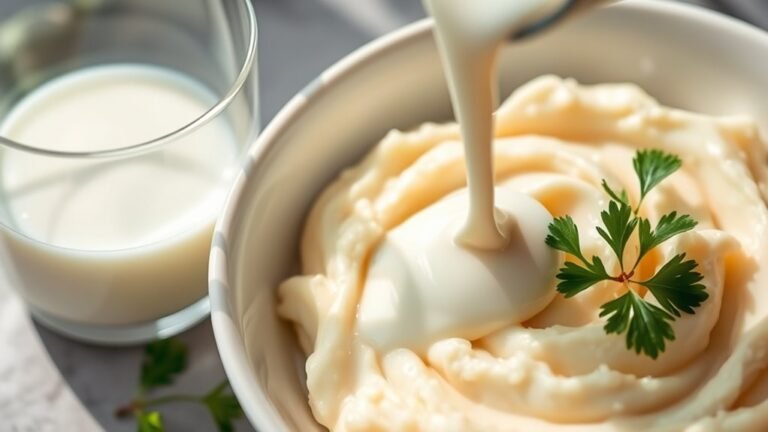
Sour milk also adds a tangy flavor to salad dressings like ranch or Caesar.
Additionally, you can make homemade cheeses such as ricotta or farmer’s cheese by curdling sour milk.
Just make sure the sour milk isn’t moldy or excessively spoiled before using it to avoid food safety risks and enjoy these practical culinary benefits.
When to Discard Milk to Avoid Health Issues
Although sour milk can be useful in cooking, you should discard it once it shows signs of spoilage like a strong sour smell, lumps, off-color, or mold.
Spoiled milk can cause food poisoning, so it’s important not to take risks.
If your milk is more than a week past its expiration date or has any rancid odor, dispose of it immediately.
Even if it’s not expired, any unpleasant smell or visible mold means the milk is unsafe to consume.
When in doubt, always choose to discard questionable milk rather than risk health issues.
Taking these precautions helps you avoid the unpleasant effects of foodborne illnesses and ensures your safety in the kitchen.
Frequently Asked Questions
What Will Happen if I Drink Slightly Sour Milk?
If you drink slightly sour milk, you might feel mild bloating or slight nausea, but it’s usually harmless.
Just stay hydrated and avoid more sour milk to let your stomach settle naturally without worry.
What Does Milk Poisoning Feel Like?
You feel like you’re trapped in a medieval plague, with nausea, stomach cramps, and burning sensations. You’ll likely get bloated, taste something metallic, and might vomit or have diarrhea. Your body’s urgent warning to stop.
How Do You Neutralize Sour Milk?
You can neutralize sour milk by adding lemon juice or vinegar to boost acidity or mixing in sugar or honey to mask the taste. Using it in baking also helps, as heat and other ingredients reduce sourness effectively.
What Medicine to Take After Drinking Spoiled Milk?
Like a shield against a sudden storm, you can take loperamide to stop diarrhea and sip oral rehydration solutions to stay hydrated.
If nausea hits hard, consult a doctor about anti-nausea meds like ondansetron.
Conclusion
Drinking sour milk is like stepping on a hidden landmine—unexpected and unpleasant. If it happens, don’t panic; rinse your mouth and keep hydrated. Watch for nausea or cramps, and avoid forcing vomiting unless a doctor says so.
Most times, your body will handle it just fine, but if symptoms stick around or get worse after a day, seek medical help. Trust your senses and discard milk once it smells or tastes off to stay safe.
In conclusion, understanding what happens if you drink sour milk helps you respond calmly. Always remember to handle sour milk properly to avoid any health issues. Staying aware and cautious is key to preventing discomfort or illness from sour milk consumption.