Do You Know If Milk Is Bad? Easy Signs to Tell if Milk Has Spoiled
You might think you’d spot spoiled milk right away, but sometimes it’s not that obvious. If you’ve ever wondered how to tell if milk has truly gone bad or if it’s just on the edge, knowing what signs to look for can save you from wasting perfectly good milk—or worse, risking your health.
There’s more to this than just sniffing the carton, and understanding these clues can make all the difference.
Signs That Indicate Milk Has Spoiled

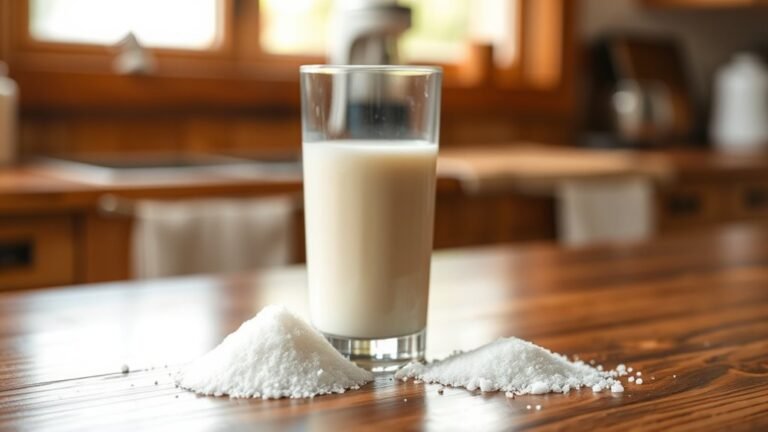
Although fresh milk has a mild, sweet aroma, spoiled milk develops a strong, sour smell that only gets worse over time. When you notice this sour odor, it’s a clear sign bacteria have started to grow, breaking down the milk’s natural sweetness.
You’ll also detect a distinct off-taste, quite different from fresh milk’s gentle flavor.
Check the texture, too—if you see lumps, curdling, or a slimy feel, the milk is spoiled and unsafe to consume.
The color might shift from bright white to a dull yellowish hue, signaling further deterioration.
These changes usually happen when milk passes its expiration date or is stored improperly.
Recognizing these signs helps you avoid drinking spoiled milk and keeps you safe from potential foodborne issues.
How to Properly Store Milk to Extend Freshness

To keep your milk fresh longer, store it in the back of the refrigerator where temperatures stay consistently between 36 and 38°F. Properly stored milk slows bacterial growth and reduces the chances it goes bad before the expiration date.
Here’s how to store milk to keep it fresh and safe to drink:
- Always keep milk in its original, tightly sealed container to block air and odors.
- Avoid the fridge door; temperature fluctuations there can spoil milk faster.
- Never drink straight from the bottle or carton to prevent contamination.
- Freeze unopened milk if you won’t use it before the expiration date, and consume it within one month after thawing.
If milk smells sour or you see lumps, it’s best not to drink it, even if the expiration date hasn’t passed.
Common Methods to Test Milk Quality at Home

When you want to guarantee your milk is still good, relying on simple home tests can quickly give you the answer. Start with a smell test: spoiled milk usually emits a sour or rancid odor that’s easy to detect.
Next, perform a visual inspection by checking for clumps, curdling, or any discoloration. Gently shake the container to see if separation or clumps appear, which signals spoilage.
If you’re cautious, taste a tiny amount; sourness confirms the milk has gone bad.
Remember, temperature plays a key role. Milk kept at the right cold temperature lasts longer.
These quick checks help you avoid using spoiled milk without needing complicated tests, ensuring your milk stays fresh and safe to consume.
Risks Associated With Consuming Spoiled Milk
After checking your milk carefully, it’s important to understand what can happen if you consume spoiled milk. Even pasteurized milk past its expiration can harbor harmful bacteria due to bacteria growth during milk spoilage.
Consuming it puts you at risk for foodborne illness and food poisoning. Here are key risks to contemplate:
- Spoiled milk may cause digestive symptoms like nausea, vomiting, diarrhea, and stomach cramps.
- Harmful bacteria such as Salmonella and E. coli can lead to serious infection, especially in children, elderly, or immunocompromised individuals.
- Drinking spoiled milk, even in small amounts, can trigger digestive distress and increase illness risk.
- Reheating won’t destroy toxins produced by bacteria, so spoiled milk remains unsafe.
Avoiding milk past its expiration date helps protect your health.
Safe Time Limits for Leaving Milk Out of Refrigeration
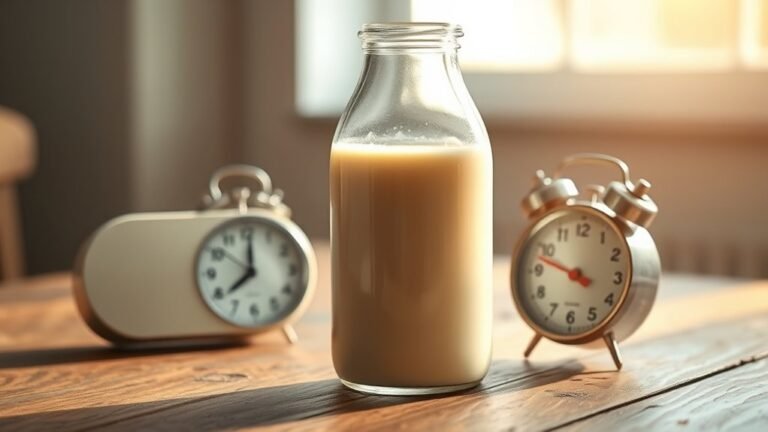
Although milk may seem harmless left out for a short time, you shouldn’t leave it unrefrigerated for more than 2 hours at room temperature to prevent harmful bacterial growth. If the temperature rises above 90°F, that safe time drops to just 1 hour.
Milk left out over 2 hours risks harmful bacteria; above 90°F, only 1 hour is safe.
Milk spoilage accelerates quickly when left out, increasing the risk of sour milk and potential food safety issues. Pasteurization helps kill bacteria initially, but once milk is exposed to warm temperatures, bacteria growth resumes rapidly.
To maintain freshness and avoid reaching expiration prematurely, always store milk in the refrigerator promptly after purchase or use. Repeated temperature fluctuations during storage can further speed up spoilage. Following these guidelines ensures your milk stays safe to consume and reduces the chance of foodborne illness.
Practical Uses for Milk That Has Gone Bad
Even if milk has passed its prime for drinking, you don’t have to toss it immediately. Spoiled milk can still be valuable in various practical ways before the expiration truly limits its use.
Here are some ideas:
- Use spoiled milk in baking recipes like pancakes or muffins to add moisture and tenderness.
- Blend it as a natural thickener for smoothies, milkshakes, or creamy soups.
- Make homemade cheese such as paneer or ricotta, utilizing the slight acidity caused by spoilage bacteria.
- Employ it as a marinade to tenderize meats and poultry, or incorporate it into skincare routines for skin softening and exfoliation.
Frequently Asked Questions
How Can You Tell if Milk Is Spoiled?
You can tell milk is spoiled if it smells sour, has lumps or curdles, looks yellowish, or tastes off.
If it’s been in the fridge over 3-5 days, it’s safer to toss it out.
What Happens if I Drank Bad Milk?
If you drank bad milk, you might feel like your stomach’s throwing a wild party. Nausea, vomiting, and cramps could hit you hard. Don’t ignore these symptoms; they can escalate quickly, so stay alert and hydrated.
How to Tell if Milk Is Still Okay?
You can tell if milk’s okay by checking for a sour smell, lumps, or discoloration. If it smells fresh, looks normal, and tastes fine, it’s safe.
Always store it cold and use it within a week.
What Does Milk Poisoning Feel Like?
You’ll likely feel nausea, vomiting, diarrhea, and cramps within hours. Over 48 million Americans suffer foodborne illnesses yearly. Severe cases might include fever and weakness, especially if bacteria like Salmonella or E. coli contaminate the milk you drank.
Conclusion
Think of milk like a delicate flower—fresh and vibrant when cared for, but wilting quickly if left in the sun. By spotting sour smells, lumps, or color changes, you’re protecting yourself from the thorny dangers of spoiled milk.
Keep it chilled, trust your senses, and don’t let it linger too long outside the fridge. Just like tending a garden, a little attention keeps your milk safe and fresh.
To know if milk is bad, always check for these signs. Using your senses and proper storage helps ensure your milk stays fresh and safe to consume.