How Long Can Fresh Breast Milk Sit Out Safely? Expert Storage Guidelines
When you express fresh breast milk, you might wonder how long fresh breast milk can sit out safely before you need to refrigerate it. Knowing the right time frame helps you avoid wasting milk and ensures your baby’s safety.
But the answer isn’t always straightforward—it depends on several factors you might not have considered yet. Understanding these can make a big difference in how you manage your milk storage.
Recommended Duration for Fresh Breast Milk at Room Temperature

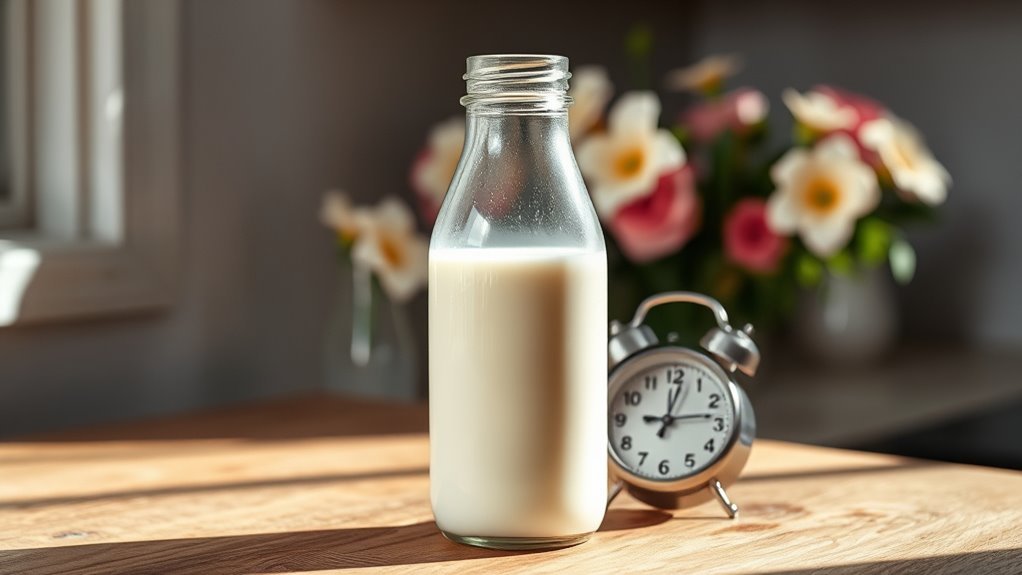
While freshly expressed breast milk can safely sit out at room temperature for up to 4 hours, you should use or refrigerate it sooner if the environment is warm or if cleanliness is a concern.
At around 77°F (25°C), fresh breast milk maintains its safety for about 4 hours, but higher temperatures or less sterile conditions call for stricter storage measures.
To guarantee safety, you should store the milk in a clean, covered container and use it within the recommended time frame.
For infants under 3 months or with weaker immune systems, the safe duration at room temperature drops to 2 hours.
If milk sits out longer than recommended, discard it to avoid bacterial risks.
Proper storing and timely refrigeration help keep fresh breast milk safe and nutritious.
Factors Affecting Breast Milk Safety When Left Out

Understanding how long fresh breast milk can sit out safely depends on several factors beyond just time and temperature.
While room temperature around 77°F (25°C) allows up to 4 hours of safe storage time, higher temperatures accelerate bacterial growth, shortening freshness and increasing contamination risk.
Proper handling plays a vital role: using clean containers and covering milk helps slow contamination and adhere to safety guidelines.
Environmental factors like humidity and cleanliness of collection equipment also impact milk safety.
Once breast milk exceeds 4-6 hours at room temperature without refrigeration, the risk of bacterial proliferation rises sharply, signaling expiration.
To maintain safety, always consider these factors alongside refrigeration options to prevent contamination and ensure your baby receives fresh, safe milk.
Best Containers for Storing Expressed Breast Milk

Choosing the right container is essential for storing expressed breast milk safely and preserving its quality. You should use clean, sterilized glass containers or BPA-free bottles made specifically for milk storage.
Milk storage bags made from food-grade material are also acceptable if they’re leak-proof and designed for this purpose. Avoid using household plastic liners or disposable bags not meant for breast milk, as they can cause contamination.
Always ensure container cleanliness by washing with soap and hot water before each use. Select containers that are freezer-safe or suitable for refrigerator storage to keep the milk fresh and nutrient-rich.
Proper containers help maintain milk safety and make storage more convenient, so investing in the right types is important for your baby’s health.
Proper Handling and Labeling of Breast Milk
Because breast milk is highly perishable, you must handle and label it carefully to keep it safe for your baby. Start with thorough handwashing before expressing and storing milk to avoid contamination. Use proper storage containers and label each with the expression date and, if needed, your baby’s name for clear identification.
Follow these key steps:
- Store milk in small portions (2-4 ounces) to minimize waste and simplify feeding.
- Use waterproof labels with the expiration date to ensure proper rotation.
- Keep milk in the coldest part of your fridge for consistent temperature control.
- Adhere strictly to storage guidelines and storage duration to maintain safety and nutrition.
This careful handling and labeling protect your baby’s health and ensure your milk stays fresh and safe.
Guidelines for Refrigerating and Freezing Breast Milk
Once you’ve properly handled and labeled your breast milk, the next step is storing it safely to preserve its quality and nutrients.
You should refrigerate or freeze your stored breast milk within 1 hour of expression to ensure milk preservation.
At room temperature, fresh milk can sit safely for up to 4 hours, but it’s best to use within that time.
For refrigerator storage, keep milk at 39°F (4°C) and use within 4 days.
If you freeze your milk, it can last 6 to 12 months depending on your freezer type.
When thawing, use the thawed milk within 24 hours and never refreeze it. Following these guidelines will help you maintain the safe duration and quality of your stored breast milk.
Signs Breast Milk May No Longer Be Safe to Use
Although fresh breast milk can be safely stored for several hours, you should watch for signs that indicate it may no longer be safe to use. Spoiled milk can pose health risks due to bacterial growth, so it’s crucial to discard milk showing these warning signs:
- Sour smell or off odor. Any unusual odor is a red flag.
- Color change. Milk turning yellowish or developing a cloudy appearance suggests spoilage.
- Storage time over 4 hours at room temperature. Milk left out too long becomes unsafe to feed.
- Milk previously fed from and left unrefrigerated for over 2 hours must be discarded to avoid contamination.
If you notice any of these signs, don’t risk your baby’s health. Discard milk immediately.
Frequently Asked Questions
How Long Can Freshly Pumped Breast Milk Sit Out?
You can safely leave freshly pumped breast milk out for up to 4 hours at room temperature. If it’s warmer or you want to be extra cautious, refrigerate it within 1-2 hours to keep it fresh longer.
Can I Refrigerate Breast Milk That’s Been Out for 4 Hours?
Wondering if you can still refrigerate breast milk left out for 4 hours? Yes, you can! Just make sure to refrigerate it promptly to keep it safe, but don’t let it sit out any longer than that.
What Happens to Breast Milk After 4 Hours at Room Temperature?
After 4 hours at room temperature, breast milk starts to develop harmful bacteria and loses some nutrients. You shouldn’t feed your baby with it, so it’s safest to discard the milk to avoid any risks.
What Is the 3-3-3 Rule for Breast Milk?
The 3-3-3 rule means you can keep fresh breast milk for 3 hours at room temperature, 3 days in the fridge, and 3 months in the freezer.
Always label and use it within these times to stay safe.
Conclusion
You might be surprised to learn that fresh breast milk can safely sit out at room temperature for up to 4 hours—but for babies under 3 months, it’s best to limit this to just 2 hours.
Remember, keeping your baby safe means acting quickly and storing milk properly.
By following these simple guidelines, you’re not only protecting your little one’s health but also giving yourself peace of mind during those busy feeding moments.
Understanding how long fresh breast milk can sit out safely is key to ensuring your baby’s well-being and maintaining the quality of the milk.