How a Woman Can Produce Milk Without Getting Pregnant Step by Step
It’s funny how sometimes life’s surprises lead you to explore options like how a woman can produce milk without getting pregnant. If you’re considering this, you might already know it involves more than just wishful thinking.
You’ll need to understand hormonal changes and consistent breast stimulation to make it work. But where do you start, and what steps should you follow to give yourself the best chance at success?
Let’s explore the process together.
Understanding Induced Lactation

Although you haven’t been pregnant, you can still produce breast milk through induced lactation, a process that uses hormonal treatments and regular breast stimulation to mimic the body’s natural preparation for breastfeeding.
Induced lactation relies on hormone therapy involving estrogen and progesterone to simulate pregnancy, followed by mechanical stimulation like pumping or nipple manipulation to encourage milk production.
Hormone therapy and regular breast stimulation together encourage milk production without prior pregnancy.
This breast stimulation boosts prolactin levels, the key hormone responsible for milk supply. By consistently applying mechanical stimulation, you stimulate your breasts to produce milk, enabling breastfeeding without pregnancy.
Keep in mind, establishing a steady milk supply may take weeks or months, depending on your body’s hormonal response and how regularly you stimulate your breasts.
This method can successfully support milk production and infant nutrition without prior pregnancy.
Hormonal Changes Required for Milk Production

When you want to produce milk without pregnancy, your body needs to experience specific hormonal changes that mimic those after childbirth.
Normally, high levels of estrogen and progesterone during pregnancy inhibit prolactin, the hormone responsible for milk production.
After delivery, estrogen and progesterone levels drop sharply, allowing prolactin to rise and stimulate lactation.
To induce lactation, you must recreate these hormonal changes by elevating prolactin while lowering estrogen and progesterone.
This shift encourages your mammary glands to begin milk synthesis and maintain milk supply.
Without these hormonal adjustments, prolactin can’t effectively promote milk production.
Understanding how these hormones interact is *essential* when you’re trying to induce lactation and establish a consistent milk supply without pregnancy.
Preparing Your Body With Hormone Therapy

To prepare your body for milk production, hormone therapy plays a key role in replicating the hormonal environment of pregnancy. During preparation, you’ll take estrogen and progesterone for several months to promote breast development, including ductal growth and secretory tissue formation.
Hormone therapy with estrogen and progesterone prepares your body for milk production by promoting breast development.
This phase mimics gestational changes essential for milk production. Your healthcare provider may add medications like domperidone to increase prolactin levels, which directly stimulate milk synthesis.
Hormone dosages and the length of therapy are tailored to your individual health and goals, typically lasting three to four months.
About two months before you start pumping, hormone therapy is usually stopped to trigger the hormonal shift necessary for milk let-down.
This careful preparation sets the foundation for successful lactation without pregnancy.
Starting Breast Stimulation and Pumping
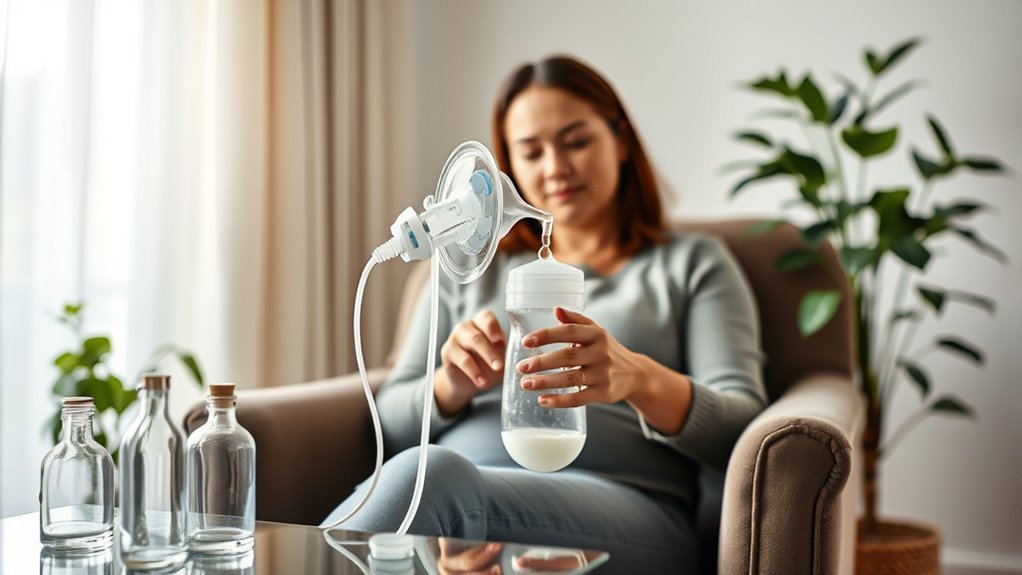
Since hormone therapy has prepped your body, you’ll now begin breast stimulation and pumping to encourage milk production. Use a hospital-grade breast pump for 15-20 minutes, 3-4 times daily to mimic infant feeding and boost prolactin levels.
Before pumping, apply warm compresses or gently massage your breasts to enhance blood flow and trigger milk letdown.
Incorporate nipple stimulation by gently massaging or rolling your nipples, or have your partner assist with suckling, which further promotes a hormonal response and activates milk ducts.
Stay well-hydrated and maintain a balanced diet with lactation-supporting foods like oatmeal or fenugreek to complement mechanical stimulation.
Consistency here is key to gradually increase milk production and establish a reliable supply.
Establishing a Consistent Pumping Schedule
Although it may feel challenging at first, establishing a consistent pumping schedule is essential for stimulating your breasts and encouraging steady milk production. Start with 5-minute sessions three times daily to gently stimulate breasts and promote prolactin release.
Gradually increase each session to 15-20 minutes every 2-3 hours, mimicking a newborn’s feeding pattern. Regular pumping at consistent pump timing helps maintain milk supply and supports breastfeeding without pregnancy.
Don’t forget to include nighttime sessions since prolactin peaks naturally then, boosting production. Use a hospital-grade electric pump with adjustable suction to optimize comfort and milk expression. Track your pumping schedule daily to ensure consistency, adjusting based on milk flow and personal comfort. This disciplined approach will help you stimulate breasts effectively and sustain milk production over time.
Using Medications to Enhance Milk Supply
When natural stimulation alone doesn’t produce enough milk, you might consider medications that boost prolactin levels to enhance your supply. Lactation medications like domperidone and metoclopramide are commonly used off-label to increase milk production by raising prolactin levels.
Hormonal therapy with estrogen and progesterone can also support breast tissue development for breastfeeding without pregnancy. Keep in mind:
- Domperidone blocks dopamine receptors, increasing prolactin and milk volume
- Typical medication dosage for domperidone is 10-20 mg, three to four times daily
- Metoclopramide offers a similar effect but with different side effects
- Monitor for side effects such as gastrointestinal discomfort or rare cardiac issues
- Always use these medications under medical supervision to guarantee safety and effectiveness
This approach can considerably support your milk supply when pumping isn’t enough.
Managing Supplementary Feeding Techniques
Even if you can’t produce enough milk on your own, managing supplementary feeding techniques lets you nourish your baby while encouraging your body to increase milk supply. Using supplementary feeding devices like supplemental nursing systems (SNS) delivers donor milk or formula through a thin tube at the nipple, providing necessary nutrition and breast stimulation simultaneously.
Combining this with regular pumping sessions helps maintain prolactin levels, which stimulate milk production. Gradually increasing supplement volume ensures your baby’s needs are met while promoting milk supply.
You can also use syringes or cups to mimic natural feeding, enhancing bonding and nipple stimulation.
Monitor your baby’s weight and diaper output to adjust feeding techniques effectively, ensuring you support both growth and your body’s milk production efforts through consistent breast stimulation.
Overcoming Challenges During Induction
As you work through milk induction, you might face challenges like low supply or discomfort that can slow progress. Achieving milk production without pregnancy requires patience and attention to both your body and emotions.
To overcome common hurdles during inducing lactation, try these steps:
Increase frequent pumping to every 2 hours to boost hormone prolactin and milk volume. Use warm compresses and gentle breast massage to relieve clogged ducts and improve physical health. Monitor for signs of low milk supply early and adjust stimulation or medication under medical advice.
Address emotional stress by seeking emotional support from trusted friends or support groups. Practice proper breast emptying techniques to prevent engorgement and nipple pain.
Staying proactive helps you succeed in this rewarding journey.

Seeking Support From Lactation Professionals
Overcoming challenges during milk induction can feel overwhelming, but you don’t have to navigate it alone. Seeking support from a lactation consultant provides personalized guidance tailored to your unique needs.
These professionals assess hormonal treatments, recommend effective pumping techniques, and monitor your milk production progress closely.
They also offer essential emotional support, helping you handle the physical and psychological aspects of induced lactation.
Additionally, lactation consultants advise on safe supplements and medications to boost milk supply without compromising your health.
Regular follow-up appointments increase your chances of successful milk production, ensuring you’re on the right track.
Frequently Asked Questions
How to Start Milk Production Without Pregnancy?
You start milk production by stimulating your breasts regularly using a pump or hand expression, possibly combining hormone therapy and galactagogues under medical guidance.
Stay patient since it takes weeks of consistent effort to build supply.
Is It Possible for a Girl to Produce Milk Without Getting Pregnant?
You can absolutely spark milk production without pregnancy. It’s like teaching your body a new dance. With hormonal help and regular breast stimulation, you’ll coax your breasts to produce milk even if you’ve never been pregnant.
What Is the 3-3-3 Rule for Breast Milk?
The 3-3-3 rule means you nurse or pump every three hours for about three minutes, doing this eight to twelve times daily. This routine helps stimulate milk production and maintain a steady supply effectively.
What Triggers a Woman’s Body to Produce Milk?
Your body produces milk when prolactin levels rise, triggered by breast stimulation or suckling. This signals your brain to release hormones that stimulate milk synthesis and ejection, even without pregnancy hormones inhibiting the process.
Conclusion
Imagine your body as a garden, ready to bloom with care and patience. By nurturing it with hormone therapy and consistent stimulation, you can awaken milk production without pregnancy.
Though the journey takes dedication, each pumping session waters your growing supply, turning hope into nourishment. With support and persistence, you’ll cultivate a beautiful bond through lactation, proving that with the right tools and heart, nature’s miracles can blossom in unexpected ways.
In conclusion, how a woman can produce milk without getting pregnant involves a step-by-step process of hormone treatments and regular stimulation. This method allows for induced lactation, enabling milk production without pregnancy and fostering a unique connection between mother and child.