How to Use Heavy Cream Instead of Milk in Recipes
You might not realize it, but heavy cream can be a handy substitute when you run out of milk in recipes. Heavy cream is thicker and richer than milk, so using it straight won’t always work well in your dishes. Knowing how to adjust and dilute heavy cream properly can keep your recipe’s texture and flavor just right.
Let’s explore the best way to make this switch without compromising your results. Properly using heavy cream instead of milk can enhance your cooking experience and ensure your meals turn out delicious every time.
Understanding the Difference Between Heavy Cream and Milk

Although heavy cream and milk come from the same source, they differ considerably in fat content and texture. Milk’s fat percentage varies from 0.5% to about 3.25%, making it much thinner and less rich due to its higher water content.
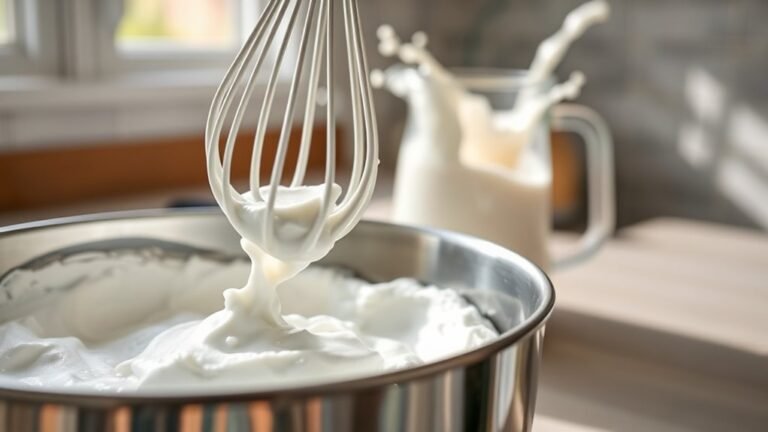
Heavy cream, on the other hand, has around 36% milk fat content, giving it a thick, velvety texture and greater richness. This high fat percentage is what allows heavy cream to be whipped into fluffy peaks, a quality milk simply can’t match.
Because of these differences, you can’t substitute heavy cream for milk without adjustment. Dilution with water is necessary to lower the fat content and mimic milk’s consistency and richness in recipes.
Understanding these distinctions helps you use heavy cream effectively as a milk substitute.
How to Dilute Heavy Cream to Substitute for Milk

Since heavy cream contains much more fat than milk, you’ll need to dilute it with water to achieve a similar consistency and richness when substituting it in recipes.
Heavy cream is much richer than milk, so dilute it with water for a similar texture and flavor.
Here’s how to dilute heavy cream to substitute for milk effectively:
- For a whole milk substitute, mix equal parts heavy cream and water (½ cup cream + ½ cup water) per cup of milk needed.
- To mimic lower-fat milk, use ¾ cup heavy cream and ¼ cup water per cup of milk in your recipe.
- Adjust the ratio based on how creamy or light you want the final dish, using less water for richer results.
Adjusting Recipes When Using Heavy Cream Instead of Milk

When you swap heavy cream for milk in a recipe, you’ll need to modify other ingredients to keep the texture and flavor balanced. Since heavy cream is richer, diluting it with water helps match milk’s consistency and fat content.
For every cup of milk, mix half heavy cream and half water, but you can tweak this proportion to control richness and flavor. Keep the total liquid volume the same, but if your mixture feels too thick, reduce added fats or other liquids to maintain the right texture.
For lighter dishes, increase the water proportion to dilute the cream further, preserving a smoother consistency.
Benefits and Drawbacks of Using Heavy Cream as a Milk Substitute
If you choose to use heavy cream as a milk substitute, you’ll notice it adds a richer, creamier texture that can enhance many dishes. However, there are benefits and drawbacks to contemplate:
- Richness and Body: Heavy cream’s high milk fat content (about 36%) boosts the creaminess and depth of flavor in sauces and baked goods, making them more indulgent.
- Calorie Content: Substituting heavy cream increases calorie content markedly, which mightn’t suit calorie-conscious diets.
- Diluting Heavy Cream: To mimic milk’s consistency, diluting heavy cream with water helps, but it can still alter taste and may cause over-thickening or curdling if not handled carefully.
Understanding these factors helps you decide when heavy cream is a suitable substitute for milk in your recipes.
Best Recipes to Use Heavy Cream in Place of Milk
Although heavy cream is richer than milk, you can easily substitute it in many recipes to create luscious sauces, soups, and baked goods. When cooking creamy pasta sauces or custards, heavy cream adds unmatched richness that elevates flavor and texture.
For soups, it enhances consistency, making them silky smooth. In baking recipes, using heavy cream as a substitute for milk boosts moistness and tenderness, though you might want to reduce other fats or liquids to balance the batter.
To approximate milk’s consistency, dilute heavy cream with water in a 1:1 ratio. This way, you retain creaminess without overwhelming richness.
Tips for Maintaining Texture and Flavor With Heavy Cream Substitutions
Because heavy cream has a higher fat content than milk, you’ll want to dilute it with water to maintain the right texture and avoid overwhelming richness.
When using heavy cream as a substitute, follow these tips to preserve flavor and texture:
- Mix equal parts heavy cream and water (½ cup each per cup of milk) to match milk’s consistency.
- Add a teaspoon of sugar or vanilla extract in desserts to keep flavor balanced.
- Adjust the cream-water ratio based on the dish’s richness. Use more water for lighter texture, less for creamier results.
Frequently Asked Questions
Can I Replace Milk With Heavy Cream in a Recipe?
Yes, you can replace milk with heavy cream by diluting it with water, usually half cream and half water. This mimics milk’s consistency while keeping your recipe rich and creamy without overpowering the dish.
How Does Heavy Cream Affect Baking Recipes?
Heavy cream makes your baked goods richer, moister, and denser due to its higher fat content. You’ll get a creamier texture and stronger flavor, but you might need to thin it with water to keep the batter balanced.
How Much Heavy Cream Is Equivalent to 1 Cup of Milk?
Don’t worry about heavy cream being too rich. Just mix ½ cup heavy cream with ½ cup water to replace 1 cup milk. This keeps your recipe balanced without overwhelming creaminess or texture changes.
Can I Use Heavy Cream Instead of Milk in a Bread Recipe?
Yes, you can use heavy cream instead of milk in bread recipes, but dilute it with an equal part of water to avoid making the dough too rich or dense. This keeps the texture just right.
Conclusion
Now that you know how to dilute heavy cream to replace milk, you can confidently tweak your recipes without wasting ingredients. Did you know heavy cream contains about three times the fat of whole milk? That richness can elevate your dishes but requires balance to avoid overpowering flavors or textures.
Keep these tips in mind, and you’ll enjoy creamy, delicious results every time you substitute heavy cream for milk in your cooking and baking adventures. Using heavy cream instead of milk can add a luxurious texture and flavor to your recipes when done correctly. This simple substitution allows you to enhance your meals while maintaining the right consistency and taste.