How You Can Make Butter From Whole Milk Simply
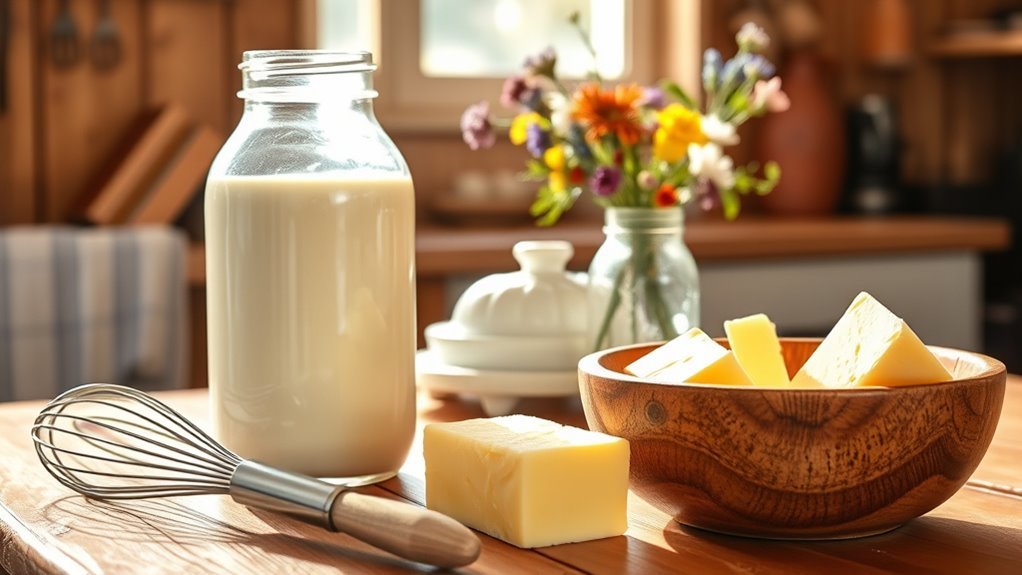
You can make butter simply by letting whole milk sit in a cool place for 12-24 hours so the cream rises to the top. This natural process allows you to separate the rich cream needed for butter making. Gently skim off this cream and churn it by shaking or stirring until fat clumps separate from the buttermilk, forming butter.
Wash the butter with cold water to remove any remaining buttermilk, which helps it last longer. Add salt if you like, to enhance the flavor and preserve it. Store your homemade butter wrapped and chilled for best freshness.
If you want to master every step and get the best results, keep exploring the process ahead. Making butter from whole milk is a rewarding kitchen skill that anyone can learn with a little patience.
Understanding the Basics of Butter Making

Before you plunge into churning, it helps to know that butter forms when you agitate cream or whole milk to separate fat from liquid. When you shake or churn the milk, the fat globules clump together, ultimately forming solid butter. The remaining liquid is called buttermilk.
You’ll notice that the process requires patience and consistent movement to encourage fat separation. Temperature plays a role too. Too cold, and the fat won’t separate easily; too warm, and the texture suffers.
Understanding that butter is fundamentally concentrated milk fat helps you appreciate the transformation happening during churning. By grasping these basics, you’re better prepared to create fresh, homemade butter that’s both delicious and satisfying.
Preparing Your Milk for Butter

Now that you understand how fat separates from liquid during churning, the next step is getting your milk ready. Start by selecting fresh, whole milk with a high-fat content for the best butter yield.
You’ll want to let the milk sit undisturbed in a cool place for 12 to 24 hours so the cream rises to the top. Here are three key preparation tips:
Let your milk rest undisturbed in a cool spot for 12 to 24 hours to let the cream rise.
- Use a clear container to easily see the cream layer.
- Avoid shaking or stirring the milk to keep the cream intact.
- Skim the thick cream layer gently with a spoon or ladle.
Taking these steps guarantees you have rich cream ready for churning, making your butter-making process smooth and successful.
Churning Process: Turning Milk Into Butter

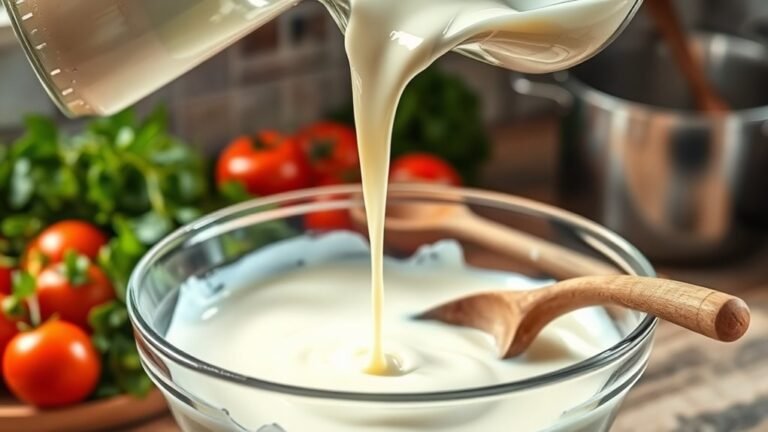
Once you’ve collected your rich cream, you’re ready to churn it into butter. Pour the cream into your churn or a clean jar with a tight lid.
Begin agitating the cream by shaking, stirring, or turning the churn handle steadily.
At first, the cream will thicken and turn into whipped cream. Keep going past this stage; soon, the fat globules will clump together, separating from the liquid, which is buttermilk.
When you see the solid mass form and separate clearly, stop churning.
This process usually takes 10 to 20 minutes, depending on your method and cream temperature.
Remember to work at a steady pace and avoid overheating the cream, as that can affect the butter’s texture and flavor.
Washing and Salting Your Fresh Butter
After churning, you’ll want to wash the butter to remove any remaining buttermilk, which helps preserve its freshness. To do this, rinse the butter under cold water while kneading it gently. This will wash away residual liquid that could cause spoilage.
Next, salting your butter enhances flavor and acts as a preservative. Here’s how to proceed:
Add salt gradually, mixing it thoroughly to distribute evenly. Use fine salt for even absorption and a smoother texture. Taste as you go to avoid over-salting.
Storing and Using Homemade Butter
Although homemade butter doesn’t contain preservatives like store-bought varieties, you can keep it fresh by storing it properly in the refrigerator. Wrap your butter tightly in wax paper or place it in an airtight container to prevent it from absorbing other odors.
Homemade butter typically lasts about one to two weeks when refrigerated. If you want to store it longer, freeze it in a sealed container for up to three months.
When using your butter, bring it to room temperature for easier spreading or melt it gently for cooking and baking. Remember, homemade butter has a richer flavor and creamier texture, so enjoy it on fresh bread, vegetables, or in your favorite recipes.
Proper storage guarantees you get the best taste every time.
Frequently Asked Questions
Can I Use Non-Dairy Milk to Make Butter?
You can’t make traditional butter from non-dairy milk because it lacks the fat content needed to churn. However, you can create plant-based butter alternatives using oils and emulsifiers for a similar spreadable texture.
How Long Does Homemade Butter Last in the Fridge?
Your homemade butter usually lasts about 1 to 2 weeks in the fridge. Make sure you store it in an airtight container to keep it fresh and prevent it from absorbing other odors.
What Equipment Is Best for Churning Small Batches?
You’ll want a small hand-crank butter churn or a mason jar with a tight lid for churning small batches. These let you control the process easily without bulky equipment, making homemade butter simple and fun.
Can I Flavor Butter With Herbs or Spices?
Imagine a garden bursting with flavor. Yes, you can absolutely flavor your butter with herbs or spices!
Just fold in fresh or dried ingredients after churning, and watch your butter transform into a savory masterpiece.
Is Homemade Butter Healthier Than Store-Bought Butter?
Yes, homemade butter can be healthier since you control the ingredients, avoiding additives and preservatives found in store-bought.
Plus, it’s fresher and often has better nutrient retention from whole milk.
Conclusion
Now that you know how to make butter from whole milk, you can enjoy fresh, homemade butter anytime. Did you know that homemade butter contains fewer additives than store-bought versions, making it a healthier choice? By churning your own, you’re not only saving money but also controlling the ingredients.
Plus, the satisfaction of turning simple milk into creamy butter is priceless. Give it a try—you’ll love the fresh taste and the process!
Making butter from whole milk is a simple, rewarding experience that anyone can do at home. Enjoy the natural flavor and the wholesome goodness of homemade butter today!