How Long Is Milk Good Past the Expiration Date? Safety & Storage Guide
You want to know how long milk stays fresh past the expiration date, how to tell if it’s spoiled, and how to store it properly. While expiration dates provide a guideline, they don’t always tell the full story. Milk can often last beyond the printed date if handled right.
However, relying on dates alone can be misleading. To avoid waste and stay safe, you’ll need to understand a few key factors that affect milk’s shelf life. Proper storage, temperature, and handling all play a role in how long milk remains good to drink.
Understanding Milk Date Labels

Although milk date labels like “Best if used by,” “Sell by,” and “Use by” might seem like safety indicators, they actually reflect quality rather than freshness. These expiration dates on milk labels mainly help stores manage inventory and aren’t strict food safety deadlines.
The FDA doesn’t require expiration dates on most milk products except infant formula, so these labels serve as freshness indicators instead. To guarantee milk is safe, you should follow proper storage guidelines and rely on sensory checks—smelling, looking, and even tasting a small amount to detect spoilage signs.
Don’t depend solely on milk labels like “best if used by” or “sell by.” Instead, trust your senses and how well you’ve stored the milk to decide if it’s still good.
Shelf Life of Milk After Expiration

Milk date labels give you a general idea of freshness but don’t guarantee safety beyond the printed date. For pasteurized milk, unopened milk stored properly in the fridge usually retains its shelf life for 5 to 7 days past the expiration date.
Once opened, pasteurized milk typically stays good for about 3 days if there are no signs of spoilage. Storage conditions play an essential role in safety, so keep milk cold to slow spoilage.
Ultra-high temperature (UHT) milk lasts much longer—2 to 4 weeks unopened and about a week once opened.
Signs That Milk Has Spoiled

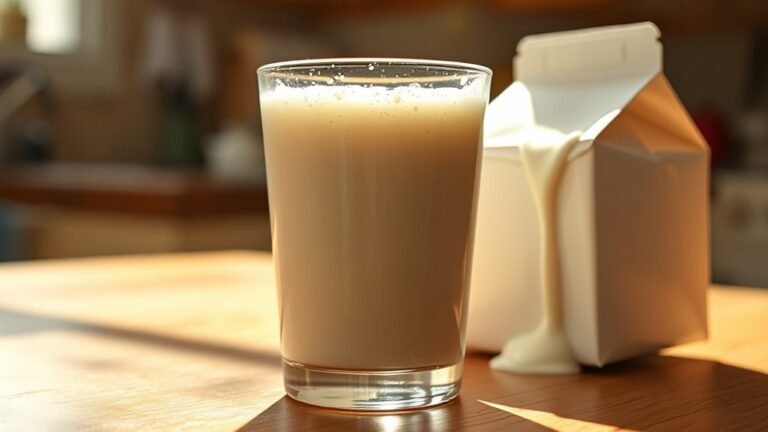
When you notice a sour smell or an unusual texture, it’s a clear sign that your milk has spoiled. Recognizing signs of spoilage helps maintain food safety with dairy products.
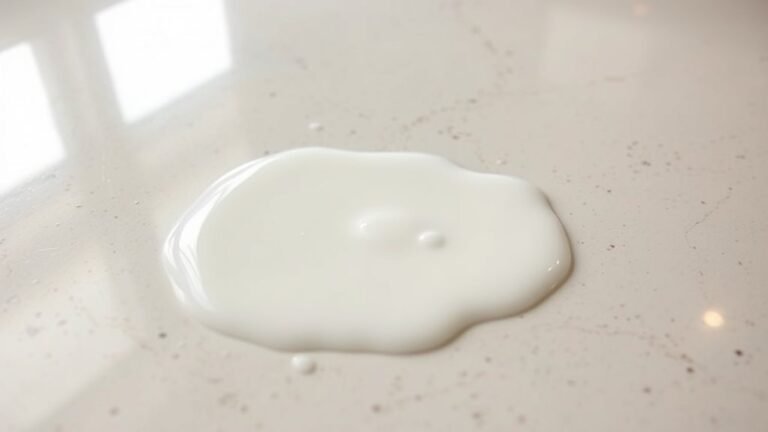
Spoiled milk often emits an off-odor and may develop mold or discoloration. A curdled texture or lumps when you pour indicate it’s time to discard.
Even if it looks fine, a taste test revealing sour or bitter flavors confirms spoilage.
| Sign | What It Indicates |
|---|---|
| Sour smell | Most reliable spoilage sign |
| Curdled texture | Milk has begun to separate |
| Mold | Visible contamination present |
| Discoloration | Milk is no longer safe |
Always trust these signs to avoid consuming spoiled milk.
Best Practices for Storing Milk
To keep your milk fresh and safe to drink, you should store it promptly in the refrigerator at a temperature between 38°F and 40°F. Always place milk on interior shelves rather than the door to avoid temperature fluctuations that can accelerate spoilage.
After each use, make sure to seal the container tightly to prevent contamination and maintain freshness. Avoid leaving milk out at room temperature for more than two hours, as this encourages bacterial growth and shortens shelf life.
While freezing can extend milk’s usability for up to three months, use airtight containers to preserve quality. Proper refrigeration and careful storage directly impact how long milk stays good past the expiration date, helping you avoid waste and enjoy milk safely.
Methods to Extend Milk Freshness
Proper storage habits lay the groundwork for keeping milk fresh longer, but you can take additional steps to extend its usability.
To maximize milk freshness beyond its expiration date, keep it refrigerated at 38°F to 40°F and store it on interior shelves where temperature remains stable.
Always seal the container tightly after use to avoid contamination and spoilage.
If you don’t plan to use milk soon, consider freezing milk in airtight containers; freezing milk can extend its shelf life up to three months. When thawing, do so in the refrigerator and consume within 7-10 days to maintain food safety.
Health Risks of Consuming Spoiled Milk
Although milk might look and smell fine, drinking spoiled milk can quickly lead to food poisoning symptoms like nausea, vomiting, diarrhea, and stomach cramps.
Drinking spoiled milk may cause rapid food poisoning symptoms including nausea, vomiting, diarrhea, and stomach cramps.
Spoiled milk harbors bacterial growth that poses serious health risks, especially if consumed past the expiration date.
Even small amounts can cause foodborne illness due to harmful bacteria such as Salmonella or Listeria.
These bacteria multiply rapidly once milk spoils, increasing the danger of infection and dehydration that may require medical attention.
Paying attention to signs of spoilage is essential for your safety; never ignore off smells or curdled texture.
To avoid health complications, always prioritize safety over consumption convenience and discard milk that shows any indication of spoilage, no matter the expiration date.
Common Myths About Milk Expiration Dates
While expiration dates on milk cartons serve as helpful guidelines, they don’t always mean the milk becomes unsafe immediately afterward. Many believe milk spoils right after the sell by date, but proper storage and a sensory check—smell, taste, and appearance—are better for judging freshness and safety.
Relying solely on the expiration date can cause unnecessary food waste.
| Myth | Fact |
|---|---|
| Milk is unsafe after expiry | Milk can be safe days after if no spoilage signs |
| Sell by date = bad milk | It indicates quality, not safety |
| Spoilage occurs on expiration | It depends on storage and handling |
| Date alone ensures safety | Sensory checks and refrigeration matter more |
Understanding these myths helps you reduce waste while ensuring food safety.

Frequently Asked Questions
Can I Drink Expired Milk if It Doesn’t Smell?
You can drink expired milk if it doesn’t smell sour or look off, but be cautious. Even without odor, harmful bacteria might be present.
When in doubt, it’s safer to toss it out to avoid illness.
How to Tell if Milk Is Still Good After the Expiration Date?
You check if milk’s good by smelling for sour odors, looking for curdling or discoloration, and noticing texture changes. If it smells and looks fine, taste cautiously to confirm, but never risk spoiled milk consumption.
Can You Drink Milk After 14 Days?
Drinking milk after 14 days is like walking on thin ice; you shouldn’t risk it. If it smells sour or looks curdled, toss it. Freshness fades fast, so trust your senses over the date.
Conclusion
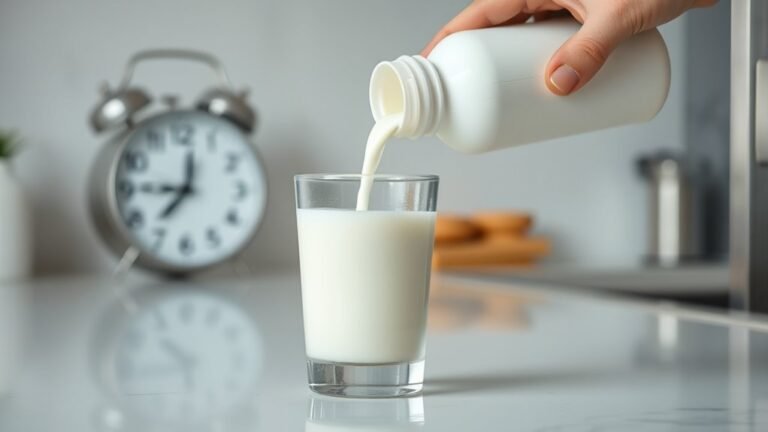
You’ve held that cold carton in your hands, wondering if it’s still good—like a ticking clock whispering secrets. Remember, milk can stay fresh for up to a week past its expiration if you keep it chilled and sealed tight.
But trust your senses—if it smells sour or looks curdled, don’t take the risk. Treat milk like a fleeting moment: enjoy it before it sours, savoring freshness while it lasts.
In conclusion, understanding how long milk is good past the expiration date helps you avoid waste and ensures safety. Always store milk properly and check for signs of spoilage to enjoy its freshness to the fullest.