How Long Can Breast Milk Stay in the Fridge Step by Step
When it comes to keeping your breast milk fresh, timing plays a subtle but vital role. Understanding how long breast milk can stay in the fridge is essential for every nursing parent. You might think storing milk in the fridge is straightforward, but there are specific steps that can make a big difference in preserving its quality and safety.
Knowing exactly how long you can keep it chilled—and what to do before and after—can help you avoid waste and keep your baby healthy.
Let’s explore what you need to know step by step.
Understanding Breast Milk Storage Durations

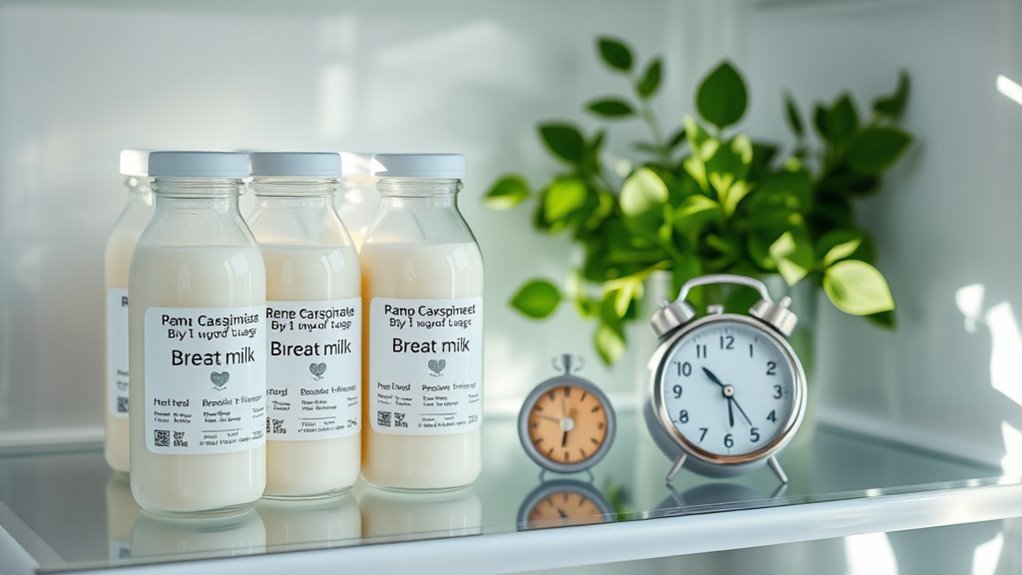
You can safely store freshly expressed breast milk in your refrigerator at 39°F (4°C) for up to 4 days. Following CDC guidelines guarantees the safety and quality of refrigerated breast milk during this storage duration.
The “Rule of 4s” highlights that fresh breast milk maintains its freshness and nutritional value within this timeframe. If you’re using thawed milk, make sure to use it within 24 hours to prevent bacterial growth.
Proper milk handling and labeling help you track storage time accurately and maintain safety. Remember, refrigerator temperature plays a vital role in preserving milk quality, so adhere strictly to breast milk storage guidelines.
Ideal Refrigerator Temperatures for Breast Milk

Although storing breast milk properly is essential, maintaining the ideal refrigerator temperature at or below 4°C (39°F) plays a crucial role in preserving its quality and safety. This temperature slows bacterial growth, ensuring milk safety and extending the storage duration.
To keep your breast milk fresh, you need precise temperature monitoring.
Accurate temperature monitoring is key to ensuring your breast milk stays fresh and safe.
Keep these points in mind for effective breast milk storage:
- Regularly check your refrigerator temperature with a thermometer to maintain the ideal temperature.
- Avoid temperatures above 4°C to prevent accelerated bacterial growth and compromised milk quality.
- Cool breast milk promptly after expression to support milk preservation and safety.
Preparing Breast Milk for Refrigeration

Maintaining the right refrigerator temperature sets the stage for safely storing breast milk, but proper preparation before refrigeration is just as important.
Before you express or handle fresh breast milk, wash your hands thoroughly with soap and water to ensure good hygiene.
Use sterilized, airtight storage containers designed specifically for breast milk to prevent contamination.
Once expressed, cool the milk promptly by placing it in the refrigerator within one hour to preserve freshness.
Always store the milk at 39°F (4°C) or lower, ideally in the back of the fridge where the temperature is most stable.
Follow storage guidelines carefully during handling to maintain the milk’s quality and safety.
Proper preparation helps keep your breast milk fresh and ready for your baby’s needs.
Labeling and Organizing Stored Milk
Since breast milk quality depends on proper use, labeling and organizing stored milk is essential. You should clearly mark each storage container with the expression date using waterproof, permanent markers or pre-printed labels for reliable identification.
Organizing your milk helps maintain freshness by prioritizing older milk for use first.
Organizing milk ensures freshness by using the oldest stored milk before newer batches.
To manage your inventory efficiently:
Use a storage chart to track quantities and expiration dates at a glance.
Arrange containers so the oldest milk is visible and accessible in front.
Regularly rotate supplies, moving older milk forward to maintain priority.
Using the Rule of 4s for Fresh Breast Milk
Once you’ve labeled and organized your stored breast milk, applying the Rule of 4s can help guarantee its safety and quality. According to this rule, fresh breast milk can stay in the refrigerator at 39°F (4°C) for up to 4 days.
Make sure to keep the temperature consistent to prevent bacterial growth and preserve nutritional value.
Always follow proper labeling and use the “first in, first out” method to ensure you use the oldest milk first, respecting the recommended storage duration.
If you leave fresh breast milk at room temperature (up to 77°F or 25°C), it should be used within 4 hours.
These storage guidelines help you safely manage your milk supply while maintaining its quality.
Handling Leftover Breast Milk Safely
Although you may want to save every drop, leftover breast milk should be handled carefully to guarantee your baby’s safety. Proper milk handling prevents milk spoilage and ensures milk safety during refrigerator storage.
Handle leftover breast milk with care to ensure safety and prevent spoilage during refrigeration.
Use airtight containers labeled with date and time, and follow clear storage guidelines. Remember, once feeding starts, use leftovers within 1 hour; any remaining milk must be discarded.
Also, leftover breast milk in the fridge should be used within 24 hours; discard expired milk beyond this period.
Keep in mind these key points:
- Use airtight containers for storing leftover milk and label with date/time.
- Don’t reuse milk fed to your baby to avoid bacterial contamination.
- Always discard expired milk to maintain milk safety and prevent spoilage.
Freezing Breast Milk When Refrigeration Time Expires
When your refrigerated breast milk approaches its 4-day limit, freezing is the best way to extend its shelf life and maintain its nutritional value.
Once the expiration of safe refrigerator storage nears, transfer the milk promptly to the freezer to preserve quality and safety.
Use airtight containers or specialized storage bags designed for freezing to avoid contamination.
Make sure to label each container with the date you froze it, so you can follow the “first in, first out” rule.
Store the milk at 0°F (−18°C) or below, ideally in the back of the freezer where temperature is most stable.
Depending on your freezer type, the storage duration can last between 6 to 12 months, keeping your breast milk safe and nutritious until you need it.
Tips for Transporting and Storing Milk Outside the Home
Because breast milk is sensitive to temperature changes, you’ll want to transport it in a clean, insulated cooler bag with ice packs to keep it at 39°F (4°C) or below.
Use pre-chilled bottles or storage bags and avoid leaving milk at room temperature during transport.
Aim to deliver expressed milk within 24 hours to maintain freshness.
Follow storage guidelines carefully by refrigerating or freezing milk promptly after returning home.
Use an insulated cooler bag with ice packs to transport breast milk safely.
Avoid opening containers during transport and keep milk away from direct sunlight.
Refrigerate or freeze milk promptly upon arrival, respecting recommended storage times.
Monitoring and Maintaining Safe Storage Conditions
To keep breast milk safe and fresh, you need to monitor your refrigerator and freezer temperatures regularly. Use a thermometer to confirm your refrigerator temperature stays at or below 40°F (4°C) and the freezer at 0°F (-18°C).
Store milk in the back of the fridge, away from the refrigerator door, to maintain consistent temperature and prevent spoilage. Avoid frequent door openings to preserve the cold chain and ensure food safety.
During power outages, keep the refrigerator door closed to maintain cold storage for up to 4 hours.
| Aspect | Recommendation |
|---|---|
| Refrigerator Temp | ≤ 40°F (4°C), check with a thermometer |
| Storage Location | Back of fridge, away from the door |
| Power Outage Action | Keep door closed, maintain cold chain |
Frequently Asked Questions
What Is the 4 4 4 Rule for Breast Milk?
The 4-4-4 rule means you can keep breast milk for 4 hours at room temperature, 4 days in the fridge, and 4 months in the freezer. It helps you store milk safely and reduce waste effectively.
What Is the 6 6 6 Rule for Breast Milk?
The 6 6 6 rule means you can keep freshly expressed breast milk for 6 hours at room temperature, 6 days in the fridge, and 6 months in the freezer.
It helps you store milk safely and preserve nutrients.
What Is the 3-3-3 Rule for Breast Milk?
The 3-3-3 rule means you can keep breast milk in the fridge for 3 days, at room temperature for 3 hours, and in the freezer for 3 months.
Always label it with the date to stay safe.
What Is the 5 5 5 Rule for Breast Milk?
You can safely store breast milk for 5 hours at room temperature, 5 days in the fridge, and 5 months in the freezer. That’s the 5-5-5 rule. It helps you keep milk fresh and nutritious for your baby.
Conclusion
Think of your breast milk like a precious treasure chest—you want to keep it safe and fresh for your little one. Just like a treasure loses value if left out too long, breast milk stays best in the fridge for up to 4 days at 39°F (4°C).
By following simple steps—washing hands, using airtight containers, and labeling dates—you guarantee every drop remains a nourishing gift. Proper handling and storage are key to maintaining the quality and safety of your milk.
Remember, how long breast milk can stay in the fridge depends on these careful practices. Proper storage keeps your baby’s treasure pure and ready, ensuring your breast milk stays fresh and nutritious.