Breast Milk Safety: How Long Can It Stay Out Safely
Did you know breast milk can safely stay out at room temperature for up to four hours? Proper breast milk storage is essential to ensure its safety and nutritional value. It might seem straightforward, but the guidelines can change depending on factors like whether the milk is fresh, refrigerated, or previously frozen.
Understanding these nuances is vital to keeping your baby healthy and avoiding waste. Let’s explore what you need to know to handle and store breast milk properly in different situations. This knowledge will help you provide the best care for your little one.
Understanding Room Temperature Limits for Breast Milk

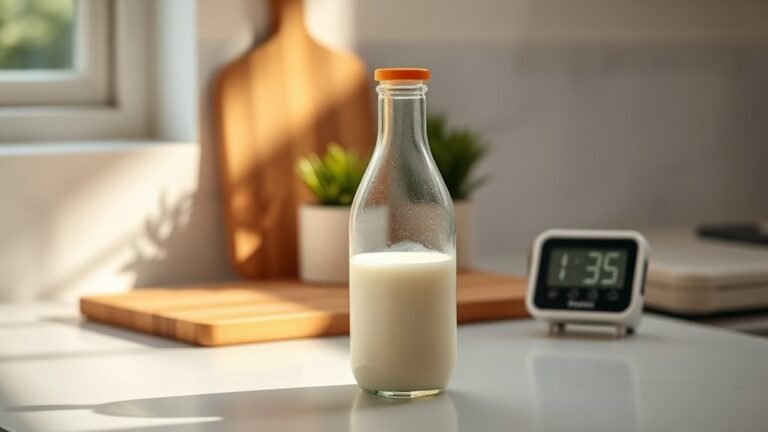
Although freshly expressed breast milk can stay safely at room temperature (77°F or 25°C) for up to 4 hours, you should refrigerate it sooner if the environment is warm or humid. Understanding the temperature limits is essential for storage safety, as breast milk is perishable and its safe duration decreases in less ideal conditions.
Fresh breast milk is safe at room temperature up to 4 hours; refrigerate sooner if warm or humid.
Following proper storage guidelines helps you avoid exceeding the expiration time at room temperature, which could lead to bacterial growth. Remember, freshly expressed milk left out longer than 4-6 hours risks spoilage.
Also, thawed or previously refrigerated milk shouldn’t remain at room temperature for more than 1 to 2 hours.
Keeping these factors in mind ensures you maintain the highest quality and safety when handling breast milk outside the fridge.
Selecting the Right Containers for Milk Storage

When storing breast milk, choosing the right containers plays a crucial role in preserving its quality and safety. Opt for clean, BPA-free glass or hard plastic storage containers with secure, air-tight caps to prevent contamination.
Breast milk storage bags designed specifically for this purpose are convenient, but avoid using regular household plastic bags.
Always wash and sterilize containers before each use to maintain container safety and reduce bacterial risks.
Make sure your containers are suitable for freezing and refrigeration, as this affects how well the milk stays fresh.
While plastic bottles are acceptable, prioritize those made for breast milk storage. Proper container choice ensures your milk stays safe and nutritious, ready for your baby whenever needed.
Best Practices for Labeling and Storing Expressed Milk

Choosing the right containers is only part of keeping your expressed breast milk safe; proper labeling and storage play a vital role too. Always label containers with the date of expression using waterproof labels and ink to guarantee accurate tracking of freshness and expiration.
If storing milk at a childcare facility, include your child’s name to prevent mix-ups. Use clear, legible labels placed on the side of containers or bags so they don’t cover the milk, maintaining visibility. This helps you easily identify the date and avoid feeding expired milk.
When transferring milk to different containers, reapply labels promptly to keep storage tracking accurate. Proper labeling combined with correct refrigeration storage ensures your baby gets fresh, safe milk every time.
Combining Fresh Milk With Stored Milk Safely
How do you safely combine freshly expressed breast milk with stored milk? To maintain safety and prevent bacterial growth, you need to pay close attention to temperature and timing when storing breast milk.
Cool freshly expressed breast milk to room temperature before you combine it with refrigerated milk. Never add warm milk to cold or frozen milk to avoid partial thawing or spoilage.
Ensure both milk portions are at similar temperatures before combining. Use the combined milk within 24 hours to guarantee freshness and safety.
Label the mixed milk with the date of the earliest expressed milk to track proper usage. Following these steps helps you safely store breast milk in the refrigerator without risking contamination or spoilage.
How Long Breast Milk Lasts at Different Temperatures
After combining freshly expressed and stored breast milk safely, you’ll want to know how long it can last at different temperatures.
Fresh breast milk stays good at room temperature (77°F/25°C) for up to 4 hours, but warm breast milk should be used sooner.
Thawed breast milk lasts only 1 to 2 hours at room temperature before it needs refrigeration or disposal.
If you use an insulated cooler with ice packs, stored breast milk remains safe for up to 24 hours.
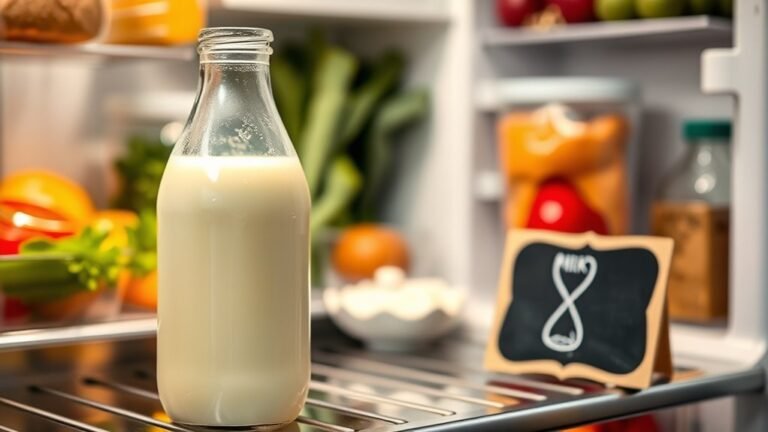
Follow storage guidelines carefully: in the fridge, breast milk keeps for 4 days, while freezer storage can preserve it for 6 to 12 months, depending on the freezer.
Using bottle liners helps maintain cleanliness. Always respect breast milk expiration to ensure your baby’s health.
Proper Techniques for Thawing Frozen Breast Milk
When you need to thaw frozen breast milk, transferring it to the refrigerator and letting it thaw slowly overnight is the safest method. This slow thaw preserves nutrients and reduces bacterial growth.
Here are key tips for proper thawing breast milk:
Avoid thawing at room temperature to minimize bacterial risks. Use warm water to speed up thawing if needed, never a microwave. Never microwave breast milk; it creates hot spots and damages nutrients.
Once thawed in refrigeration, use the milk within 24 hours. Gently swirl the milk to mix separated layers; avoid vigorous shaking.
Recognizing Changes in Smell and Appearance of Thawed Milk
Although thawed breast milk may look or smell different from fresh milk, these changes are usually normal and harmless. During storage, thawed milk might develop a soapy or sour odor and appear separated or cloudy.
These shifts in smell and appearance don’t always indicate spoilage. However, if you detect a rancid or strongly sour odor, discard the milk immediately to ensure safety.
| Appearance | Smell/Odor | Safety Implication |
|---|---|---|
| Slightly cloudy | Soapy or mild sour | Safe for feeding |
| Separated layers | Neutral or mild odor | Safe if mixed and no rancid smell |
| Normal color | Rancid or off odor | Unsafe, discard immediately |
| Slightly yellowish | Strong sour | Unsafe, discard immediately |
Always trust your senses to prevent spoilage risks after thawing.
Tips for Handling Leftover Breast Milk After Feeding
Because leftover breast milk can harbor bacteria quickly, you should use it within 2 hours after feeding or discard it to keep your baby safe.
To handle leftover breast milk properly, follow these tips to maintain food safety:
Use any leftover breast milk within 2 hours after feeding or discard it immediately.
If storing leftover milk, place it in the refrigerator and use it within 24 hours.
Always label stored milk with the date to monitor storage times accurately.
Avoid reheating leftover breast milk multiple times to preserve nutrients and reduce bacterial risk.
Discard any milk left out beyond recommended times to prevent contamination.
Impact of Environmental Factors on Breast Milk Safety
Handling leftover breast milk properly is only part of keeping it safe; the environment where you store it plays a big role too. Ambient temperature directly affects breast milk safety by influencing bacterial growth.
Proper storage environment is crucial for breast milk safety alongside handling practices.
At room temperature (below 77°F/25°C), breast milk can safely stay out for 4-6 hours. But warmer environments shorten this storage time to 1-2 hours to prevent milk spoilage.
Temperature fluctuations, like moving milk between cold and warm areas, increase the risk of contamination and reduce shelf life.
To maintain breast milk safety, you should aim for proper storage in a controlled environment such as a refrigerator or insulated cooler.
Consistently stable temperatures slow bacterial growth and help preserve milk freshness, ensuring your baby receives safe, nutritious milk every time.
Ensuring Safe Breast Milk Storage During Power Outages
When the power goes out, you need to act quickly to keep your breast milk safe. During a power outage, monitor your refrigerator and freezer temperature to maintain milk safety and prevent bacterial growth.
Follow these tips for safe storage:
- Discard refrigerated milk if power is out over 4 hours and temperature rises above 40°F (4°C).
- Keep breast milk in a solidly frozen freezer for up to 24-48 hours during outages.
- Use a thermometer to check if milk remains within safe temperature ranges.
- Discard milk if the freezer thaws and temperature exceeds 40°F for several hours.
- Prioritize safe storage to avoid thawing and spoilage during prolonged outages.
Acting promptly guarantees your milk stays safe for your baby despite power interruptions.

Frequently Asked Questions
How Long Is Breastmilk Good After Taken Out of the Fridge?
You can keep breast milk out of the fridge for up to 4 hours if freshly expressed.
If it’s thawed, use it within 1-2 hours. Always discard leftover milk after feeding to keep baby safe.
What Happens to Breast Milk After 4 Hours Room Temperature?
After 4 hours, breast milk loses its protective shield, allowing harmful bacteria to invade.
You shouldn’t feed it to your baby then, as it risks their health by breaking down essential nutrients and defenses.
What Is the 4 4 4 Rule for Breast Milk?
The 4-4-4 rule means you can keep breast milk at room temperature for 4 hours, in the fridge for 4 days, and in the freezer for 4 months.
It helps you store milk safely and maintain nutrients.
What Happens if a Baby Drinks Breast Milk That Sat Out Too Long?
Imagine a ticking clock speeding up bacteria growth; if your baby drinks milk left out too long, they risk tummy troubles like diarrhea or vomiting.
You’ll want to watch for illness and call the doctor if needed.
Conclusion
You should never leave freshly expressed breast milk out at room temperature for more than 4 hours to keep it safe for your baby.
Remember, if the milk has been refrigerated or thawed, it’s best to use it within 1-2 hours once it’s out. This quick timeframe helps prevent spoilage and protects your baby’s health, especially during power outages or warm days when temperatures can rise above 77°F (25°C).
Always prioritize safety! Knowing how long breast milk can stay out safely is essential for ensuring your baby receives the best nutrition without risk.